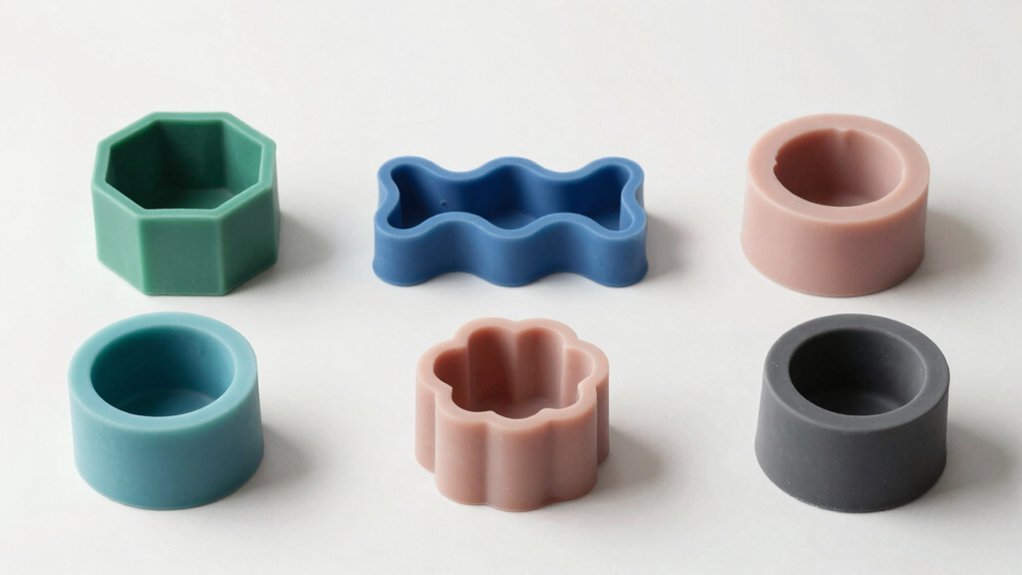

Clean your silicone soap molds with warm soapy water after each use and let them dry completely before storage. For stubborn residues, create a paste with baking soda or use rubbing alcohol to remove persistent scents and oils. Store your molds flat or hanging in a cool, dry place, away from direct sunlight and heavy objects. Following these essential care tips will extend your molds' lifespan, but there's much more to mastering proper mold maintenance.
Essential Tools for Cleaning Silicone Molds

When it comes to maintaining your silicone soap molds, having the right cleaning tools on hand makes all the difference.
You'll need soft sponges or cloths, along with warm soapy water for your regular cleaning routine. Keep baking soda in your supplies to create an effective cleaning paste that tackles stubborn white films and residues.
For thorough cleaning silicone maintenance, you should stock up on rubbing alcohol or acetone and paper towels to remove persistent scents and oils. A washing basin large enough to soak your molds will help loosen tough residues.
With proper care, these essential tools will help preserve your molds' quality and extend their lifespan. Remember to inspect your cleaning tools regularly and replace worn-out sponges or cloths to guarantee they won't damage your molds' surface.
Daily Maintenance and Care Routine

You'll maintain your silicone soap molds' quality by cleaning them with warm, soapy water right after each use.
Make cleaning a daily habit to prevent residue accumulation and guarantee your molds remain in top condition for future soap-making projects.
Store your clean molds flat or hanging in a cool, dry space to preserve their shape and extend their usable life.
Clean After Every Use
Regular cleaning of silicone soap molds after each use is essential for maintaining their quality and extending their lifespan. To clean your silicone molds effectively, use warm soapy water immediately after removing your soap creations. You'll prevent residue buildup and preserve the mold's integrity for future batches.
- Soak stubborn residues in warm, soapy water to dissolve lingering scents and soap remnants.
- Create a baking soda paste to tackle any white film that develops over time.
- Rinse thoroughly to remove all cleaning agents that could affect your next batch.
Once you've completed cleaning, store cleaned molds in a cool, dry location. Make sure they're completely dry before storing to prevent warping and maintain their original shape.
This simple routine will keep your molds in ideal condition for consistent soap-making results.
Proper Storage Methods
Three essential storage practices will keep your silicone soap molds in pristine condition.
First, clean your molds thoroughly after each use and let them air dry completely before storing. Never put away damp molds, as this can lead to mold growth and unpleasant smells.
Second, store your silicone molds in a cool, dry place away from direct sunlight. You'll want to keep them flat or hanging to maintain their original shape. Cover them with plastic wrap or a dust cover to protect against debris and dust buildup.
Finally, avoid stacking molds or placing heavy objects on top of them, as this can cause permanent deformation.
These proper storage methods will extend your molds' lifespan. Remember to inspect them regularly for signs of wear and address any damage promptly.
Removing Stubborn Soap Residue

When soap residue stubbornly clings to your silicone molds, several effective methods can help restore them to pristine condition.
Start by soaking your molds in warm water with dish soap to loosen the buildup. For tougher residues, you've got stronger options at your disposal.
- Create a paste using baking soda and water, then gently work it into the affected areas.
- Apply rubbing alcohol with a paper towel to break down persistent soap residues.
- Heat the molds briefly in the microwave or use hot water to melt away stubborn deposits.
Remember that prevention is key – clean your silicone molds promptly after each use to avoid heavy buildup.
Don't use abrasive tools that might damage the surface, as this can create more places for soap to stick in the future.
Proper Storage Techniques

Proper storage of silicone soap molds plays an essential role in extending their lifespan and maintaining their quality.
Your silicone molds need a cool, dry storage area away from direct sunlight to prevent warping. Before you store them, make sure they're completely clean and dry to avoid mold growth and odors.
Don't stack your molds on top of each other; instead, lay them flat or position them vertically to preserve their shape. Use a protective cover or plastic wrap to keep dust and contaminants off your molds while they're in storage.
It's important to regularly inspect your molds for signs of wear, damage, or deterioration. When you notice any issues that could affect your soap making, it's time to replace them.
Preventing Scent Transfer Between Batches

Maintaining distinct scent profiles between soap batches requires diligent cleaning of your silicone molds after each use.
You'll need to wash your molds thoroughly with warm, soapy water immediately after pouring to prevent fragrance transfer. For stubborn scents, create a baking soda solution and soak your molds before regular cleaning.
- Always dry your silicone molds completely in a well-ventilated space to prevent trapped moisture from harboring unwanted odors.
- Keep dedicated molds for soap making separate from food preparation to avoid cross-contamination.
- Store clean molds in individual plastic bags or containers to shield them from environmental scents.
Dealing With Color Staining and Pigments
Beyond fragrance concerns, color staining presents another challenge for soap makers using silicone molds. When you work with strong pigments, they can leave persistent stains that might affect your future batches.
To protect your molds, it's essential to clean them right after use with warm soapy water before pigments have a chance to set.
Clean molds immediately with warm, soapy water to prevent pigments from setting and causing permanent stains.
If you're dealing with stubborn stains, don't worry – you've got options. Create a baking soda solution by mixing it with water and soak your molds to lift those tough color residues.
For particularly resistant spots, apply a baking soda paste directly to the stained areas. You'll also want to keep your silicone molds out of direct sunlight and regularly inspect them for signs of color bleeding.
Using lighter colors in your soap making can help minimize staining issues altogether.
Heat Treatment and Sanitization Methods
While cleaning your silicone soap molds is essential, understanding the right heat treatment and sanitization methods can make the process more effective.
You'll find that sanitizing silicone molds using controlled heat can both clean and extend their lifespan. For stubborn residues, create a paste with baking soda and water before applying any heat treatment.
- Microwave your molds with water until steaming to loosen residue and sanitize effectively
- Maintain 110°F in a turned-off oven overnight to enhance soap gelling and mold cleanliness
- Use warm water instead of boiling water to prevent warping while cleaning
Extending Your Mold's Lifespan
To guarantee your silicone soap molds last for years, proper care and maintenance are essential. Clean your molds with warm water and mild soap right after each use to prevent residue buildup that can compromise their quality.
Regular cleaning with mild soap and warm water keeps silicone molds pristine and extends their useful life significantly.
Don't use harsh scrubbers or abrasive cleaners, as they'll damage the non-stick surface.
Store your silicone molds in a cool, dry area, either flat or hanging, and keep them away from direct sunlight to maintain their original shape.
Make regular inspections part of your routine to catch any wear and tear early.
Before casting, apply mold release agents to protect the surface and make demolding easier.
These simple practices will greatly extend your molds' lifespan, saving you money and ensuring consistent results in your soap-making projects.
Signs of Wear and When to Replace
Your silicone soap molds will show clear physical signs when they need replacement, including cracks, tears, or visible discoloration that can affect your final product.
You'll notice changes in cleaning performance, like sticky residue that won't wash away or lingering scents that persist despite thorough cleaning.
When your molds start warping, developing white powder residue, or losing their non-stick properties, it's time to invest in new ones to maintain your soap's quality.
Physical Damage Indicators
Maintaining awareness of physical damage to silicone soap molds can prevent costly mistakes and guarantee high-quality results. You'll need to regularly inspect your molds for visible cracks and tears that could compromise their integrity during pouring.
Watch for discoloration or fading, as these changes often indicate deteriorating non-stick properties.
- Check if your mold feels sticky or tacky after cleaning, which suggests the non-stick coating is wearing down.
- Look for warping or deformation that could affect the shape and consistency of your soap bars.
- Pay attention to any persistent odor that won't go away with cleaning, as it means the mold has likely absorbed too many scents.
These physical indicators will help you determine when it's time to replace your molds and maintain the professional quality of your soap-making projects.
Cleaning Performance Changes
When silicone soap molds begin showing changes in their cleaning performance, it's important to evaluate whether they need replacement.
You'll notice these changes when soap becomes harder to release, or residue starts building up despite your thorough cleaning efforts.
Watch for persistent scents or oils that won't wash away, as this indicates your silicone molds have absorbed these substances.
If you're finding that the non-stick properties aren't what they used to be, it's likely time for new molds.
You don't want to risk compromising your quality soap production by using worn-out equipment.
Pay attention to how the molds respond to cleaning – if they're warping or deforming after washing or heat exposure, replace them promptly.
Remember that continuing to use deteriorating molds can lead to unwanted color and scent transfer issues.
Best Practices for Multiple Soap Types
Different soap types require specific cleaning approaches to keep your silicone molds in top condition. When working with melt and pour soaps, you'll want to avoid harsh scrubbers that can damage the silicone surface. Instead, use warm soapy water and gentle cleaning motions to maintain your molds' integrity.
- For cold process soaps, soak your silicone molds in warm water to dissolve stubborn residues and lingering scents.
- Before using new pigments, clean your molds thoroughly and wipe them with dry paper towels to prevent color transfer.
- Implement regular maintenance by inspecting your molds for wear and storing them in a cool, dry place.
Remember that proper cleaning between different soap types helps prevent scent and color cross-contamination, ensuring each batch comes out perfectly every time.
Natural Cleaning Solutions and Methods
Natural cleaning solutions provide a safe and effective way to maintain your silicone soap molds without exposing them to harsh chemicals. You'll find that a mixture of warm water and baking soda effectively removes stubborn residues while preserving your molds' quality.
| Solution | Purpose |
|---|---|
| Baking Soda Paste | Removes white film |
| Warm Water Soak | Loosens residue |
| Vinegar Solution | Breaks down soap buildup |
| Natural Dish Soap | Daily maintenance |
For best results, create a cleaning routine that combines these natural methods. Start with a warm water soak, then apply a baking soda paste to tackle any persistent residue. Follow up with a vinegar rinse to restore clarity, and finish with a light natural dish soap wash. You can also spray rubbing alcohol afterward to sanitize and eliminate lingering scents.
Avoiding Common Cleaning Mistakes
While natural cleaning methods are effective, knowing what not to do is just as important for maintaining your silicone soap molds. When cleaning your molds, you'll want to avoid common mistakes that can lead to permanent damage or reduced performance.
- Don't use harsh chemicals or abrasive scrubbers that can scratch and deteriorate the silicone's non-stick surface.
- Never clean your silicone molds with boiling water, as extreme temperatures can cause warping – stick to warm water instead.
- Skip washing your molds alongside clothing or other items in the dishwasher to prevent contamination.
Remember to clean your molds right after use with gentle, warm soapy water.
Once they're clean, store them flat or hanging in a cool, dry space to preserve their shape.
These simple precautions will help extend the life of your silicone molds considerably.
Frequently Asked Questions
How Do You Keep Silicone Molds Clean?
Clean your silicone molds right after use with warm, soapy water. You'll want to soak tough residues, and you can use a baking soda paste for white film. Don't use harsh cleaners or scrubbers.
How Do You Store Silicone Soap Molds?
Store your silicone soap molds in a cool, dry area away from sunlight. Make sure they're completely dry before storing. Don't stack them; instead, keep them flat or hanging. Cover with plastic wrap to prevent dust.
How to Clean Silicone Molds for Soap?
Clean your silicone molds with warm, soapy water right after use. For tough residue, make a baking soda paste and gently scrub. Don't use harsh cleaners, and rinse thoroughly before drying completely.
Do Silicone Molds Need to Be Oiled?
No, you don't need to oil silicone molds. They're naturally non-stick and perform best without added lubricants. In fact, using oil can damage the silicone's non-stick properties and make future demolding more difficult.
In Summary
Your silicone soap molds will last for years when you follow proper cleaning and storage techniques. Don't skip daily maintenance, and always address stubborn residue right away. Remember to store your molds flat, keep them away from direct sunlight, and check regularly for signs of wear. By combining these care methods with natural cleaning solutions, you'll protect your investment and guarantee consistently beautiful soap results.