Eight effective DIY soap release agents you can use include mineral oil, coconut oil, talcum powder, olive oil, canola oil, dish soap mixed with water, petroleum jelly, and a homemade mixture of isopropyl alcohol with dish soap. Mineral oil remains the top choice for its easy cleanup and reliable performance, while natural oils offer eco-friendly alternatives. For intricate molds, try freezing them for 10-20 minutes combined with your chosen release agent. Professional techniques and specific combinations will help you achieve flawless results.
Our Recommended Products on Amazon


As an Amazon Associate we earn from qualifying purchases.
Natural Oil-Based Release Methods
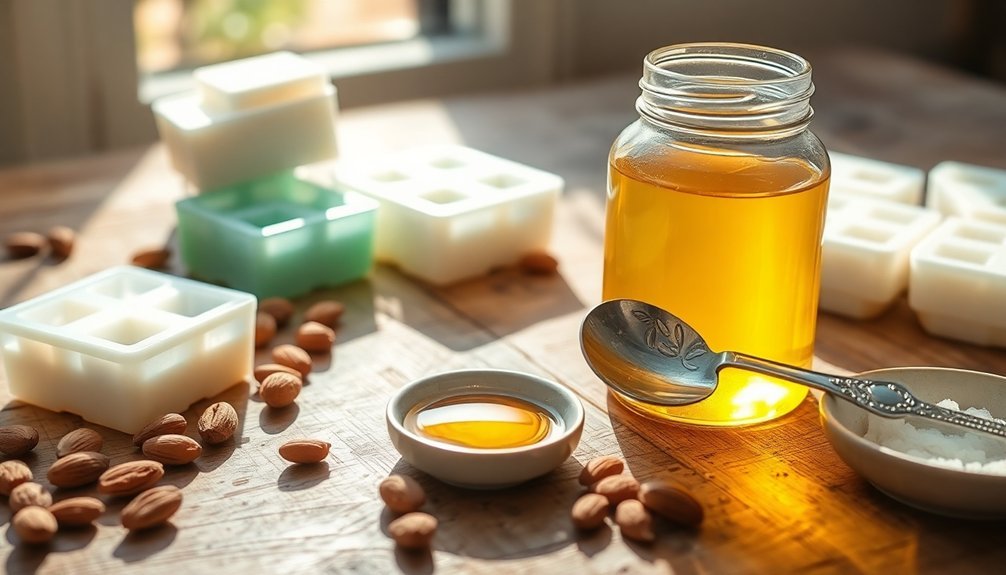
Natural oils serve as excellent mold release agents in soap making, offering both effectiveness and accessibility.
When you're choosing between natural oils, mineral oil stands out as a top choice due to its easy cleanup and reliable performance. You'll find that it creates a protective barrier that helps your soap slide effortlessly from the mold.
If you'd like to try alternatives, coconut oil can work well, though you'll need to plan for extra cleaning time.
For the best results, apply your chosen natural oils using an atomizer bottle to create an even, thin coating. This method prevents pooling and guarantees uniform soap surfaces.
Before committing to any release agents, it's smart to test them on small batches first, as some natural oils might react differently with your specific soap formula.
Mineral-Based Release Solutions
You'll find mineral oil spray the most reliable option among mineral-based release agents, offering consistent results when applied evenly through an atomizer bottle.
While talcum powder works well for intricate molds, you'll need to dust it lightly and tap out excess to prevent any residue on your final soap.
Clay-based solutions, though less common, can provide excellent release properties when mixed with a small amount of mineral oil, particularly for detailed artistic soap designs.
Talcum Powder Application Methods
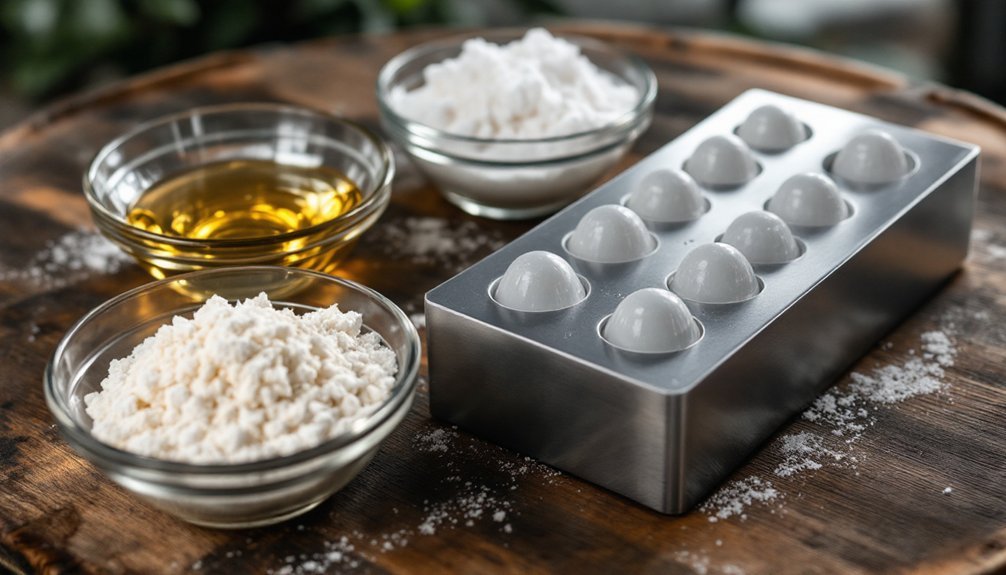
When working with soap molds, talcum powder serves as a reliable and cost-effective release agent that creates a protective barrier between your soap mixture and the mold's surface. You'll achieve the finest results by applying a thin, even coating while avoiding clumps that could mar your soap's finish.
| Application Step | Key Consideration |
|---|---|
| Initial Dusting | Use light, even strokes |
| Coverage Check | Focus on intricate details |
| Excess Removal | Tap mold gently to remove extra powder |
For ideal results, verify you're working in dry conditions to prevent moisture from compromising the talcum powder's effectiveness. Pay special attention to detailed areas of your mold, as talcum powder excels at reaching small crevices. You'll want to dust the mold thoroughly, then tap it lightly to remove any excess powder before pouring your soap mixture.
Mineral Oil Spray Benefits
Mineral oil spray stands out as a versatile release agent for both melt and pour and cold process soapmaking.
You'll find that a light coating guarantees your soaps release effortlessly from molds while maintaining their pristine appearance.
When you're looking for a reliable mold release solution, mineral oil offers distinct advantages. It won't leave the greasy residue that's common with other petroleum-based products, and you can easily remove any excess with alcohol and a cloth.
You'll appreciate how this cost-effective option prevents your soaps from sticking, reducing the risk of damage during demolding.
For DIY soap makers, mineral oil's accessibility and effectiveness make it an ideal choice.
You'll save time and money while achieving professional results, as it works consistently across different mold types and soap formulations.
Clay-Based Release Solutions
Clay-based release agents take soap mold preparation to the next level. When you're looking for effective mold releases, these mineral-based solutions offer superior non-stick properties that'll make your soap-making process smoother.
You'll find that clay-based agents, particularly those containing mineral oil, create an exceptional barrier between your soap and the mold. By applying a thin, even layer before pouring, you're ensuring your soaps will pop out easily without leaving any residue behind.
These solutions work wonderfully for both melt and pour and cold process methods.
What's particularly impressive is how these agents help prevent soap sweating while maintaining your product's professional finish. You'll notice the difference in quality when you use these mineral-based releases, as they provide consistent results and cleaner unmolding every time.
Kitchen-Friendly Release Alternatives

For successful soap making in your kitchen, you'll find several common household items that work effectively as release agents.
Mineral oil stands out as a versatile option that works well for both MP and CP soaps, leaving your molds clean without any greasy residue.
You can spray olive oil or canola oil as alternatives, though be aware they might saponify during the process.
If you prefer avoiding oils altogether, try freezing your molds for 10-20 minutes – this creates tiny air bubbles that naturally release your soap.
For a liquid solution, mix dish soap with water to create a gentle release agent.
Consider lining your molds with parchment or freezer paper, which acts as a physical barrier and eliminates the need for additional release agents while ensuring easy removal.
Professional-Grade Release Agents
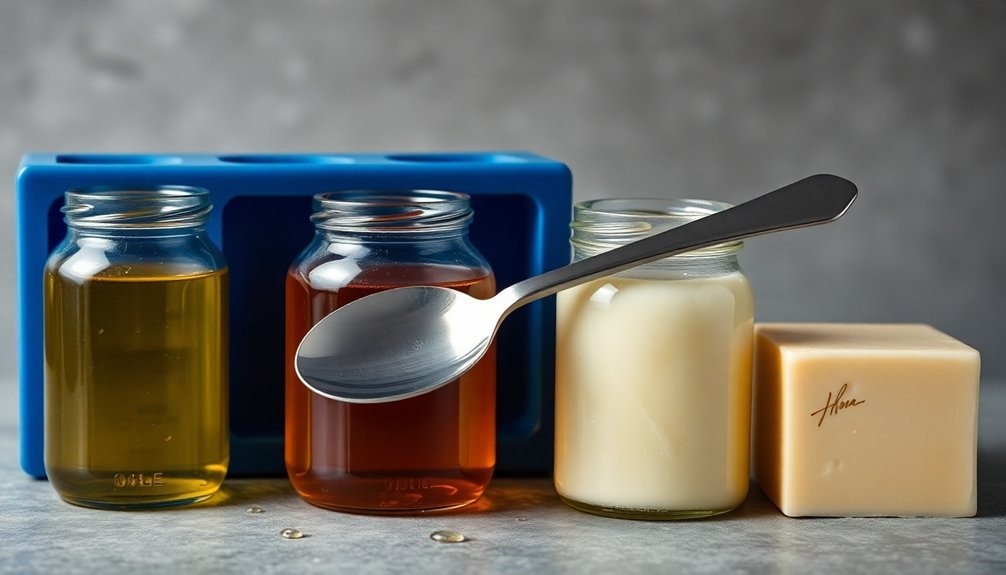
Professional-grade release agents like E302 Rocket Release and Mann-Ease Release 200 offer you superior mold separation and reduced maintenance time compared to kitchen alternatives.
You'll find these specialized formulations create an ultra-thin lubricating layer that prevents soap from sticking while minimizing residue buildup on your molds.
When you're ready to scale up your soap production, these commercial solutions prove cost-effective by delivering consistent results and extending the life of your molds.
Commercial Release Agent Benefits
Commercial release agents deliver exceptional performance that surpasses DIY alternatives in the soap-making process. When you use silicone-based sprays, you'll create a thin, uniform layer of lubrication that guarantees your soaps release effortlessly from molds.
These professional products considerably reduce the time you'll spend cleaning and maintaining your equipment.
You'll find that commercial release agents are specifically engineered to work with various soap-making materials, offering superior compatibility compared to homemade solutions. The aerosolized application means you'll get even coverage without worrying about pooling or uneven distribution.
Proper Application Techniques
When applying professional release agents to your soap molds, proper technique makes all the difference between success and frustration.
You'll need to start by thoroughly cleaning your mold's surface to remove any residue that could interfere with the effective release agent's performance.
Before using silicone spray, shake the can vigorously to guarantee proper pressure buildup. Apply a thin, even coat to your mold, being careful to avoid pooling or excess buildup that could affect your final soap's appearance.
You'll want to be patient and allow the release agent to dry completely according to the manufacturer's instructions before pouring your soap mixture.
This attention to detail in your application process won't just make demolding easier – it'll also extend your mold's lifespan and improve your overall soap-making efficiency.
Cold Process Soap Release Techniques
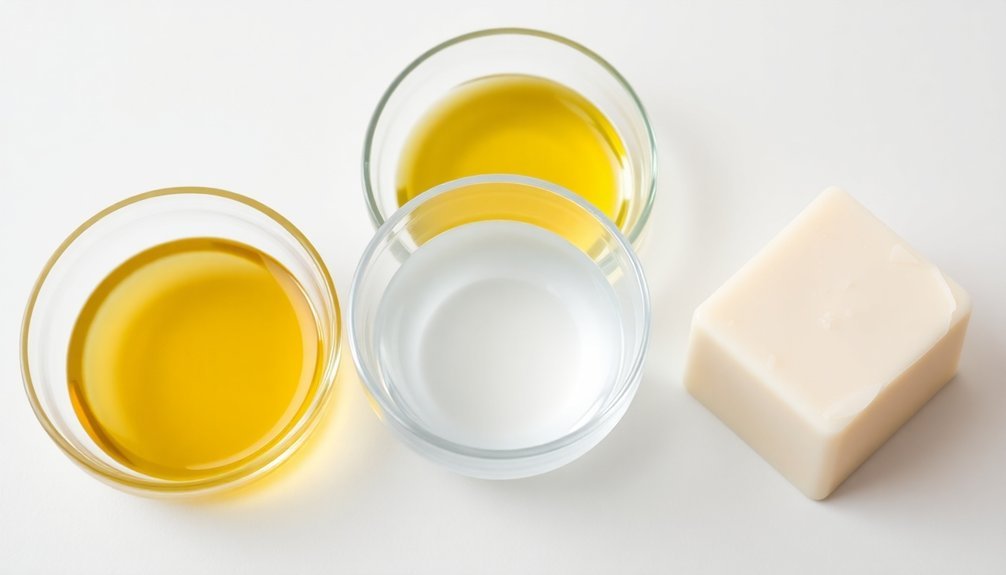
Making cold process soap requires careful attention to release techniques, as the chemical reactions during saponification can cause your soap to stubbornly stick to molds.
Proper mold release is essential in cold process soapmaking, as the intense saponification process can leave your creations permanently trapped.
You'll find that applying a light coating of mineral oil to your mold surface creates an effective barrier that prevents sticking while remaining skin-safe.
For a reliable release method, try freezing your molds for 10-20 minutes before removing the soap. This creates tiny air bubbles that help pop the soap out effortlessly.
If you're looking for an alternative solution, mix castor oil with isopropyl alcohol and spray it lightly on your molds – this combination provides excellent release without leaving greasy residue.
Remember to maintain your molds by cleaning them thoroughly after each use and applying a fresh coat of release agent to guarantee consistent results.
Temperature-Control Release Strategies
Temperature control offers one of the most reliable methods for releasing handmade soap from molds without additional agents.
By placing your silicone mold in the freezer for 10-20 minutes, you'll create air bubbles that naturally assist in the release process.
You'll find this temperature-control technique particularly effective in dry climates, as excess moisture can cause your soap to sweat and stick.
When using this method, it's essential to remove your soap immediately after taking the mold from the freezer – don't wait, as the soap can warm up and reattach to the surface.
This strategy works exceptionally well with intricate mold designs where traditional release agents might fall short.
As an added benefit, you'll reduce your reliance on chemical releasing agents, making your soap-making process more natural and straightforward.
Release Solutions for Complex Mold Designs
Complex mold designs demand specialized release strategies beyond basic temperature control.
Successfully releasing complex molds requires carefully planned techniques that go well beyond simply controlling heat and cold.
When you're working with intricate silicone molds, a light coating of mineral oil proves highly effective. For challenging mold making projects, you can opt for professional silicone spray release agents like A353, which create a thin lubrication layer perfect for detailed patterns.
If you prefer natural alternatives, try applying petroleum jelly or lanolin using an oil atomizer for even coverage.
You'll find that combining the freezing technique with your chosen release agent enhances results – simply place your molds in the freezer for 10-20 minutes.
For a DIY solution, mix isopropyl alcohol with dish soap, though you'll want to test this combination first.
Each of these methods helps guarantee your detailed soaps release cleanly without damaging intricate designs.
Eco-Friendly Release Agent Options
When choosing release agents for your soap molds, you'll find plenty of natural alternatives that are both effective and environmentally responsible.
These eco-friendly options won't harm the environment and will still guarantee your soaps release easily from their molds.
Consider these natural release agents for your next soap-making project:
- Natural oils like coconut and olive oil provide excellent non-toxic release properties while nourishing your skin.
- Beeswax creates a protective barrier when melted and applied to mold surfaces.
- Cornstarch mixed with water forms a biodegradable paste that's both safe and effective.
- Vegetable shortening offers reliable release properties while remaining plant-based.
You can enhance any of these eco-friendly release agents by adding essential oils, which contribute pleasant scents and antimicrobial benefits to your soap-making process.
Frequently Asked Questions
What Can I Use as a Mold Release Agent?
You can use mineral oil, silicone spray, or petroleum jelly as effective mold release agents. If you're on a budget, try freezing your molds for 10-20 minutes or use non-saponifying cooking sprays.
How to Keep Soap From Sticking to Mold?
You'll prevent soap from sticking by freezing molds for 10-20 minutes, applying mineral oil or silicone spray before pouring, or using petroleum jelly in detailed areas. Regular mold cleaning also guarantees easier releases.
What Is a Good Alternative to Mold Release Spray?
You'll find mineral oil works great as a mold release alternative. You can also try petroleum jelly (used sparingly), lanolin for detailed molds, or a mix of isopropyl alcohol and dish soap.
What Is a Good Release Agent for Silicone Molds?
You'll find mineral oil works great as a release agent for silicone molds. It's affordable and creates a smooth barrier. If you need alternatives, try lanolin for detailed molds or a silicone-based spray.
In Summary
Making your own soap release agents is both cost-effective and practical. You'll find that natural oils, mineral-based solutions, and kitchen staples can work just as well as commercial products. Whether you're using silicone, plastic, or wooden molds, you've got multiple DIY options at your disposal. Remember to test your chosen release agent on a small area first, and you'll be unmolding perfect soap bars every time.