
Choose your soap mold based on your project's specific needs. Flexible silicone molds work best for intricate designs and easy unmolding, while rigid molds provide better support for heavy formulations and larger batches. If you're making detailed patterns, go with silicone's ability to capture fine elements. For bigger production runs, wood or rigid molds offer stability and even heat distribution. Understanding each mold type's unique properties will guide you toward better soaping success.
Key Differences Between Rigid and Flexible Molds

When choosing soap molds, understanding the fundamental differences between rigid and flexible options will help you make the right selection for your project.
Rigid molds offer superior structural support and durability, making them ideal for large-scale soap making. However, you'll need to line them to prevent your soap from sticking.
Rigid soap molds excel in strength and longevity, perfect for batch production, but require proper lining to ensure smooth release.
In contrast, flexible molds don't require lining and allow for easier demolding, though they might need external support when holding heavy soap batter.
If you're creating soaps with intricate designs, flexible molds are your best choice as they can stretch to accommodate complex shapes and undercuts. Rigid molds often require multiple pieces to achieve similar results.
While rigid molds promote faster hardening due to their insulating properties, flexible molds may extend curing time, but you can speed this up using sodium lactate.
Material Properties and Heat Resistance

The materials used in soap molds play a direct role in their heat resistance and durability during the soap-making process.
When choosing your mold, you'll need to take into account that silicone offers superior heat resistance, withstanding temperatures up to 400°F without warping. This makes flexible molds ideal for handling the intense chemical reactions during soap curing.
While rigid molds provide excellent structural support, they're more susceptible to heat damage and may warp under high temperatures.
You'll also need to be cautious about material interactions with sodium hydroxide. Only use stainless steel tools and equipment, as this chemical can react dangerously with other metals.
Remember that rigid molds require lining to prevent sticking, while flexible molds like silicone release soap easily and allow for more intricate designs.
Unmolding Techniques and Success Rates

Successfully unmolding your soap depends heavily on proper timing and technique. You'll find that different unmolding techniques work best for specific mold types.
For rigid molds, try freezing your soap for an hour before removal, which greatly reduces sticking and prevents soap damage. When using HDPE molds, you can disassemble them after 24-36 hours for easier access.
Lining your mold with greaseproof paper, baking paper, or cling film is essential for both rigid and flexible molds. This simple step dramatically improves success rates while giving your soap bars a smoother finish.
Don't rush the process – letting your soap cure properly guarantees it maintains its shape during unmolding. With proper lining and timing, you'll achieve consistent results whether you're working with rigid or flexible molds.
Cost Considerations and Long-Term Value

Making a smart investment in soap molds requires careful consideration of both immediate costs and long-term value. While rigid molds have higher upfront costs, their durability makes them more cost-effective for frequent soap makers.
You'll find that flexible silicone molds are cheaper initially but may need replacement sooner, affecting their long-term value.
- Rigid molds can withstand repeated use and maintain their shape longer
- Silicone molds excel at complex designs but may wear out quickly
- Production volume impacts cost-effectiveness – rigid molds suit larger batches
- High-quality wooden molds often prove more economical over time
- Initial savings on flexible molds might be offset by replacement costs
When choosing between soap molds, consider how often you'll use them. If you're planning regular production, investing in durable rigid molds could save you money despite the higher initial investment.
Design Capabilities and Shape Restrictions

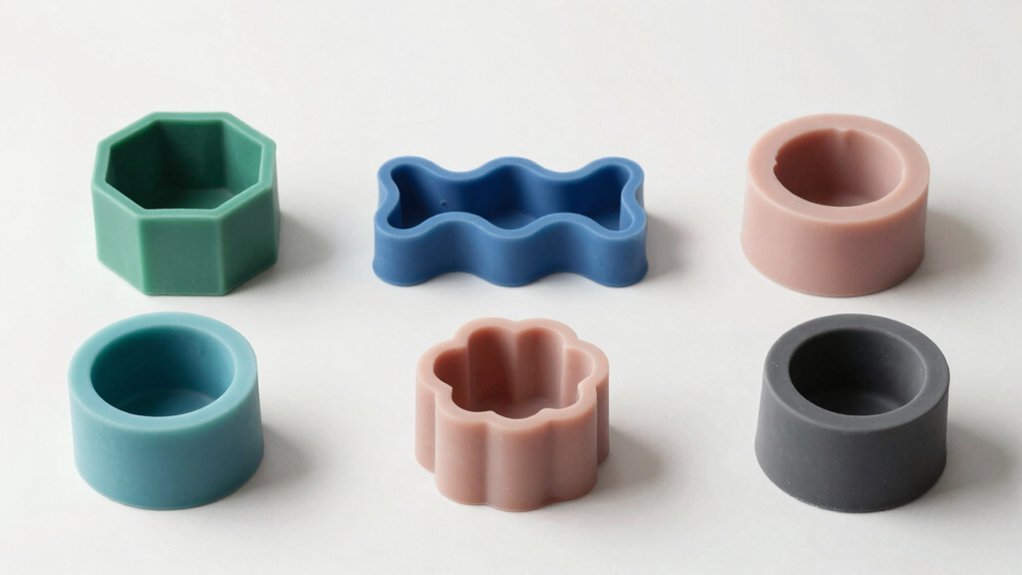
When you're planning intricate soap designs with detailed patterns or undercuts, flexible silicone molds offer superior capabilities compared to rigid alternatives that may require complex multi-piece construction.
You'll find that silicone molds excel at reproducing fine details while allowing easy demolding, though they mightn't maintain their shape integrity for extensive production runs.
Your design possibilities are further influenced by mold depth, as deeper cavities can affect both the curing process and the ease of removing finished soaps, regardless of whether you choose flexible or rigid materials.
Complex Vs Simple Designs
The design complexity of your soap molds directly influences your choice between flexible and rigid options. When you're working with intricate shapes and detailed patterns, flexible molds offer superior performance due to their ability to stretch and release easily.
While rigid molds work well for basic soap shapes, they'll require multiple pieces to achieve complex designs, making the unmolding process more challenging. You'll find that silicone molds deliver smooth finishes and better detail reproduction.
- Flexible molds stretch around undercuts, preserving delicate design elements
- Rigid molds may need sectional construction for intricate patterns
- Simple bar shapes work equally well in both mold types
- Silicone molds excel at creating layered or themed designs
- Your soap's final appearance benefits from flexible molds' smooth surface quality
Mold Depth Limitations
Successful soap designs depend heavily on your mold's depth capabilities and structural limitations.
When choosing between rigid and flexible silicone molds, you'll need to take into account how mold depth limitations affect your design complexity.
Rigid molds often restrict your creative options due to their structural constraints, especially with deeper designs. You'll find that these molds may require multiple pieces to achieve intricate shapes, which can complicate your demolding process.
In contrast, flexible silicone molds offer greater versatility, easily accommodating deeper patterns and complex undercuts. They'll stretch to conform to your soap batter while maintaining detailed designs.
Remember that deeper molds require more soap batter, which affects curing time.
If you're working with rigid molds, you'll need to carefully take into account height and width measurements to guarantee successful unmolding of your finished soap.
Maintenance and Storage Requirements
Proper storage and maintenance of soap molds can drastically extend their lifespan and guarantee consistent, high-quality results.
Taking care of your soap molds isn't just good housekeeping – it's an investment in consistently beautiful, professional-quality soaps.
You'll need to store your silicone molds in a cool, dry place and avoid placing heavy items on top to prevent warping. For rigid molds, thorough cleaning after each use is essential to prevent soap residue buildup, which can affect unmolding.
If you're using wood molds, don't forget to line them with freezer paper before each use.
- Store silicone molds on racks or in plastic bins
- Keep molds away from direct sunlight and heat sources
- Inspect all molds regularly for signs of wear or damage
- Clean thoroughly after each use to prevent residue buildup
- Avoid stacking flexible molds to maintain their shape
Best Applications for Each Mold Type
Understanding how different mold types excel in specific applications will help you select the perfect match for your soap-making projects. You'll find each type offers unique advantages for specific soaping scenarios.
| Mold Type | Best Application |
|---|---|
| Silicone | Detailed designs, artistic soaps, small batches |
| Wood | Large batches, gel phase soaping, uniform curing |
| Rigid | Heavy soap batters, consistent shapes, professional production |
| Plastic | Basic shapes, beginner projects, budget-friendly options |
| Recycled | Small test batches, custom sizes, eco-conscious production |
When working with intricate patterns, you'll want silicone molds for their flexibility and easy release of finished soap. Wood molds are your go-to for larger batches requiring even heat distribution. If you're making heavier formulations, rigid molds provide the structural support needed. Plastic molds work well for simple designs, while recycled molds offer sustainable alternatives for experimental batches.
Frequently Asked Questions
Which Molds Best for Soap Making?
You'll find silicone molds are best for easy unmolding and professional results. If you're making large batches, choose rigid wood or plastic molds, but don't forget to line them properly.
Why Is My Soap Sticking to the Mold?
Your soap's sticking because you haven't lined your rigid mold properly, or you're trying to unmold too early. Use freezer paper or greaseproof paper, and make certain your soap's fully hardened before removal.
What Is a Flexible Mold?
A flexible mold is what you'll use for easy soap removal – it's made from bendable materials like silicone that you can twist and stretch. You'll find it's perfect for detailed designs and intricate shapes.
Are Silicone Molds Good for Soap Making?
Yes, you'll find silicone molds excellent for soap making. They're flexible, durable, and release soap easily. Your designs will come out beautifully detailed, and you won't need to line them before use.
In Summary
You'll find both rigid and flexible soap molds have their place in your soapmaking journey. Choose rigid molds when you need durability and precise shapes, or opt for flexible silicone when you want easy unmolding and versatility. Consider your budget, design needs, and storage space when deciding. Whatever you select, proper care and maintenance will extend your mold's lifespan and guarantee consistent results.

Leave a Reply