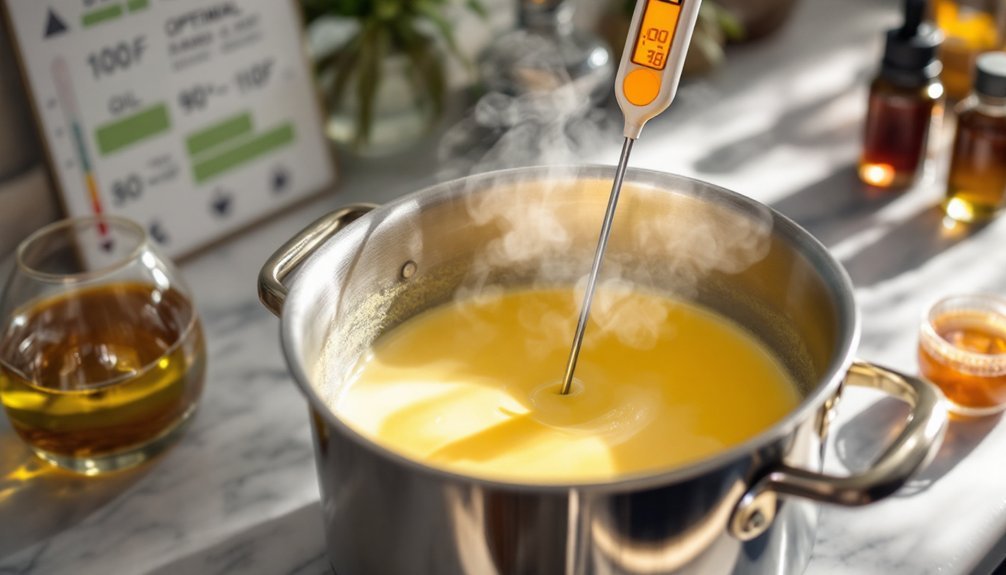
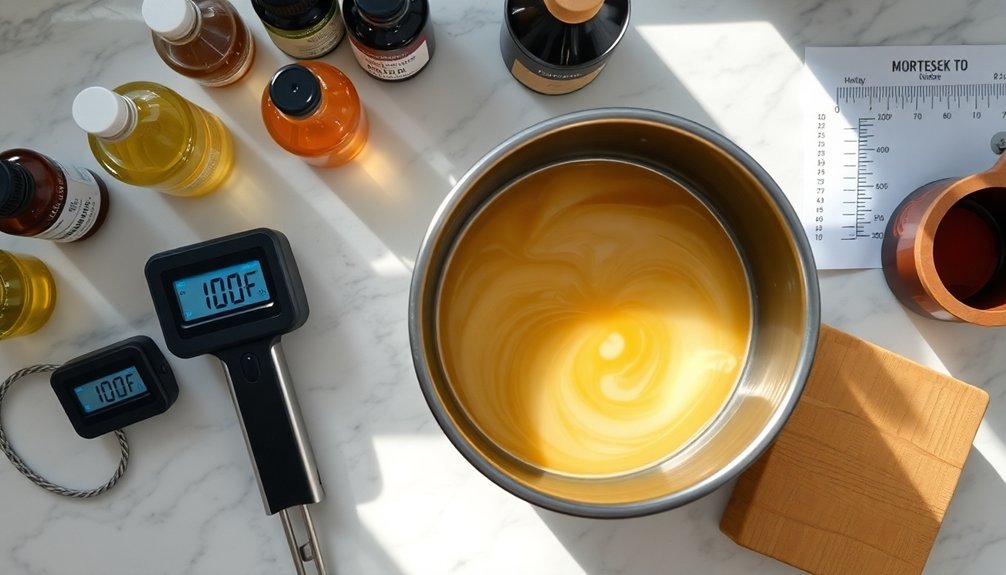
For successful cold process soap making, you'll want to keep lye solution and oils between 90-110°F (32-43°C), maintaining a temperature differential of no more than 10°F between them. Hard oils should be melted at 120-130°F before mixing. Work cooler (70-90°F) for intricate designs, or hotter (115-130°F) to promote gel phase and vibrant colors. Specialty additives like milk require lower temperatures (100-110°F), while certain colorants perform better at higher ranges. These temperature guidelines will transform your soaping results.
The Ideal Range: 90-110°F for Balanced Saponification
Three key factors determine successful cold process soap making: your recipe, technique, and temperature control.
When mixing your ingredients, maintaining an ideal temperature range between 90-110°F (32-43°C) guarantees a balanced saponification reaction that's neither too slow nor too fast.
You'll want to keep your lye and oil temperatures within 10 degrees of each other in this range. This prevents false trace—when oils solidify prematurely rather than truly emulsifying.
Below 90°F, hard oils may begin to solidify too quickly, while temperatures above 110°F can accelerate the process excessively.
This sweet spot allows for proper melting of hard oils and facilitates smooth emulsification.
Soapmakers who consistently work within the 90-110°F range typically achieve more reliable soap quality and predictable outcomes batch after batch.
Working With Hard Oils: Temperature Considerations for Butters and Waxes
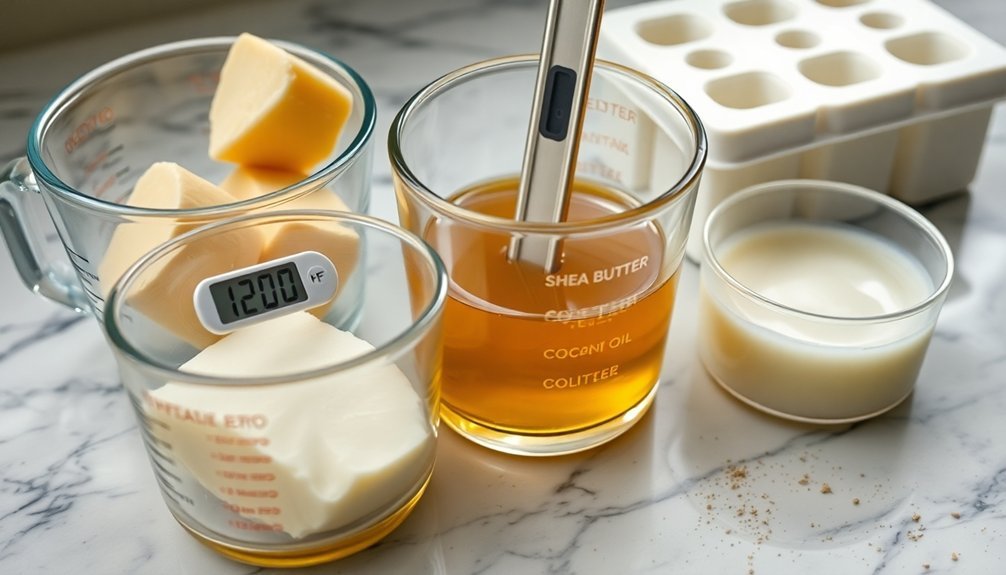
While the 90-110°F range works well for general soap making, specialty ingredients like hard oils and butters demand specific temperature attention.
Hard oils such as cocoa butter (melting point: 93°F), shea butter (84°F), and palm oil (96°F) must be fully melted at 120-130°F for ideal emulsification.
When working with high stearic fats, this elevated temperature range prevents false trace and guarantees proper saponification.
Always melt solid oils before adding liquid oils—cold temperatures can cause hard oils to resolidify upon contact with lye, creating clumps and compromising your batch.
For successful soap making with butters and waxes, monitoring temperature is critical.
Keep your lye solution and oil mixture within 10 degrees of each other to achieve seamless integration and the smooth, creamy texture you're aiming for.
Preventing False Trace: Temperature Management for Clear Saponification
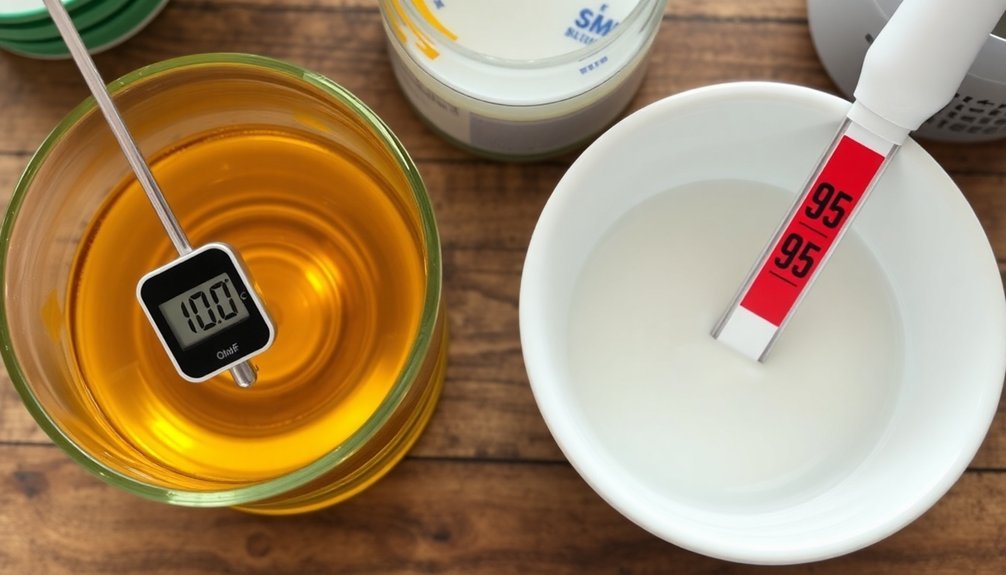
When you're working at high temperatures above 120°F, your soap batter can accelerate unexpectedly, giving you less time to add colorants or fragrance before reaching trace.
This heat-induced acceleration often leads to thicker soap batter that's difficult to pour into molds and creates challenges for intricate swirl designs.
You'll need to adjust your process accordingly by working more quickly or slightly reducing your temperatures if you notice your soap setting up too fast during hot weather or when using reactive fragrance oils.
Subheading Discussion Points
Achieving proper temperature balance stands as one of the most critical factors in preventing false trace during cold process soap making. You'll want to maintain your lye solution and oil mixture within 10°F of each other, ideally between 100°F and 110°F. This temperature range guarantees all soap making oils remain fully melted and properly homogenized.
| Temperature Issue | Effect on Soap Batter | Prevention Method |
|---|---|---|
| Cold oils (below 100°F) | Premature thickening | Use consistent heat source |
| Hot lye (above 120°F) | Accelerated chemical reaction | Cool to body temperature |
| Temperature disparity | Solidified fatty acids | Match temperatures within 10°F |
| Cold environment | Grainy texture | Work in warm room |
| Fluctuating temperatures | Inconsistent saponification | Monitor with reliable thermometer |
When your oils appear clear and free of cloudiness, you're at the ideal temperature for your soap recipes to proceed without false trace complications.
Heat-Induced Acceleration Problems
Although balanced temperatures promote proper saponification, excessive heat can trigger serious acceleration problems in your cold process soap. When temperatures exceed 120°F, you'll notice your batter thickening too rapidly, giving you minimal working time for designs or swirls.
To prevent this heat-induced acceleration, maintain your lye solution and oils between 100°F and 110°F. You'll want to keep them within 10 degrees of each other to avoid temperature shock during mixing conditions. An infrared thermometer is invaluable for monitoring these ideal temperatures precisely.
While you're working to prevent false trace caused by cooler temperatures, don't swing too far in the opposite direction. Overheated oils and butters can rush emulsification, compromising your design plans.
The sweet spot for successful saponification lies in careful temperature management—not too cool, not too hot.
Cool Temperature Soaping: Benefits of the 70-90°F Range
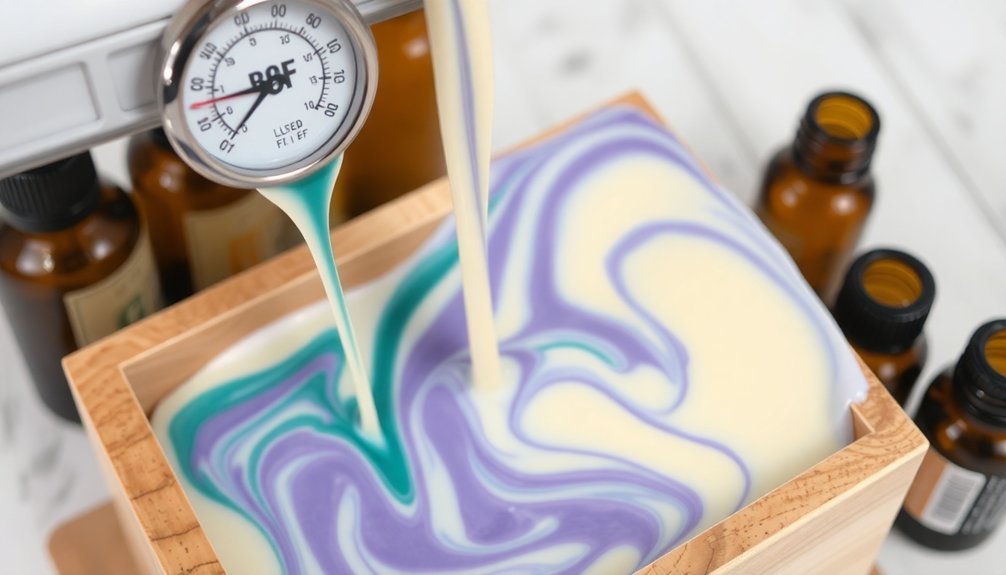
Working at cool temperatures between 70-90°F gives you considerably more time to create intricate designs before your soap reaches trace.
You'll notice that colorants blend more predictably at these lower temperatures, without the acceleration that can occur when oils and lye are too hot.
This temperature range is particularly valuable when working with complex swirls or layers, as your soap batter remains fluid longer, allowing for precise pattern development.
Slow Trace Advantages
When you soap in the cooler 70-90°F range, you'll enjoy considerably more working time before your mixture reaches trace. This extended window is invaluable for soap makers attempting intricate designs or complex layering techniques.
The slow trace achieved at cool temperatures gives you ample opportunity to mix colors thoroughly and pour with precision.
You'll also find that these lower temperatures help prevent common soap defects. Glycerin rivers, alien brain formations, and soda ash become less likely when you're not fighting against rapid saponification.
Your mixing oils maintain a smoother consistency throughout the process, allowing for better control of your final product.
For those working with temperamental essential oils or heat-sensitive fragrances, this temperature range offers protection against sudden seizing, preserving both your ingredients and your creative vision.
Preventing Color Acceleration
Color stability represents another compelling reason to embrace cool temperature soaping in the 70-90°F range. When you work within this cooler temperature spectrum, you'll prevent color acceleration that often occurs at higher heat levels. Your vibrant colorants will stay true throughout the saponification process rather than darkening or morphing unexpectedly.
This temperature range offers additional benefits beyond color preservation. You'll minimize glycerin rivers—those unwanted streaky formations that can mar your soap's appearance.
Even heat-generating fragrance oils become more manageable at cooler temperatures, reducing their potential to alter your carefully planned design.
The cooler approach also provides a more manageable trace, giving you ample time to create intricate designs and perfect layering techniques. Your finished soaps will exhibit smoother surfaces with fewer soap defects like soda ash, ultimately enhancing their aesthetic qualities.
Hot Temperature Techniques: When to Soap at 115-130°F
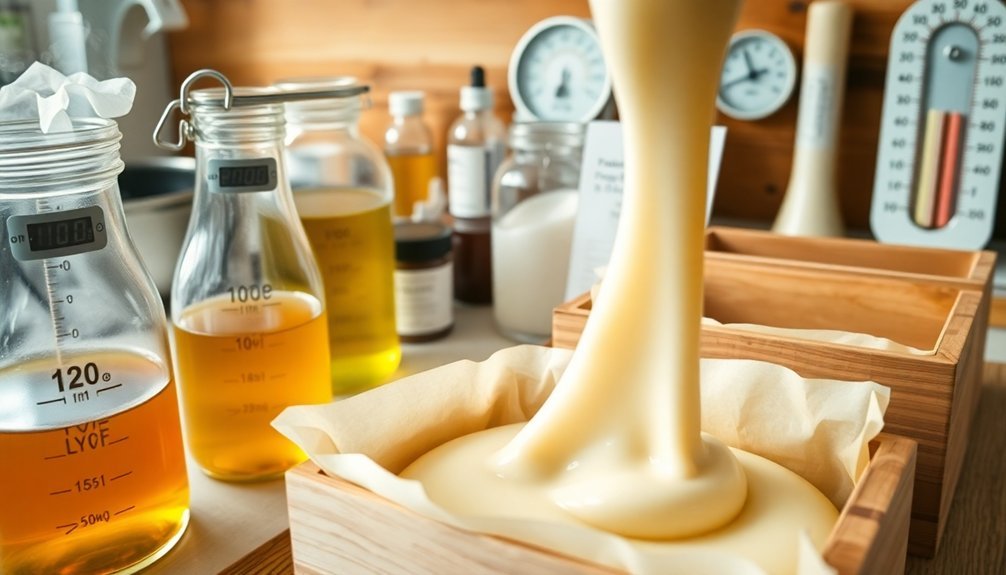
Although many soapmakers prefer working at room temperature, elevating your soap temperatures to the 115-130°F range offers distinct advantages for specific formulations and desired outcomes.
This higher temperature range effectively promotes gel phase, enhancing your cold process soap's color vibrancy and appearance.
When working with recipes containing high soft oil content, these elevated temperatures accelerate saponification while reducing soda ash formation.
You'll want to keep your lye solution and oils within 10 degrees of each other for ideal mixing conditions and consistent results.
This temperature range also helps prevent false trace, ensuring your soap batter remains properly emulsified.
Additionally, soaping at 115-130°F proves particularly beneficial when using fragrances that require heat for proper incorporation, helping you avoid issues like seizing that can compromise your final product.
Temperature Differential: Keeping Lye and Oils Within 10 Degrees
The cornerstone of successful cold process soapmaking lies in maintaining a temperature differential of no more than 10 degrees between your lye solution and oils. This precision prevents false trace and guarantees proper emulsification process when blending your ingredients.
When your lye solution is considerably colder than your oils, it may solidify them upon contact. Conversely, an excessively hot lye solution accelerates saponification too quickly. For ideal soap quality, aim for both components to fall within the perfect soaping temperature range of 120°F to 130°F.
Consistently monitoring temperatures throughout your process gives you greater control over trace development and final texture. By keeping these temperatures closely aligned, you'll create a more uniform mixture that's less likely to separate, ultimately resulting in smooth, well-textured bars.
Adjusting Temperatures for Specialty Additives and Colorants
Specialty additives and colorants require careful temperature management to achieve ideal results in your cold process soap. When working with milk or citrus juices, maintain cooler soaping temperatures (100-110°F) to prevent scorching during saponification.
Conversely, colorants like LabColors benefit from higher temperatures (131-160°F) to promote a vibrant gel phase.
Many fragrance oils can seize if you don't stay within their preferred temperature range (90-110°F), causing premature thickening. For natural colorants like turmeric, lower temperatures yield more consistent hues without accelerating trace.
Always test additives in small batches first—temperature requirements vary greatly between ingredients. This preliminary testing helps you identify the perfect temperature balance for your specific formulation, ensuring your specialty additives perform as expected without unwanted reactions.
Frequently Asked Questions
What Temperature Should Cold Process Be?
You'll want to keep your cold process soap temperatures between 90-110°F (32-43°C). Make sure your oils and lye solution are within 10 degrees of each other, ideally around 100°F (38°C) for best results.
What Is the Correct Temperature Range for Cold?
For cold process soap making, you'll want to keep your lye and oils between 90-110°F (32-43°C). Maintaining them within 10 degrees of each other, ideally around 100°F (38°C), guarantees ideal saponification.
What Is the Best Temperature for Saponification?
The best temperature for saponification is between 90°F to 110°F (32°C to 43°C). You'll want to keep your lye solution and oils within 10 degrees of each other, ideally around 100°F (38°C).
What Is the Best Temperature for Curing Soap?
Cure your soap in a well-ventilated area between 70-100°F (21-38°C). You'll want to maintain this temperature range for 4-6 weeks to guarantee proper water evaporation and complete saponification for best quality.
In Summary
Don't overcomplicate temperature management in your soaping journey. Whether you're working in the balanced 90-110°F range, going cooler for intricate designs, or heating things up for difficult oils, success comes from understanding your specific recipe needs. Keep your lye and oils within 10 degrees of each other, adjust for additives, and you'll soon develop an intuitive feel for what works best for your signature soaps.

Leave a Reply