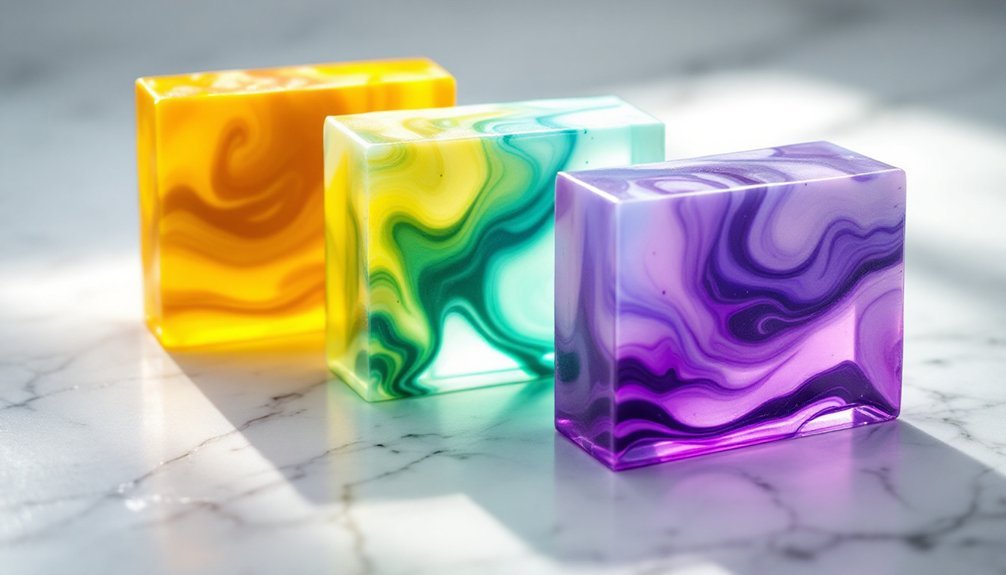
Natural soap colorants give you gorgeous, stable hues that won't bleed between layers. You'll find rich reds from madder and alkanet roots, vibrant greens from spirulina and chlorella powders, and earthy tones from Brazilian and Cambrian clays. Spices like turmeric and paprika deliver warm yellows and oranges, while natural oxides and ultramarines provide deep, lasting colors. These plant-based and mineral options offer endless possibilities for your next soap creation.
Root-Based Colorants: Madder and Alkanet for Rich Reds

The fascinating world of root-based soap colorants centers on two powerhouse ingredients: madder and alkanet roots. If you're seeking natural colorants for your soap-making projects, these safe alternatives offer stunning possibilities.
You'll find madder root particularly versatile, producing red hues ranging from delicate pink to deep crimson. While you might need higher concentrations for richer shades, the results are worth the experimentation.
Alkanet root delivers beautiful purple shades to blue tones, with its color outcome influenced by your soap's pH levels.
Alkanet root creates stunning purples and blues in your soap, with the final color determined by pH balance.
As eco-friendly, non-toxic options, both roots cater perfectly to environmentally conscious consumers. You'll want to start with small test batches to perfect your desired shade, as results can vary based on your soap base and ingredient combinations.
These natural powerhouses offer consistent, non-bleeding colors that'll transform your soap-making adventures.
Botanical Powders: Spirulina and Chlorella for Steadfast Greens

Two remarkable algae powders, spirulina and chlorella, stand out as nature's most reliable green colorants for soap making.
These non-bleeding colorants deliver steadfast greens that won't migrate between layers, ensuring your designs stay crisp and clean.
You'll find that spirulina creates vibrant green hues while packing your soap with protein and antioxidants.
Chlorella offers a deeper green shade and brings its own set of vitamins and minerals to your soap base.
Since they're approved for cosmetic use, you won't need to worry about harmful additives often found in synthetic dyes.
For best results, stick to a maximum 1-2 teaspoons of these botanical powders per pound of soap base.
This ratio will give you beautiful natural color without affecting your soap's texture or performance.
Earth-Derived Clays: Reliable Colors From Nature's Palette

Moving from vibrant algae powders, nature offers another remarkable set of colorants in earth-derived clays. Brazilian and Cambrian clays provide non-bleeding natural colorants that'll give your soap making projects crisp, clean lines. You'll find these safe, environmentally friendly options perfect for achieving reliable colors while enhancing skin benefits.
| Clay Type | Color Range | Benefits |
|---|---|---|
| Brazilian | Red, Yellow | Rich minerals |
| Cambrian | Green | Gentle exfoliation |
| Mixed Blends | Custom shades | Enhanced texture |
To use clays effectively, create a smooth dispersion by mixing 2 teaspoons of clay with 2 tablespoons of water before adding to your soap batch. Natural soap makers love how these earth-derived clays maintain color integrity while contributing to a luxurious final product that's both beautiful and beneficial.
Spice-Based Pigments: Turmeric and Paprika's Lasting Hues

Nature's spice cabinet offers vibrant, lasting colors for your soap making adventures through turmeric and paprika.
These spice-based pigments are reliable natural colorants that won't bleed into other soap layers, making them perfect for multi-colored designs.
You'll find turmeric creates beautiful yellow hues while potentially adding anti-inflammatory benefits to your soap.
Paprika delivers stunning orange to red shades, giving you flexibility in your color palette.
To get the best results, stick to the maximum recommended usage of 1-2 teaspoons per pound of soap.
While turmeric may fade over time when exposed to light, you can maintain its vibrant hue by storing your soaps in a cool, dark place.
These kitchen staples are excellent options for crafting naturally colorful soaps without synthetic additives.
Mineral-Rich Additives: Natural Oxides and Ultramarines

When seeking reliable natural colorants for soap making, mineral-rich additives like oxides and ultramarines stand out as exceptional choices.
You'll find these mineral-based colorants deliver vibrant, lasting hues that won't bleed or fade in your soap formulations.
Natural oxides, particularly iron oxides, offer a stunning range of earthy browns, deep reds, and yellows that remain stable throughout your soap's life.
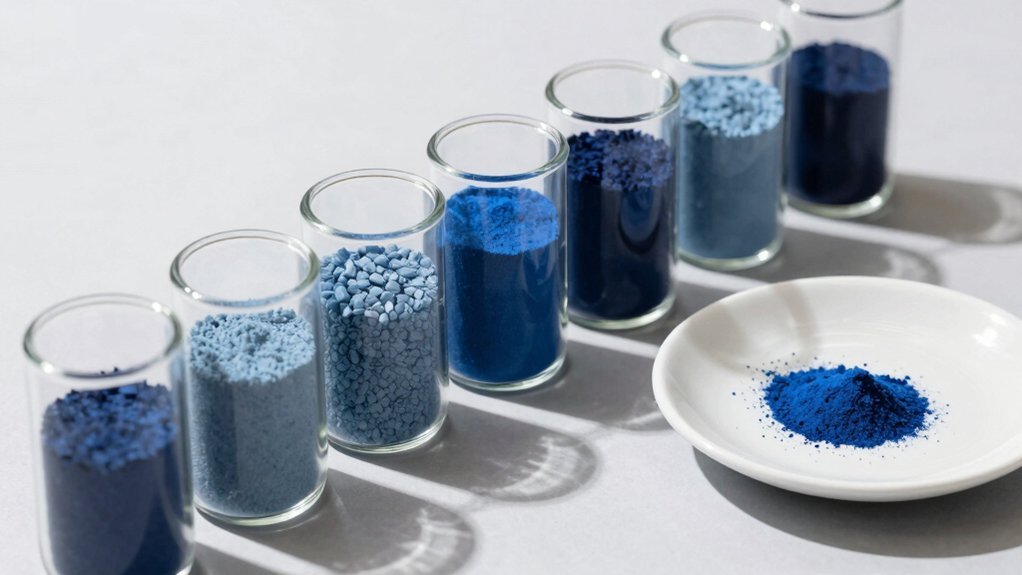
Ultramarines provide brilliant blue shades that maintain their intensity over time, thanks to their non-bleeding properties.
When you source these additives from reputable cosmetic-grade suppliers, they're completely safe for skin contact.
You can confidently use these minerals up to 5% of your total soap weight to achieve rich, enduring colors without compromising your soap's quality or effectiveness.
Frequently Asked Questions
What Are the Natural Dyes From Plants for Soap?
You'll find natural soap dyes in plant sources like madder root for pink, turmeric for yellow, alkanet root for purple, and annatto seeds for orange. They're stable and won't fade much over time.
Does Mica Powder Bleed in Soap?
You'll find that most mica powders don't bleed in soap, especially in opaque bases. However, it's best to test your specific mica brands first and mix them with oils or glycerin rather than water.
What Is Non-Bleeding Color?
Non-bleeding colors won't migrate or seep into surrounding areas of your soap. They'll stay exactly where you place them, letting you create crisp, clean designs with distinct color separation between layers.
Why Is My Soap Bleeding?
Your soap's bleeding because you're likely using water-soluble dyes or too much colorant. You haven't mixed the colors properly with oils, or you're not using non-bleeding alternatives like micas and natural clays.
In Summary
You'll find these five natural colorant categories offer reliable, non-bleeding options for your handmade soaps. Whether you're working with root-based reds, botanical greens, earth-toned clays, vibrant spices, or mineral pigments, you can create stunning bars that maintain their color integrity. Don't hesitate to experiment with these safe alternatives to synthetic dyes – they'll give your soaps both beauty and stability.