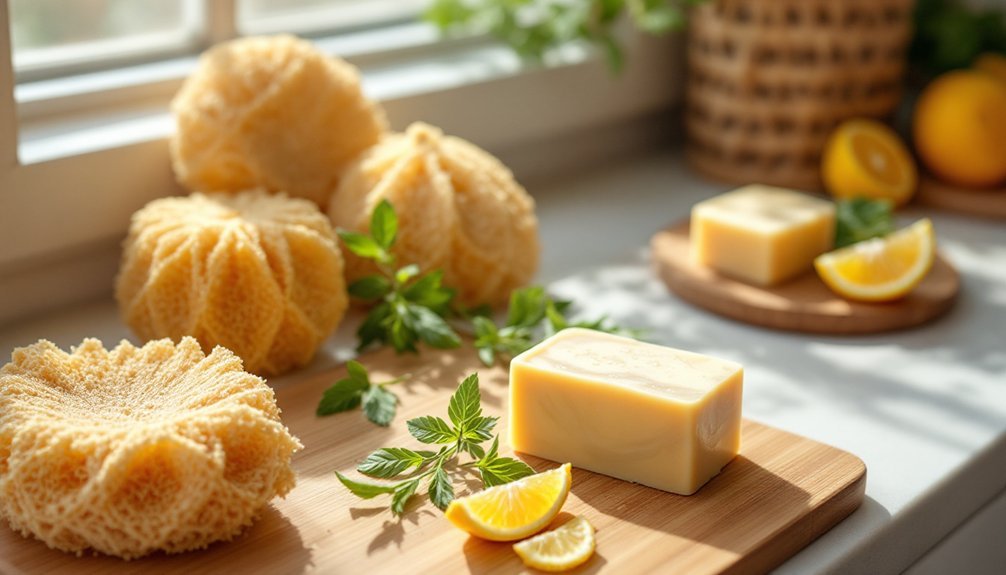
Making natural loofah soap combines exfoliation and cleansing in one beautiful product. First, hydrate your loofah sponges, then cut them into slices slightly taller than your molds. Choose a soap base matching your skin type—glycerin for normal skin, shea butter for dry skin. Melt your base, add natural colorants and essential oils, then pour over positioned loofah slices. Allow to set overnight and cure for 4-6 weeks. The following guide reveals all techniques for professional-quality results.
Numeric List of Second-Level Headings

Five distinct phases comprise the loofah soap-making process.
When you're planning your project, you'll need to follow these main steps:
- Choosing Loofah Sponges – Select natural loofahs from craft stores or online suppliers.
- Preparing Supplies and Workspace – Gather molds, soap bases, additives, and set up a ventilated area.
- Preparing Loofahs for Soap – Hydrate, cut, and position loofahs in your molds. Loofahs should be kept dry before placing in molds as pre-moistening loofahs isn't necessary for proper soap adherence.
- Preparing Soap Base – Melt your base, add fragrances and colorants, then cool slightly.
- Finalizing and Curing Soap – Pour soap over loofahs, allow proper hardening and curing time.
Each section includes critical details you'll need to successfully create exfoliating loofah soap bars that effectively cleanse while providing natural scrubbing action.
What Is Loofah Soap and Its Skin Benefits
Exfoliation meets cleansing in loofah soap, a multifunctional skincare product that embeds natural loofah fibers within soap bars.
These fibers come from the dried skeleton of tropical fruits, creating a natural exfoliating tool within your soap.
Nature's secret exfoliator: the humble tropical fruit, dried to perfection, becomes a powerful skin-renewing tool in your daily cleanse.
When you use loofah soap, you're getting multiple benefits in one convenient package. The gentle scrubbing action removes dead skin cells, unclogs pores, and improves your skin's texture—particularly on rough areas like elbows and knees.
As you continue using it, the loofah gradually protrudes more from the soap, enhancing its exfoliating power.
Beyond exfoliation, loofah soap improves blood circulation through its massaging effect while natural ingredients provide nourishment without harsh chemicals. The porous texture of loofah creates an ideal surface for effective scrubbing and enhanced lathering.
You'll enjoy healthier, glowing skin and the convenience of two products in one.
Essential Tools and Materials for Loofah Soap Making
You'll need a few basic tools to craft your own loofah soap, including dried loofah, a soap base, and appropriate molds for shaping.
A microwave or double boiler is vital for melting your soap base, while gloves and measuring cups guarantee safe, accurate preparation.
Though not required, decorative elements like colorants, essential oils, and specialty molds can elevate your homemade soap from functional to gift-worthy.
Maintain a clean workspace throughout the process to ensure safety and prevent contamination of your soap ingredients.
Basic Equipment Necessities
Crafting natural loofah soap requires having the right tools and materials at your disposal. You'll need equipment for both preparing the loofah and making the soap itself. Safety gear is essential to protect yourself during the process. A high-quality silicone mold is necessary for creating perfectly shaped bars that release easily.
| Category | Essential Items | Optional Items |
|---|---|---|
| Cutting Tools | Sharp serrated knife, scissors | Bread knife, ruler |
| Soap Base | Melt and pour base, distilled water | Fragrance oils, colorants |
| Safety Gear | Latex gloves, protective clothing | Hair net, spray bottle |
For shaping and molding, gather soap molds and bamboo skewers to position your loofah pieces perfectly. Don't forget mixing bowls and a reliable heat source for melting your soap base. With these basics on hand, you're ready to create beautiful, exfoliating loofah soaps.
Optional Decorative Tools
While the basic equipment guarantees functional soap-making, optional decorative tools can transform your loofah soap into personalized works of art.
Consider adding soap-safe essential oils like peppermint or eucalyptus for delightful fragrances, or experiment with natural colorants and mica powders to create vibrant designs.
For enhanced skincare benefits, incorporate herbal infusions such as calendula or natural enhancers like honey and coconut oil. For safety and ease, especially for beginners, using a melt and pour soap base is highly recommended.
You'll love how these additions affect both appearance and performance.
Get creative with pressed flowers, biodegradable glitter, or swirling techniques for eye-catching visual appeal.
Don't forget eco-friendly packaging options—biodegradable wraps, recycled string, or reusable soap bags make your handcrafted soaps gift-ready while respecting the environment.
These thoughtful touches elevate your loofah soap from simple exfoliators to luxury bath products.
Selecting Quality Loofah Sponges for Soap Integration
The foundation of exceptional exfoliating soap begins with choosing high-quality loofah sponges. Look for natural loofahs derived from the luffa gourd, ensuring they're fresh and free from brittleness or rot.
The secret to superior exfoliation lies in selecting pristine, natural loofah sponges—fresh from the luffa gourd and free of imperfections.
When selecting your loofahs, consider their size in relation to your soap molds, as they come in various dimensions.
Before integrating loofahs into your soap, hydrate them first—they'll expand and soften, making them easier to cut. After soaking, be sure to squeeze out excess water from the loofah before placing it in your mold.
After cutting, place the pieces on a dry towel to prevent moisture buildup, which could affect your final soap quality.
Remember that quality loofahs aren't just functional but environmentally responsible too. They're biodegradable, compostable, and sustainable alternatives to plastic scrubbers, aligning perfectly with eco-conscious soap making practices.
Preparing and Cutting Loofah for Soap Molds
Proper preparation of loofah sponges creates the foundation for beautiful exfoliating soap. You'll need to hydrate your flat loofah first by soaking it in water until it expands and softens. Once dampened, squeeze out excess water to prevent diluting your soap mixture. Remember that loofahs are actually fibrous plant material from the cucumber family, not sea sponges as many believe.
| Step | Tool Needed | Result |
|---|---|---|
| Hydrate | Bowl of water | Expanded, pliable loofah |
| Cut | Serrated knife | 1-inch thick slices |
| Size | Cutting board | Pieces slightly taller than mold |
| Squeeze | Clean hands | Properly dampened material |
| Position | Alcohol spray | Ready-to-pour foundation |
For best results, use a bread knife to cut your damp loofah into 1-inch slices. This thickness works perfectly in standard soap molds while ensuring the exfoliating surface remains visible. If your loofah seems too thin, stack pieces to achieve the desired effect.
Choosing the Right Soap Base for Your Skin Type
Selecting an appropriate soap base forms the cornerstone of creating a loofah soap that works harmoniously with your skin. Your skin type determines which base will yield the best results.
The foundation of effective loofah soap lies in choosing a base that perfectly complements your unique skin profile.
For normal skin, clear or glycerin soap bases provide gentle cleansing without disrupting your skin's natural balance. The transparency allows you to create visually appealing soaps while maintaining effective cleansing properties.
If you have oily skin, opt for clear or coconut white soap bases that offer deep cleansing without clogging pores.
Dry skin benefits from shea butter or goat milk bases, which deliver intense hydration and nourishment.
Those with sensitive skin should consider gentle options like oatmeal or aloe vera bases to minimize irritation.
For aging skin, choose antioxidant-rich bases such as shea butter or olive oil that help maintain elasticity and provide essential nutrients.
Natural Colorants and Essential Oil Combinations
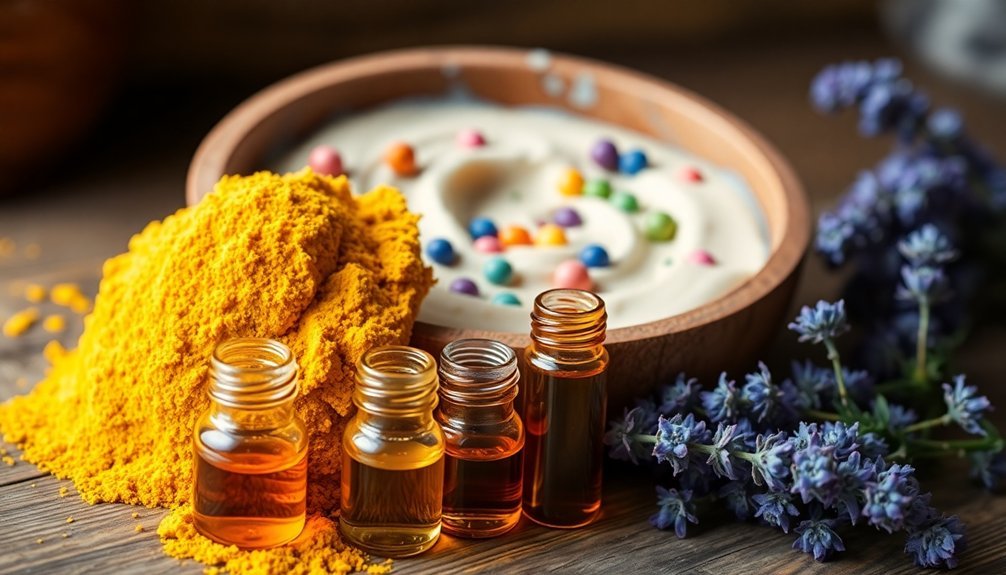
Enhancing your loofah soap with natural colorants and essential oils transforms a simple cleansing bar into a personalized spa experience.
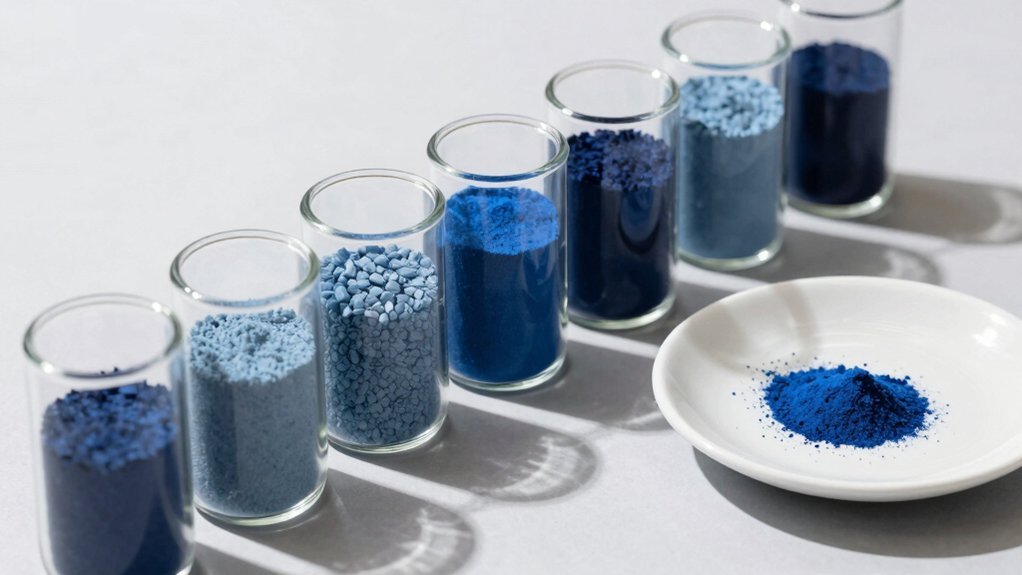
Choose vibrant annatto seeds for orange tones, turmeric for bright yellow, or madder root for pink to red shades. For purple hues, try alkanet root, while indigo delivers beautiful blues.
When selecting essential oils, consider citrus blends to enhance the vibrancy of plant colorants. Lavender and geranium create calming floral scents, while pine and cedarwood offer masculine woody aromas. Gelling your soap during the curing process will enhance color vibrancy of natural plant-based ingredients.
Always check IFRA guidelines for safe usage percentages.
Remember that natural colorants respond differently to temperature and processing methods. Clays and oxides provide consistent results, while botanicals may vary.
For best results, infuse colorants in oil or mix with alcohol to prevent clumping before adding to your soap mixture.
The Melt and Pour Method for Beginners
The melt and pour method offers a perfect entry point for soap-making beginners who want to create beautiful loofah soaps without the complexities of working with raw ingredients. You'll bypass handling lye and skip lengthy curing times, allowing you to use your handcrafted loofah soap within hours. Keep in mind that these soaps may have shorter shelf life compared to other methods.
| Base Type | Best For | Key Benefit |
|---|---|---|
| Transparent | Vibrant colors | Shows mica shimmer |
| White | Pastel hues | Creates soft tones |
| Shea Butter | Dry skin | Extra moisturizing |
| Goat's Milk | Sensitive skin | Gentle cleansing |
| Aloe Vera | Irritated skin | Soothing properties |
Simply melt your chosen base using a microwave or double boiler, add skin-safe colorants and fragrances, then pour around your loofah slices in molds. While swirls may be challenging, you'll still create professional-looking exfoliating soaps with minimal effort.
Cold Process Technique for Advanced Soap Makers
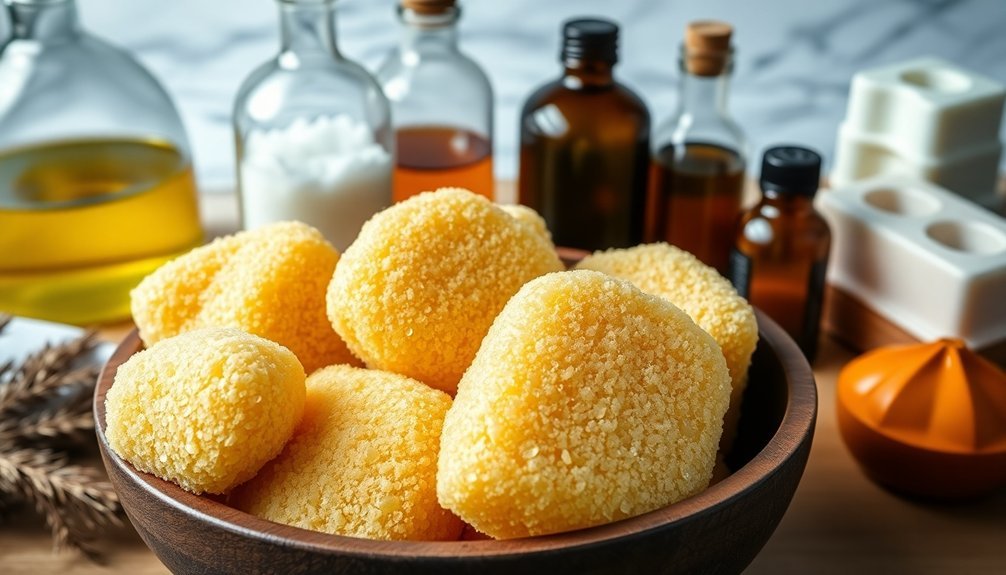
While melt and pour offers simplicity, cold process soap making elevates your loofah creations to a truly artisanal level. This method requires careful handling of lye, precise temperature control, and patience during curing.
Begin by calculating your lye-to-oil ratio using a soap calculator. Wearing protective gear, slowly mix lye into distilled water in a well-ventilated area.
Once both your lye solution and oils reach approximately 100°F, combine them and blend until reaching a light trace. This consistency guarantees proper penetration into the loofah's crevices. Pour the lye solution through a fine sieve to catch any undissolved particles.
Add essential oils for fragrance, then pour your mixture over pre-soaked loofah pieces in your mold. Tap gently to remove air bubbles, then insulate with a blanket.
After 24-48 hours, cut your soap and allow it to cure for four weeks.
Adding Complementary Exfoliants and Botanicals
While your loofah provides excellent exfoliation, you'll want to contemplate mixing in dried herbs like lavender or chamomile for added skin benefits and visual appeal.
Various beneficial clays, including kaolin for sensitive skin or bentonite for deeper cleansing, can complement your soap's therapeutic properties.
For extra texture and exfoliation, try incorporating small seeds such as poppy or chia that work alongside your loofah to create a multi-dimensional cleansing experience. This combination helps gently exfoliate skin without the need for harsh chemicals that might irritate sensitive skin types.
Dried Herb Combinations
Selecting complementary dried herbs for your loofah soap can transform a simple exfoliating bar into a therapeutic skin treatment.
Combine peppermint and lemon balm for an invigorating morning wake-up call, or mix rosemary and thyme for a speckled appearance with subtle herbal scents.
For sensitive or irritated skin, consider nettle or jewelweed—both offer anti-inflammatory benefits with nettle particularly helpful for acne-prone complexions.
Cornflowers add both antioxidants and vibrant color when incorporated fresh.
Remember that whole herbs rehydrate during use, while ground herbs create a more uniform, speckled texture throughout your soap.
Try infusing your base oils with dried herbs before soap-making to enhance therapeutic properties.
For maximum benefit, pair your dried herbs with complementary essential oils like peppermint with lemon balm or rosemary with eucalyptus.
Lavender flowers make an excellent addition to loofah soap but are best sprinkled on top rather than mixed inside to prevent browning of flowers.
Beneficial Clays
Beyond herbal additions, clay minerals offer powerful enhancements to your loofah soap, providing both aesthetic appeal and therapeutic benefits.
Different clays address specific skin concerns while complementing loofah's exfoliating properties.
Kaolin clay works gently for all skin types, while bentonite excels at drawing out impurities for oily or acne-prone skin. For sensitive complexions, consider rose clay's mild properties or rhassoul clay's mineral-rich composition. French green clay works wonders for oily skin but may be too drying for others.
When incorporating clay into your loofah soap, mix it with warm oils before adding lye solution. This combination creates a soap that lasts longer, lathers more richly, and offers a dual exfoliating action. For optimal results, add approximately 2 teaspoons per pound of oils when formulating your soap recipe.
Clay also naturally colors your soap without artificial additives, enhancing its handcrafted appeal.
Textured Seed Options
Seeds and botanicals provide the perfect complementary exfoliants to enhance your loofah soap's scrubbing power.
Sunflower and pumpkin seeds offer gentle to moderate exfoliation, while tiny sesame seeds work well for sensitive skin formulations.
Consider adding rose petals or lavender buds for a floral touch with mild scrubbing action. Hibiscus flowers contribute antioxidant benefits alongside their exfoliating texture.
For stronger exfoliation, incorporate coffee grounds, which may help reduce cellulite appearance, or walnut shell powder for deeper scrubbing action.
You'll find poppy seeds create a delicate texture that's visually appealing in your finished soap.
Pair these with soothing additives like oatmeal or aloe vera to balance exfoliation with moisture. When incorporating these additives, make sure to whisk thoroughly for even distribution throughout your soap base.
Hemp seeds add gentle exfoliation while providing essential fatty acids that nourish your skin.
Properly Curing and Storing Your Handmade Loofah Soap
After putting so much effort into creating your beautiful loofah soap, proper curing and storage are essential steps that shouldn't be overlooked. Your soaps need time to harden and develop their full potential before use.
Patience with your loofah soaps pays off—proper curing transforms them from good to extraordinary.
- Allow your soap to set overnight in molds before attempting removal.
- Store in a dry, cool place away from direct sunlight to preserve quality.
- Wrap individual soaps in breathable materials like paper or cloth.
- Avoid plastic packaging to maintain eco-friendliness and prevent moisture buildup.
- Check stored soaps regularly for signs of moisture and rotate your stock.
Complete curing typically requires 4-6 weeks for the soap to fully saponify and reach optimal hardness.
Remember to label your soaps with ingredients and handling instructions, especially if you're giving them as gifts or selling them.
Proper storage won't just extend shelf life—it'll guarantee your handmade creations remain as beautiful and effective as the day you made them.
Troubleshooting Common Loofah Soap Making Issues
When your loofah soap separates during the pouring process, try reducing your mixture's temperature and ensuring your oils are properly blended before adding lye.
If you're experiencing uneven exfoliation in your finished soap, cut your loofah pieces to consistent sizes and distribute them evenly throughout your soap mold before pouring.
You'll also want to make sure your loofah is properly anchored in place with skewers or by pouring a thin base layer of soap first to prevent migration during setting. For soap that remains too soft after unmolding, consider that high water content can significantly impact the hardness of your loofah soap bars.
Soap Separation Issues
Even the most skilled soap makers occasionally encounter separation issues while crafting loofah soap.
Separation typically appears as oily pools or streaks in your finished product, indicating incomplete emulsification of ingredients.
To resolve and prevent soap separation problems:
- Guarantee thorough mixing with a stick blender until you reach proper trace before adding your loofah
- Maintain consistent temperatures between 95°F-110°F during the entire soap-making process
- Select fragrance oils specifically formulated for soap making, as some essential oils can trigger separation
- Avoid excessive water content which weakens the soap structure around your loofah pieces
- If separation occurs, try rebatching by gently reheating the soap and adding a stabilizer like stearic acid
When troubleshooting, remember that proper preparation of your loofah and careful pouring techniques greatly reduce separation risks. Using short spurts of stick blending combined with hand stirring helps prevent rapid trace which can lead to uneven soap consistency.
Fixing Uneven Exfoliation
Uneven exfoliation in loofah soap typically manifests as inconsistent scrubbing texture when you use the finished product. This common issue stems from improper loofah preparation or placement during the soap-making process.
To fix this problem, verify your loofah pieces fit properly within your mold and spray them with rubbing alcohol before adding soap mixture. Be cautious of soap seizing which can disrupt loofah distribution before you complete pouring.
Pour your soap gradually to prevent displacing the loofah. You'll want to maintain consistent temperature throughout curing to avoid separation issues.
If you're experiencing persistent problems, try using skewers to hold loofahs in position or consider rebatching your soap.
Testing the consistency before pouring guarantees the mixture adequately envelops the loofah. Remember that proper sizing of loofah slices is essential—too large or small can result in patchy exfoliation properties in your finished bars.
Frequently Asked Questions
Can Loofah Soap Be Used Daily or Is It Too Harsh?
You can use loofah soap daily if you have normal skin, but it's best to use gentle pressure. If you've got sensitive or dry skin, limit usage to 2-3 times weekly to prevent irritation.
How Long Does a Homemade Loofah Soap Bar Typically Last?
Your homemade loofah soap typically lasts 4-6 weeks with daily use. You'll extend its life by keeping it dry between uses and using a washcloth rather than applying it directly to your skin.
Are There Any Allergic Reactions Associated With Natural Loofah?
Natural loofahs rarely cause allergic reactions, unlike synthetic ones that contain chemicals. You'll find them safer for your skin, though you should keep them clean and dry to prevent bacterial contamination that might irritate your skin.
Can Children Safely Use Loofah Soap Products?
Yes, children can safely use loofah soap with supervision. You'll want to choose products with gentle, natural ingredients and limit frequency. Always watch for skin sensitivity as kids' skin is more delicate than yours.
Does Loofah Soap Help With Specific Skin Conditions Like Eczema?
Loofah soap can help manage eczema through its moisturizing ingredients that soften dry skin and its gentle exfoliation that reduces irritants. The natural anti-inflammatory properties may also soothe your flare-ups and support skin barrier repair.
In Summary
You've now mastered making exfoliating loofah soap at home! With your natural ingredients and proper techniques, you'll enjoy spa-quality skin care that's customized to your preferences. Don't forget to let your soaps fully cure before using them, and experiment with different essential oils and additives. Your skin will thank you for these handmade exfoliating bars that cleanse, rejuvenate, and remove dead skin cells naturally.

Leave a Reply