
Natural oils like coconut oil, neem oil, and rosemary oil extract greatly extend your handmade soap's shelf life. Coconut oil fights bacteria with its lauric acid content, while neem oil provides powerful antifungal protection. Add vitamin E oil (0.5-1%) to prevent rancidity, tea tree oil (1-5%) for antimicrobial benefits, and grapeseed oil for its antioxidant properties. Shea butter and castor oil create protective barriers against oxidation. Discover how these seven oils can transform your soap's durability and quality.
7 Natural Oils That Preserve Handmade Soap
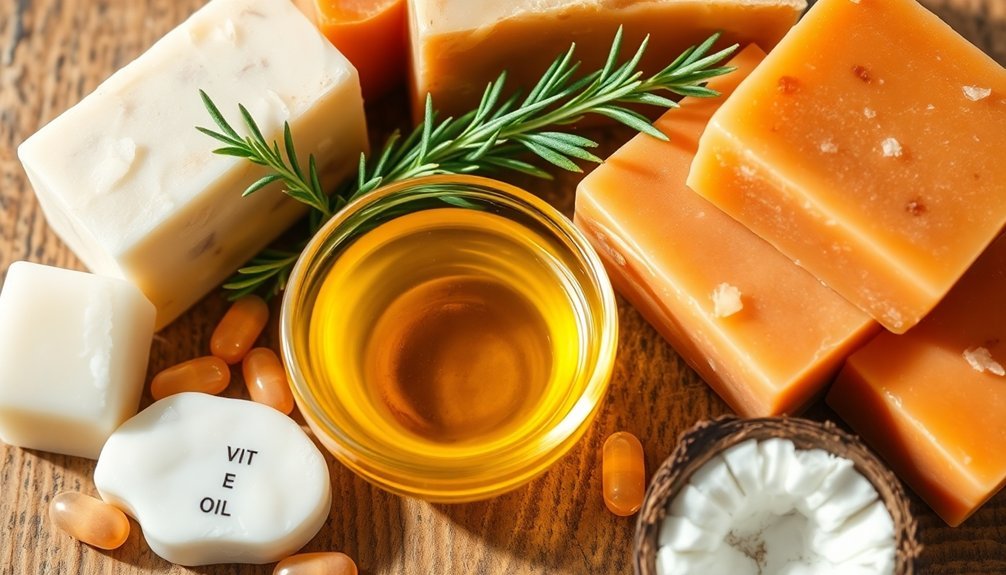
While the artistry of soap making captivates many crafters, understanding which oils extend your soap's shelf life is equally important.
Coconut oil, palm oil, and olive oil don't just create luxurious lather—they're natural preservatives due to their resistance to oxidation.
Oils high in saturated fats like coconut and palm create longer-lasting bars by notably reducing rancidity rates. Olive oil, with its exceptional moisturizing qualities, boasts a remarkable shelf life that helps maintain your handmade soap's integrity.
Don't overlook castor oil, which enhances lather while providing antioxidant properties that extend your soap's longevity.
For added preservation benefits, incorporate shea butter and cocoa butter into your recipes—they create protective barriers against oxidation while improving your soap's texture and moisturizing effects.
Coconut Oil: Nature's Antimicrobial Shield for Extended Shelf Life
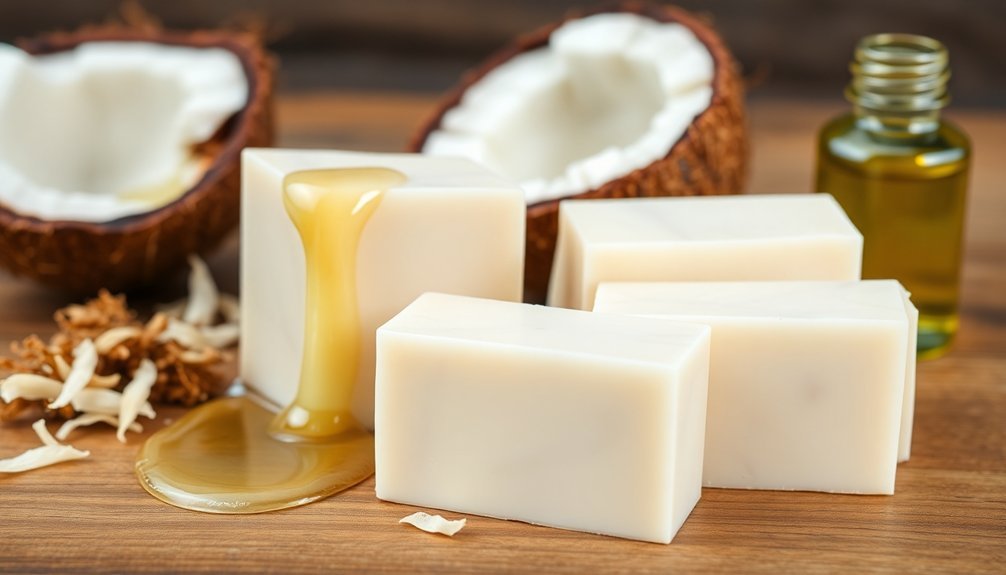
Nearly every soap maker treasures coconut oil for its exceptional antimicrobial properties. When you incorporate this versatile oil into your handmade soap, you're harnessing lauric acid's power to inhibit bacteria and mold growth, greatly extending shelf life.
The high saturated fat content creates a hard bar of soap that resists deterioration and maintains stability over time.
You'll notice coconut oil transforms your creations into firm soap bars that resist moisture absorption while producing a creamy lather that customers love. By setting an appropriate superfat percentage, you'll retain coconut oil's moisturizing properties without compromising longevity.
The oil's solid state at room temperature contributes to a structurally sound product that maintains its integrity and antimicrobial benefits throughout use. This natural preservative action makes coconut oil indispensable for crafting lasting, premium soaps.
Neem Oil: the Ancient Preservative With Powerful Antifungal Properties
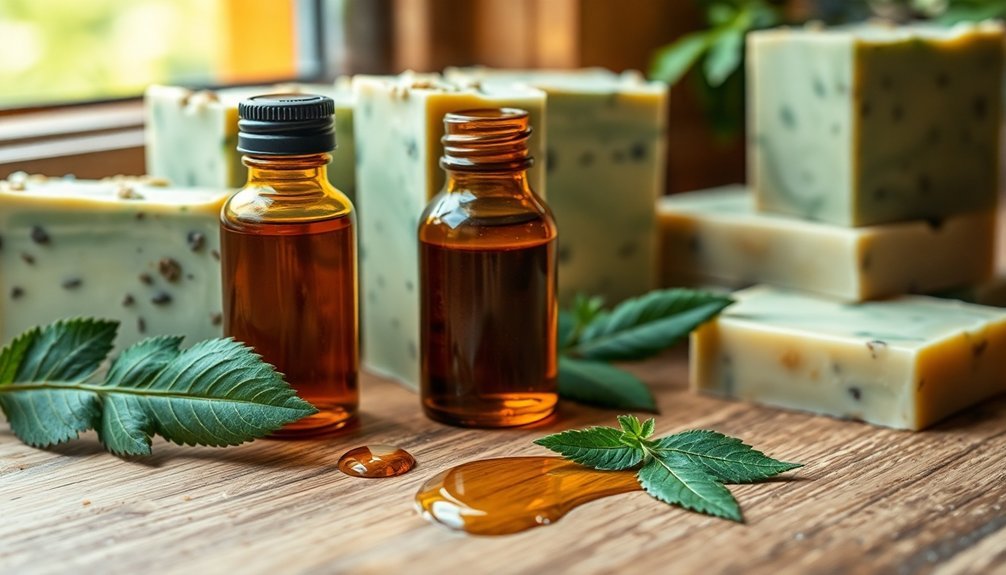
Neem oil's 5,000-year history in Ayurvedic medicine makes it one of the oldest natural preservatives you'll find for your handmade soaps.
You'll benefit from its remarkable antifungal compounds, particularly azadirachtin, which effectively combat microbial growth and extend your soap's shelf life.
For ideal results, incorporate neem oil at 3-5% of your total oil weight, allowing you to harness its preservative power without overwhelming your soap's scent profile.
Ancient Medicinal Heritage
For thousands of years, civilizations across the Indian subcontinent have treasured neem oil as a powerful medicinal substance, earning it the nickname "the pharmacy of the village."
This remarkable oil, extracted from the seeds of the neem tree (Azadirachta indica), contains potent antifungal compounds like azadirachtin that effectively inhibit fungal growth in handmade soaps.
When you incorporate neem oil as a natural preservative in soap making, you're tapping into centuries of traditional wisdom.
At a usage rate of 5-10%, you'll extend your soap's shelf life while enriching it with fatty acids and antioxidants that nourish your skin.
Beyond preservation, neem oil helps combat acne and eczema, making it doubly valuable in your handmade creations.
Its multifunctional nature delivers both preservation and therapeutic benefits.
Potent Antifungal Properties
The exceptional antifungal capabilities of neem oil make it a standout ingredient in natural soap making. When you incorporate this powerful oil into your handmade soap, you're harnessing compounds like azadirachtin and nimbidin that effectively inhibit fungal growth.
At a recommended 5-10% concentration, neem oil combats common skin infections such as athlete's foot and ringworm, elevating your soap's therapeutic qualities without compromising texture or lather.
You'll find this ancient preservative doesn't just stop at antifungal properties—it delivers additional benefits through its anti-inflammatory and antibacterial properties.
For soapmakers seeking natural preservation methods, neem oil offers a thorough solution that promotes overall skin health while extending shelf life. Its multifaceted action makes it an invaluable addition to your natural soap formulations.
Optimal Usage Rates
Determining the right concentration of neem oil in your soap formulations requires careful balance to maximize benefits without overwhelming your recipe. While neem oil offers powerful antifungal properties, it works best at specific ideal usage rates between 1-10% of your total oils.
| Usage Rate | Benefits & Considerations |
|---|---|
| 1-3% | Mild preservation, subtle antimicrobial effects |
| 4-6% | Balanced preservation with beneficial properties for skin conditions |
| 7-8% | Strong antifungal action, may require blending with milder oils |
| 9-10% | Maximum preservation, though aroma may be stronger |
When incorporating neem oil for soap making, consider pairing it with complementary milder oils to create a harmonious blend. This strategy guarantees you'll maintain neem's preservation qualities while enhancing your soap's overall performance and appeal.
Rosemary Oil Extract: Antioxidant Protection for Long-Lasting Soaps
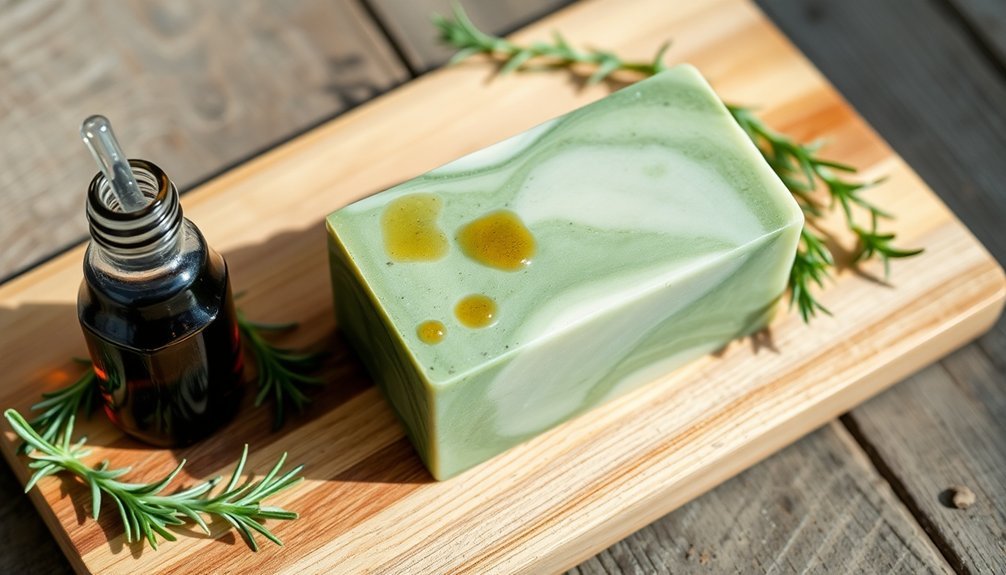
While many natural oils contribute pleasant fragrances to handmade soaps, rosemary oil extract stands out primarily for its exceptional preservative properties. Rich in antioxidants like rosmarinic and carnosic acids, it effectively inhibits oxidation in soap formulations, preventing rancidity and extending shelf life.
You'll find that adding just 0.5% to 1% of rosemary oil extract to your soap recipes markedly enhances stability in both liquid and solid varieties. This natural preservative not only prolongs your soap's freshness but also imparts a pleasant herbal scent that many crafters appreciate.
Beyond preservation benefits, rosemary oil extract's antimicrobial properties contribute to improved soap quality and skin health. It's a powerful yet natural solution for soap makers seeking to protect their creations without synthetic additives.
Vitamin E Oil: Preventing Rancidity in Handcrafted Soap Bars
You'll find vitamin E oil offers more than just rancidity prevention, with its moisturizing properties enhancing your soap's skin-nourishing benefits.
When adding this natural preservative to your formulations, remember that proper dosage (0.5-1% of total oils) guarantees effectiveness without compromising texture or lather quality.
Consider pairing vitamin E with complementary oils like sweet almond or jojoba to create balanced, long-lasting soap bars that protect both the product and your customers' skin.
Benefits Beyond Rancidity Prevention
Although Vitamin E oil is primarily added to handmade soap as an antioxidant, its benefits extend far beyond merely preventing rancidity. When you add this powerful ingredient at the recommended 0.5-1% of total oils, you'll enhance your soap's skin-nourishing properties while extending its shelf life.
| Benefit | Function | Impact |
|---|---|---|
| Moisturizing | Enhances hydration | Softer, more supple skin |
| Healing | Promotes cell regeneration | Faster recovery from minor irritations |
| Anti-inflammatory | Reduces redness | Calms sensitive or irritated skin |
Vitamin E particularly stabilizes unsaturated oils like olive and hemp seed in your formulations, which are otherwise prone to oxidation. Beyond preserving your soap's quality, you're also creating a product that actively contributes to skin health by fighting inflammation and supporting your skin's natural barrier function.
Dosage Considerations Matter
When adding Vitamin E oil to your handcrafted soap, precise measurement becomes critical for achieving optimal results. For peak effectiveness, you'll want to use between 0.5% and 1% of your total oil weight. This small but powerful dosage provides enough antioxidant protection without interfering with saponification or altering your soap's texture and lather.
For best results, thoroughly blend the Vitamin E oil with your base oils before adding lye. This guarantees even distribution throughout your handmade soap. You'll enjoy extended shelf life while benefiting from Vitamin E's moisturizing properties that enhance skin health.
Consider pairing Vitamin E with naturally stable oils like coconut oil or palm oil for maximum stability. This combination creates a superior product that maintains freshness longer while delivering exceptional quality your customers will notice and appreciate.
Complementary Oil Pairings
Certain oils naturally complement Vitamin E oil's preservative powers, creating a synergistic effect that maximizes shelf life in your handmade soaps.
When developing your soap recipes, consider pairing vitamin E oil with apricot kernel oil or sweet almond oil. While these carrier oils deliver excellent moisturizing properties, they're prone to rancidity when used alone.
Add vitamin E oil at 0.5-1% of your total oils for soap making to maintain these delicate ingredients. This small addition works as a natural preservative without affecting your soap's texture or lather quality.
In cold process soap, vitamin E oil helps retain the beneficial properties of other oils throughout the curing period.
The partnership between vitamin E and carrier oils guarantees your handmade soap remains fresh, effective, and nourishing long after production—giving you better results and happier customers.
Tea Tree Oil: Botanical Defense Against Microbial Contamination
While many natural oils offer pleasant scents or moisturizing benefits, tea tree oil stands apart as nature's powerful antimicrobial agent for handmade soap formulations.
This remarkable botanical provides natural preservation by inhibiting bacterial growth of harmful strains like Staphylococcus aureus and E. coli, extending your soap's shelf life considerably.
When incorporating tea tree oil into your handmade soap, remember these key points:
- Use concentrations of 1-5% for ideal antimicrobial properties without skin irritation.
- Benefit from its dual functionality as both a preservative and treatment for skin conditions like acne.
- Rely on its anti-inflammatory qualities to create therapeutic soap formulations.
You'll appreciate how this versatile oil combats microbial contamination while delivering therapeutic benefits—making it an essential addition to your natural soapmaking toolkit.
Grapeseed Oil: High Antioxidant Content for Soap Stability
Among the treasure trove of natural oils for soapmaking, grapeseed oil distinguishes itself through its exceptional antioxidant profile, particularly its high vitamin E content. This powerful antioxidant helps shield your handmade soap from oxidation and rancidity, naturally extending its shelf life.
You'll appreciate grapeseed oil's moisturizing properties that hydrate without heaviness. Its rich linoleic acid content creates a light texture with a non-greasy feel, making it ideal for all skin types.
For ideal results, incorporate grapeseed oil at a usage rate of up to 20% in your formulations. This versatile ingredient expertly balances cleansing and conditioning properties while blending seamlessly with other oils.
Frequently Asked Questions
What Oil Makes Soap Last Longer?
To make your soap last longer, you'll want to use oils high in saturated fatty acids like coconut and palm oil. You can also add cocoa or shea butter to enhance hardness and durability.
What Makes Homemade Soap Last Longer?
To make your homemade soap last longer, you'll need oils with high saturated fatty acids like coconut and palm, proper curing time, antioxidant-rich additives, balanced formulations, and cool, dry storage conditions.
How Do You Preserve Homemade Soap?
You'll preserve homemade soap by adding natural antioxidants like Vitamin E oil, storing in cool, dry places away from sunlight, using long-shelf-life oils, curing properly for 4-6 weeks, and monitoring pH levels regularly.
Which Essential Oils Last Longest in Soap?
For longest-lasting essential oils in soap, you'll find Argan, Babassu, and Jojoba Oil excel with 2-year shelf lives. High-oleic Sunflower Oil also maintains quality well, while Coconut Oil remains stable for 18 months.
In Summary
You'll notice these seven natural oils don't just add luxurious qualities to your homemade soaps—they're powerful preservatives too. By incorporating these plant-based alternatives, you're extending your soap's shelf life without harsh chemicals. Whether you're a seasoned soap maker or just starting out, these oils offer effective protection while keeping your creations natural, beautiful, and safe for daily use.