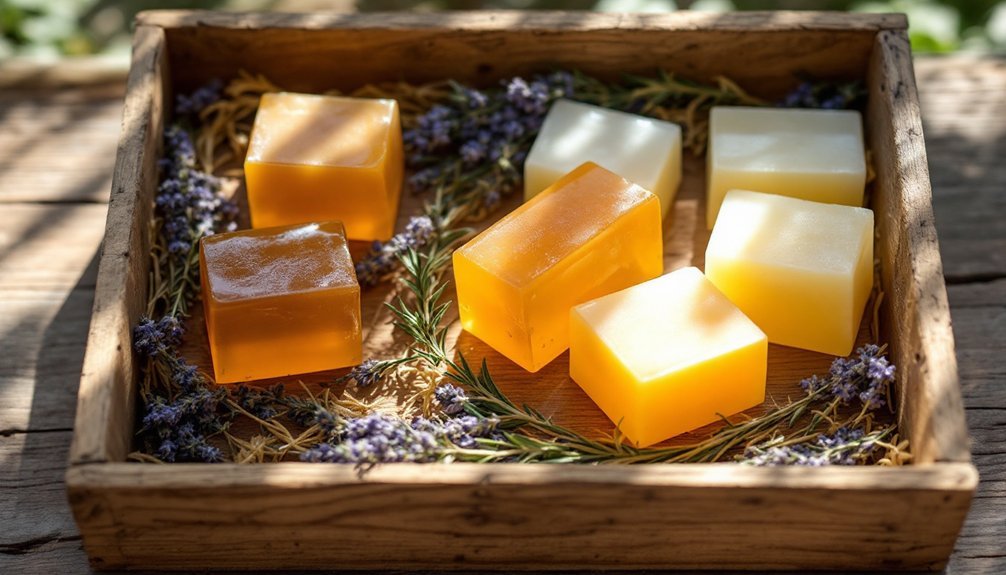
For your first soap-making project, you'll find success with three beginner-friendly oil-infused bases. Start with a classic olive oil base for its gentle, moisturizing properties. A coconut oil base creates excellent lather and cleansing power, while a shea butter base offers rich conditioning benefits. You can enhance each base with essential oils like lavender or tea tree at a 1-3% dilution rate. These foundational bases will set you up to explore countless creative soap-making possibilities.
Selecting Essential Oils for Your Soap Base
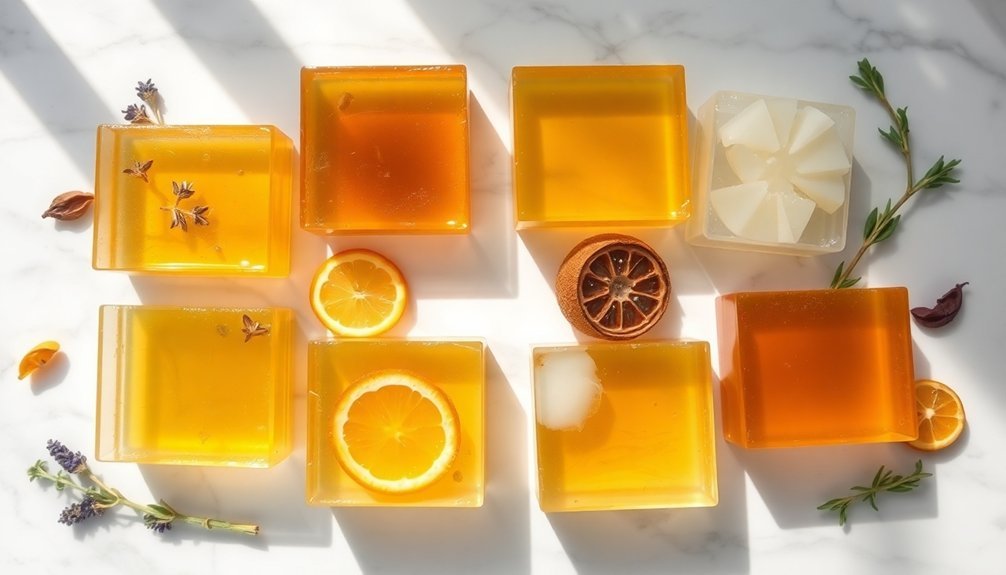
When choosing essential oils for your soap base, you'll need to take into account both their therapeutic benefits and safety factors. Different natural ingredients offer unique benefits – lavender provides calming effects, while tea tree delivers antibacterial benefits.
Always use high-quality essential oils rather than synthetic alternatives, as they provide genuine therapeutic properties without risking skin irritation. Keep your dilution rate between 1-3% of your soap's total weight to guarantee safety and proper scent balance.
Be mindful of photosensitivity, particularly with citrus oils, which can make skin more sensitive to sunlight.
You can create unique scents by blending different oils together. Try combining peppermint and eucalyptus for an energizing combination that also supports respiratory health.
This approach lets you customize both the fragrance and therapeutic benefits of your soap.
Oil-Base Compatibility and Blending Ratios
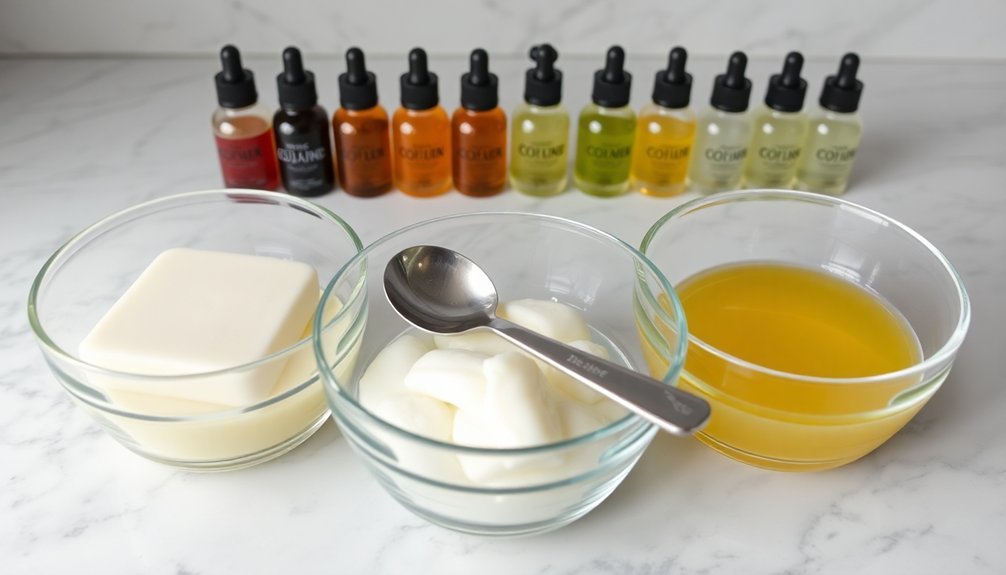
Understanding oil-base compatibility and proper blending ratios forms the foundation of successful soap making.
When creating your melt and pour soap, you'll want to start with a balanced blend of oils that complement each other's properties. Begin with a base ratio of 30% coconut oil for cleansing, 30% olive oil for moisturizing, and 40% softer oils to achieve a creamy lather.
As a beginner, you'll find that fixed oils work best at 20-50% of your total blend. While you might be tempted to experiment with specialty oils like argan or jojoba, keep their percentage under 10% to maintain your soap's structure.
Start with tried-and-tested combinations before attempting unique blends. Remember that each oil's properties affect your final product's texture and performance, so careful consideration of saponification values is essential.
Curing and Storage Methods for Oil-Infused Bases
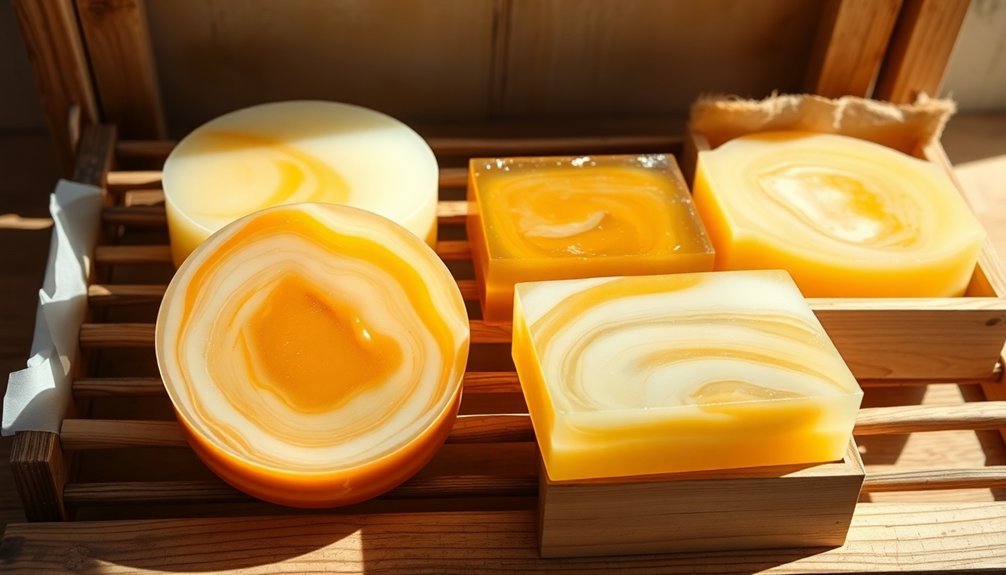
Proper curing and storage of your oil-infused soap bases make all the difference between a mediocre and exceptional final product.
You'll need to cure your soaps for 4 to 6 weeks in a cool, dry place to remove excess moisture and enhance their durability.
Once you've completed the curing time, store cured soap in an airtight container or wrap it in brown paper.
You'll want to keep your soaps away from UV rays, as sunlight can degrade the oils' quality.
Add desiccant packets to your storage containers to prevent sweating and maintain freshness for up to 6 months.
Don't forget to label each batch with the production date and ingredients – this helps you track freshness and identify potential allergens.
These simple storage practices will guarantee your oil-infused soaps maintain their quality and effectiveness.
Frequently Asked Questions
What Is the Best Oil Base for Soap Making?
You'll find olive oil is your best base for soap making, as it's moisturizing and creates creamy lather. It's beginner-friendly and works well with other oils like coconut and castor for balanced properties.
How Many Bars Does 1 Lb of Soap Base Make?
You'll get 3-4 standard-sized bars (4-5 ounces each) from 1 lb of soap base. If you're making smaller guest-sized bars, you can create up to 8 bars from the same amount.
What Not to Add to Melt and Pour Soap?
Don't add water, non-skin-safe colorants, fresh fruit juices, excessive fragrances, or high-temperature ingredients to your melt and pour soap. These can cause lumpy texture, skin irritation, spoilage, and melting problems.
Can You Make Soap With Only Coconut Oil and Olive Oil?
Yes, you can make soap using just coconut and olive oils. You'll need to balance them (30-50% coconut, 50-70% olive) and calculate the proper lye amount. It'll create a bar with good lather and moisturizing properties.
In Summary
You're now equipped to start your oil-infused soap-making journey. Remember to pair your chosen soap base with compatible essential oils, stick to the recommended blending ratios, and allow proper curing time. Store your finished soaps in a cool, dry place away from direct sunlight. With these foundational tips on oils, bases, and proper storage, you'll create beautiful, fragrant soaps that'll delight your senses.


Leave a Reply