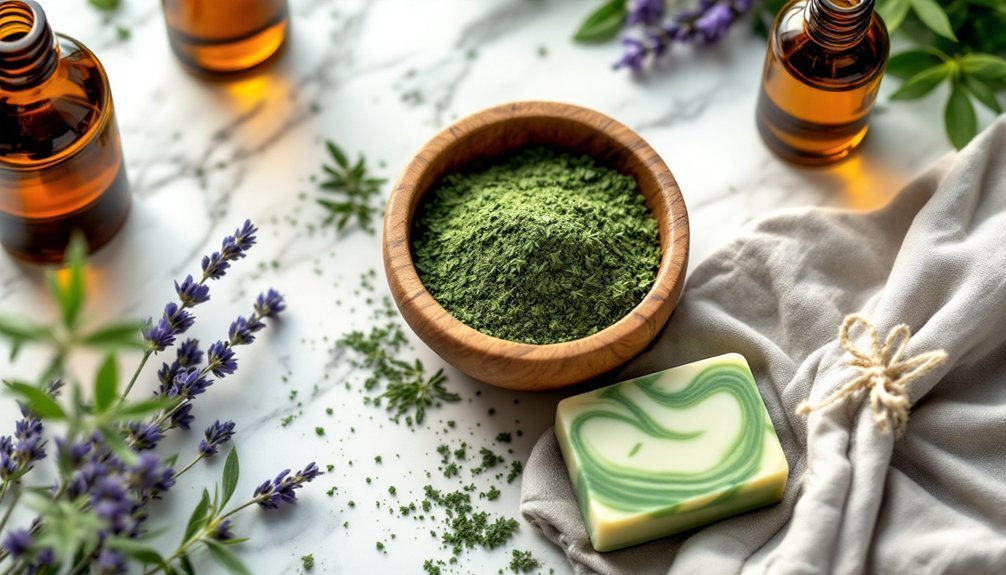
Try these bamboo powder soap recipes: a luxurious cold process formula with olive and coconut oils, a beginner-friendly melt-and-pour option with bamboo extract, an eco-friendly palm-free exfoliant blend, a detoxifying charcoal-bamboo combination for oily skin, or a visually stunning layered soap with essential oil blends. Each recipe harnesses bamboo powder's gentle exfoliating properties while nourishing your skin. Discover how these natural formulations can transform your daily cleansing routine into a spa-like experience.
Luxurious Cold Process Bamboo Powder Soap Recipe
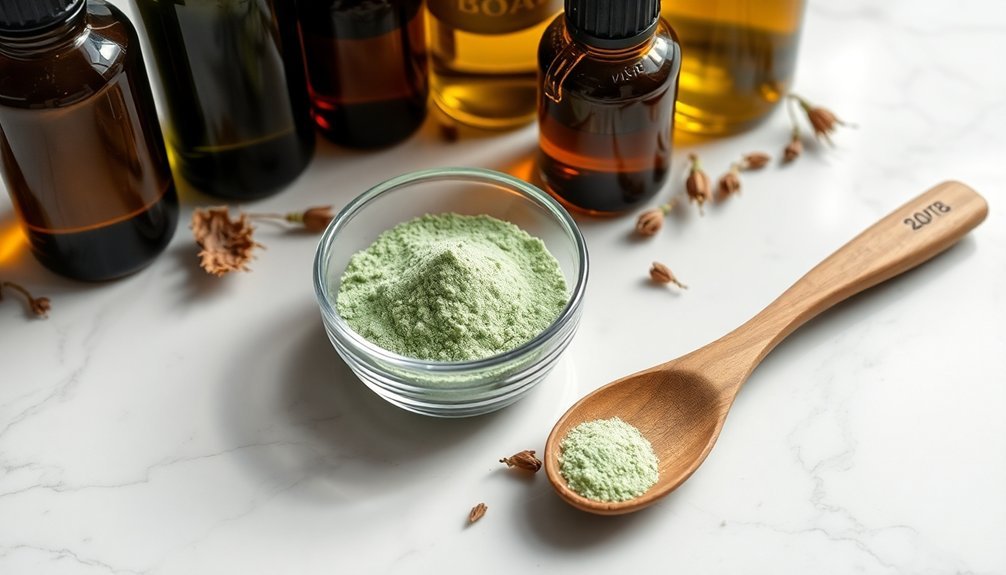
While many exfoliants can be harsh on sensitive skin, bamboo powder offers the perfect balance of gentle exfoliation and skin-nourishing benefits. This sustainable ingredient adds both texture and antioxidant properties to your homemade soap.
Begin by freezing your distilled water before carefully adding lye while wearing proper safety equipment.
Mix your oils—olive, coconut, shea butter, and castor—and heat to approximately 100°F. For easy incorporation, disperse 1-2 tablespoons of bamboo powder in a small amount of olive oil before adding to your mixture. When working with bamboo powder, remember that additional ingredients should comprise no more than 5% of your total soap mixture.
Once your lye solution and oils are within 10°F of each other, combine them using a stick blender until reaching trace.
Add essential oils like lavender or tea tree for fragrance. Pour into molds, cover, and allow to set for 24 hours before unmolding.
Simple Melt-and-Pour Bamboo Extract Soap
For those new to soapmaking, melt-and-pour bamboo extract soap provides an accessible entry point without the safety concerns of handling lye. This method requires just a few key ingredients: an olive oil soap base, bamboo extract powder, and your choice of fresh bamboo fragrance.
Start by melting your soap base in short intervals, stirring gently to avoid air bubbles. Once melted, add bamboo extract powder and a complementary essential oil like tea tree or lavender. Combining your soap with Sea Clay powder creates an appealing green color that enhances the natural bamboo aesthetic.
For professional results, melt slowly and stir mindfully—proper technique ensures your botanical additives distribute evenly throughout your creation.
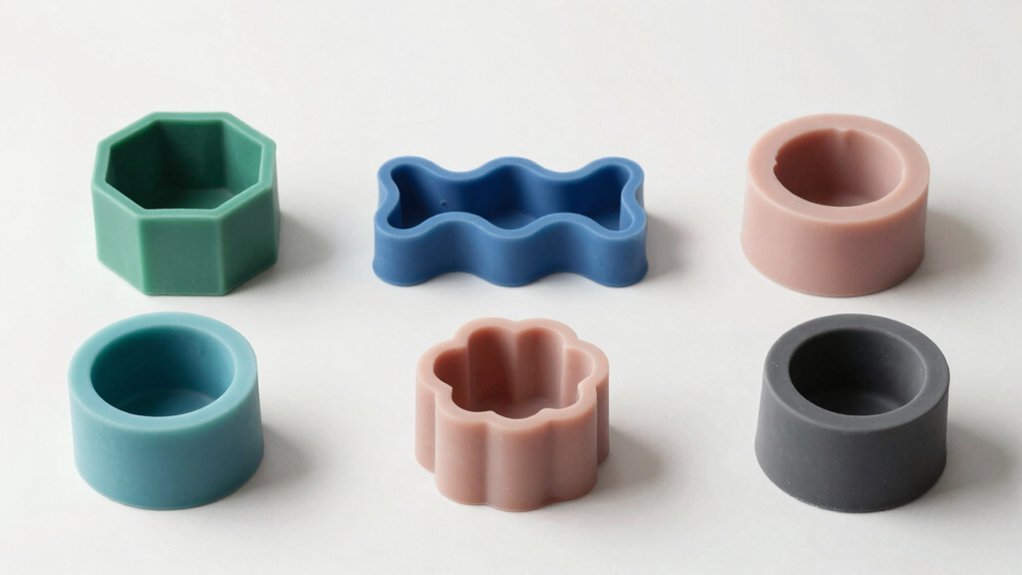
Pour the mixture into a framed bamboo mold for an authentic look, or use round silicone molds for variety. Spritz the surface with rubbing alcohol to eliminate bubbles, then cover with plastic wrap while cooling.
After hardening completely, unmold your soap carefully to preserve its design and enjoy your handcrafted bamboo creation.
Eco-Friendly Palm-Free Bamboo Exfoliant Formula
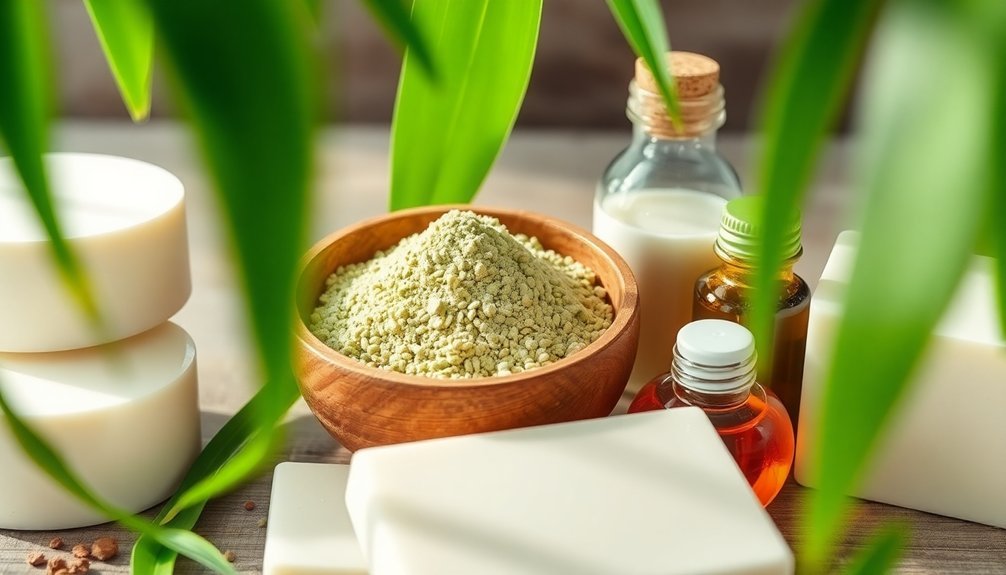
Creating a genuinely eco-friendly soap requires more than just natural ingredients; it demands thoughtful substitution of environmentally problematic components like palm oil.
Your palm-free formula can combine shea butter, olive oil, coconut oil, and sunflower oil as the moisturizing base.
Add bamboo powder as your primary exfoliant, perhaps with poppy seeds for additional texture. For fragrance, stick with natural essential oils like tea tree or lavender instead of synthetic options.
When making your soap, always wear proper protection—goggles, gloves, and a mask—while handling sodium hydroxide. Work in a well-ventilated area away from children and pets.
For this recipe, you'll need to carefully measure the sodium hydroxide flakes at exactly 2.30 oz to ensure proper saponification of your oils.
Source ingredients locally when possible, use recyclable packaging, and produce in small batches to maintain quality control while minimizing your carbon footprint.
Detoxifying Charcoal and Bamboo Powder Combination
Combining activated charcoal with bamboo powder creates a powerhouse detoxifying soap that offers dual benefits for your skin.
This dynamic duo works together to deeply cleanse pores while gently exfoliating dead skin cells, resulting in a refreshed complexion.
- Deep Cleansing Action – Activated charcoal absorbs toxins, excess oils, and impurities from your skin, effectively unclogging pores and reducing acne breakouts.
- Gentle Exfoliation – Bamboo powder provides natural, non-abrasive exfoliation that removes dead skin cells without irritation.
- Visual Appeal – The striking black charcoal against natural bamboo particles creates an aesthetically pleasing soap that stands out in your bathroom.
- Versatile Formula – Works exceptionally well for oily and combination skin types, but can be customized with moisturizing ingredients like shea butter for dry skin.
The highly porous nature of activated charcoal created during high-temperature processing makes it exceptionally effective at binding to and removing impurities from the skin's surface.
Layered Bamboo Soap With Essential Oil Blends
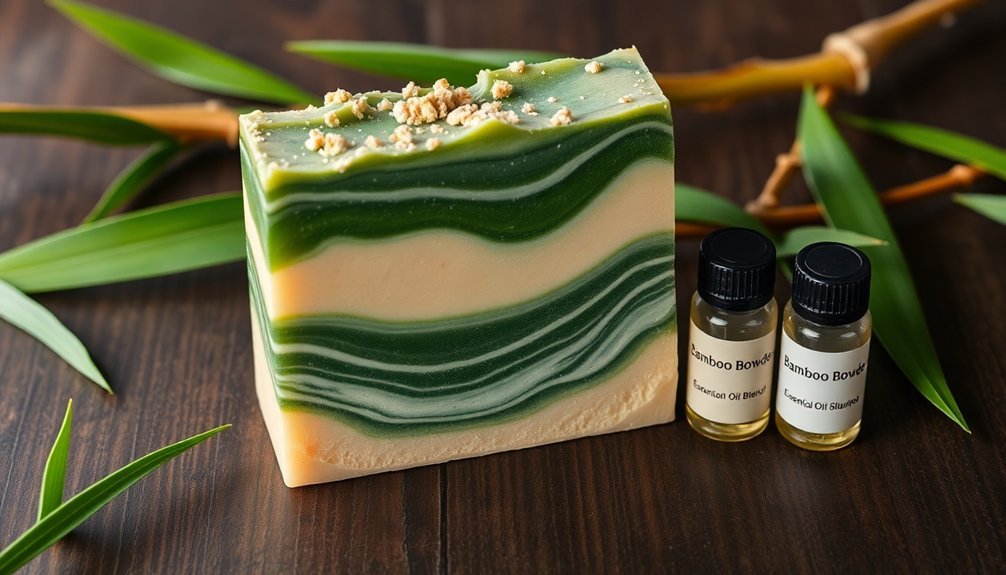
Artistry meets skincare in layered bamboo soap, where distinct sections of color and scent create both visual appeal and targeted benefits.
You'll need to prepare your oils and fats (olive, avocado, coconut, and shea butter) at 100-120°F before adding your lye solution.
For enchanting layers, start with lighter colors at the bottom, allowing each layer to set before adding the next.
Add bamboo powder (1-3 teaspoons) for gentle exfoliation, and incorporate essential oil blends at 3% of soap weight.
Try the invigorating Bamboo Mint blend or opt for Woodsy Charm with cedarwood and sandalwood for depth.
Remember to wear protective gear when handling lye, and let your completed soap cure for four weeks before enjoying your handcrafted, nourishing creation.
Many soapmakers find that creating these layered designs provides a therapeutic activity that helps reduce stress while producing something beautiful.
Frequently Asked Questions
Can Bamboo Powder Cause Allergic Reactions in Sensitive Skin?
Yes, if you have sensitive skin, bamboo powder can cause allergic reactions including redness, itching, and irritation. Your immune system might overreact to the bamboo components or chemicals used during processing.
How Long Does Bamboo Soap Last Compared to Regular Soap?
Bamboo soap typically lasts about the same as regular soap. You'll notice it's more about your usage habits, storage conditions, and whether it's natural or commercial, rather than the bamboo powder itself.
What Percentage of Bamboo Powder Is Ideal for Exfoliation?
For ideal exfoliation, you'll want to use bamboo powder at 5-15% in your soap formulation. You can adjust within this range depending on how intense you'd like the exfoliating effect to be for your skin.
Can I Substitute Bamboo Powder With Other Natural Exfoliants?
Yes, you can substitute bamboo powder with several natural alternatives. For gentle exfoliation, try colloidal oatmeal or jojoba beads. Medium options include walnut shells or poppy seeds, while coffee grounds provide stronger exfoliation.
Does Bamboo Soap Work Well in Hard Water Areas?
Yes, bamboo soap can work in hard water areas. You'll get better results if the formula includes sodium citrate, which chelates minerals. Consider adding castile soap or glycerin to maintain lathering and moisture.
In Summary
You've now discovered five exceptional ways to incorporate bamboo powder into your soap making journey. Whether you're crafting cold process luxuries or simple melt-and-pour bars, bamboo's natural properties will enhance your creations. Don't hesitate to experiment with different essential oil combinations and complementary ingredients. Your skin will thank you for these eco-friendly, exfoliating, and detoxifying formulations that harness bamboo's remarkable benefits in every soothing lather.

Leave a Reply