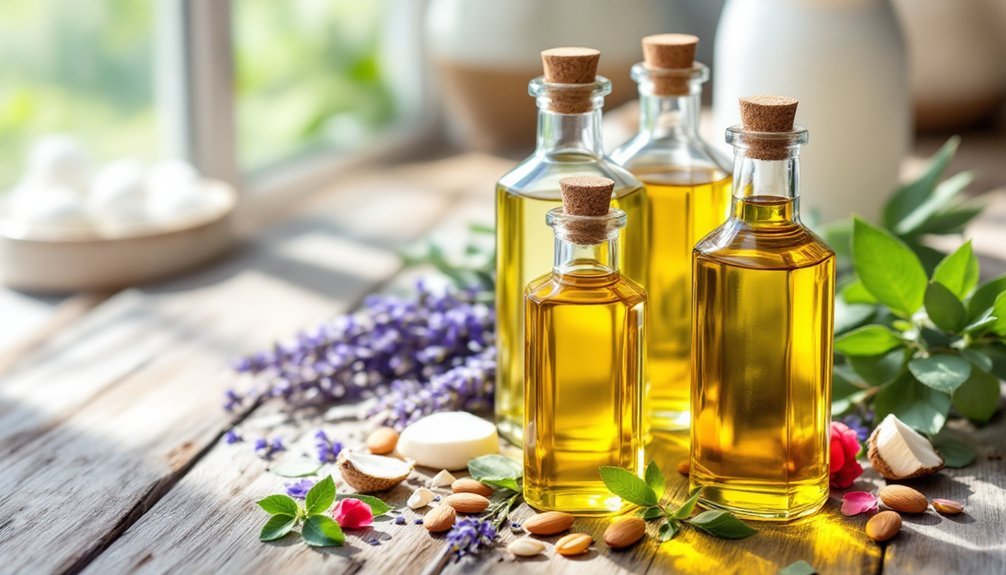
When crafting soap, you'll want to combine oils strategically for best results. Base your recipe on coconut oil (30%) for bubbles, olive oil (50%) for moisture, and castor oil (5%) for stable lather. For specialized benefits, consider adding avocado oil for deep conditioning, rice bran oil for gentle cleansing, or sweet almond oil for skin-soothing properties. Balancing your oil ratios between hard and soft varieties will reveal the secret to creating your perfect bar.
Common Base Oils and Their Unique Properties in Soap Making
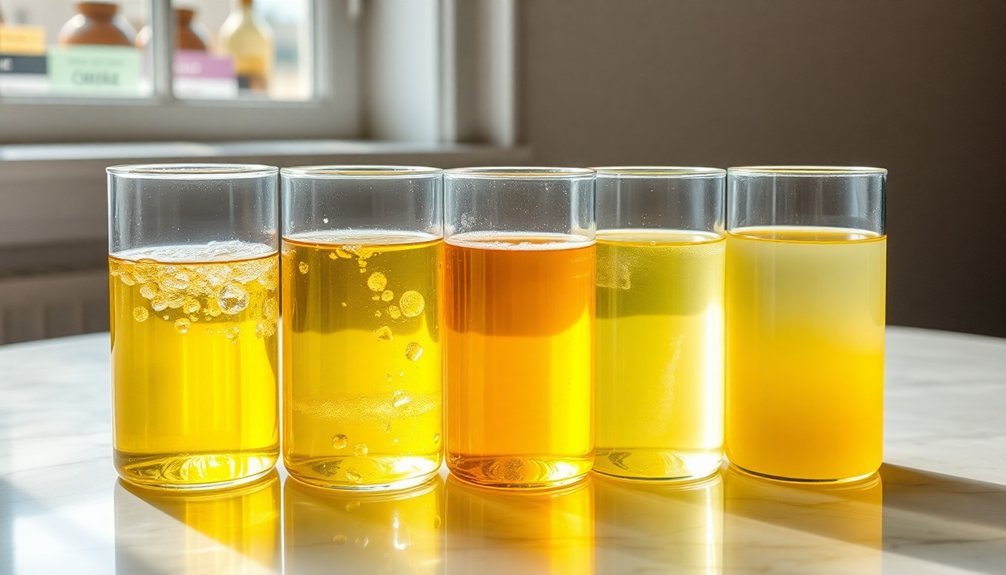
Soap makers know that selecting the right base oils can make or break their final product. Each oil brings distinct characteristics that'll enhance your soap's quality and performance.
While olive oil creates a creamy lather, you'll notice it absorbs slowly and can feel greasy. That's why you'll want to balance it with coconut oil, which adds hardness and produces rich, bubbly suds thanks to its high lauric acid content.
For ideal lather, don't forget castor oil – it's essential for creating dense, creamy foam in your soap.
If you're aiming for quick absorption and intense moisturizing, avocado oil's your best bet, especially when combined with olive oil.
For a well-balanced bar with aesthetic appeal, consider rice bran oil – it'll give you light-colored soap while nourishing the skin.
Natural Essential Oils vs. Synthetic Fragrance Performance
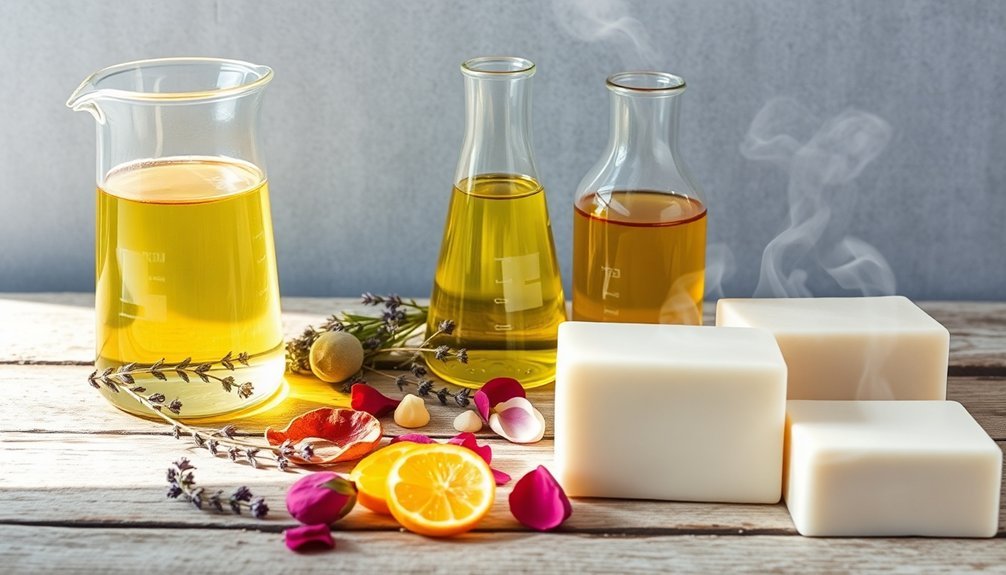
Beyond selecting base oils, you'll need to decide between natural essential oils and synthetic fragrances to scent your handcrafted soaps.
Natural essential oils offer therapeutic benefits derived from plants, but they require higher quantities to achieve the same scent intensity as synthetics. While you might prefer natural options, be aware that essential oils have a shorter shelf life, typically lasting only 1-2 years.
Synthetic fragrances provide better scent retention throughout the soap-making process and maintain their potency longer. However, they're more likely to cause allergic reactions in sensitive individuals.
Though essential oils can also trigger sensitivities, they're generally considered a gentler alternative. Your choice should balance the desired scent strength, longevity, and potential skin reactions while considering that synthetic fragrances lack the therapeutic properties found in natural alternatives.
Carrier Oil Selection for Essential Oil Infusion
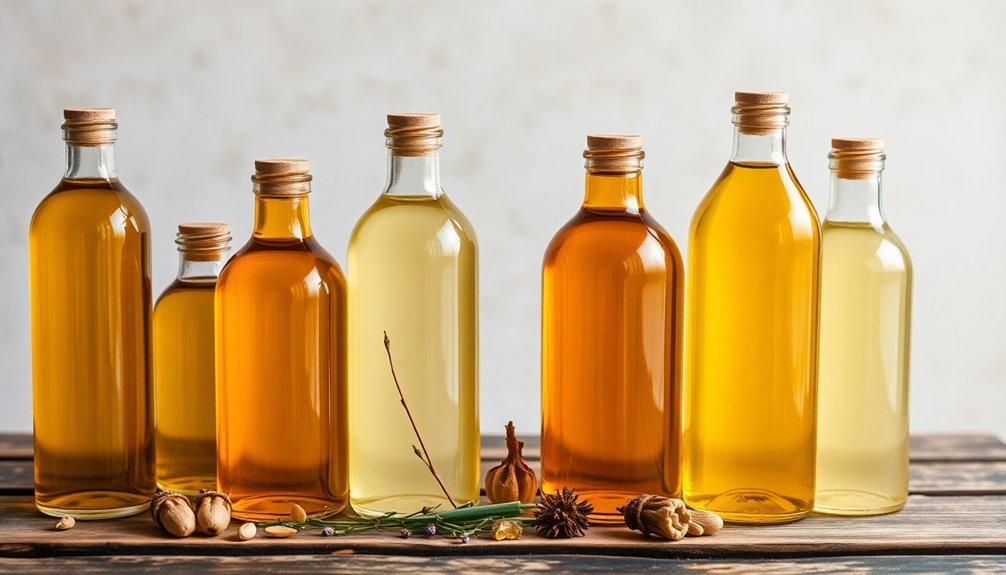
You'll find that different carrier oils offer varying absorption rates, with lightweight options like jojoba and fractionated coconut oil sinking in quickly while heavier oils like avocado provide longer-lasting moisture.
When blending essential oils, start with a 1-2% dilution ratio for facial products and up to 5% for body care, always considering your skin's sensitivity and the specific essential oil's potency.
The therapeutic benefits of your chosen carrier oil can enhance your final product, as sweet almond oil brings vitamin E and skin-soothing properties, while olive oil contributes antioxidants and deep moisturizing effects.
Oil Absorption Rates
When selecting carrier oils for essential oil infusion in soap making, understanding absorption rates becomes crucial for attaining the desired therapeutic benefits and fragrance longevity. You'll find that lightweight oils like jojoba and grapeseed absorb quickly, making them perfect for effective essential oil distribution. In contrast, heavier options like palm oil create a longer-lasting fragrance effect.
| Oil Type | Absorption Rate |
|---|---|
| Jojoba | Fast |
| Olive Oil | Moderate |
| Coconut | Slow |
| Palm Oil | Very Slow |
Consider mixing oils with different absorption rates to achieve the best results. For example, combining fast-absorbing lightweight oils with slower-absorbing options like olive oil can create a balanced soap that offers both immediate moisturizing properties and sustained fragrance release. This strategic approach guarantees your handcrafted soap delivers the finest combination of therapeutic benefits and sensory experience.
Blending Essential Oil Ratios
Selecting the right carrier oils for essential oil infusion hinges on three key factors: fatty acid composition, absorption rate, and skin compatibility.
When blending your essential oils, you'll want to maintain a 1-3% ratio with your carrier oils to achieve maximum potency without risking skin irritation. Choose lightweight carrier oils like jojoba or grapeseed for facial products, as they'll absorb quickly without leaving residue.
For moisturizing benefits, consider high linoleic oils such as sunflower or safflower, but remember to balance them with more stable oils to prevent product deterioration.
Before finalizing your blend, you'll need to conduct a patch test to verify your chosen combination won't cause adverse reactions.
Pair high oleic carriers like olive or avocado oil with volatile essential oils to enhance absorption and maintain the fragrance's longevity in your soap.
Therapeutic Benefits Comparison
Each carrier oil brings unique therapeutic properties that enhance the benefits of essential oil infusions in handcrafted soap.
When you're crafting your soap, you'll find that jojoba and sweet almond oil provide lightweight absorption while maximizing the therapeutic benefits of your essential oils. They're particularly effective for balanced skin care without causing irritation.
Coconut oil's antibacterial qualities work synergistically with essential oils, boosting their skin-healing properties.
If you're looking for deep moisturizing, avocado oil's rich vitamin content and fatty acids penetrate effectively while amplifying the therapeutic effects of your essential oils.
For those sensitive to scents, grapeseed oil offers a neutral base that won't compete with your essential oil fragrances, ensuring their therapeutic properties remain prominent in your finished soap.
Cold Process Method Oil Compatibility Guide
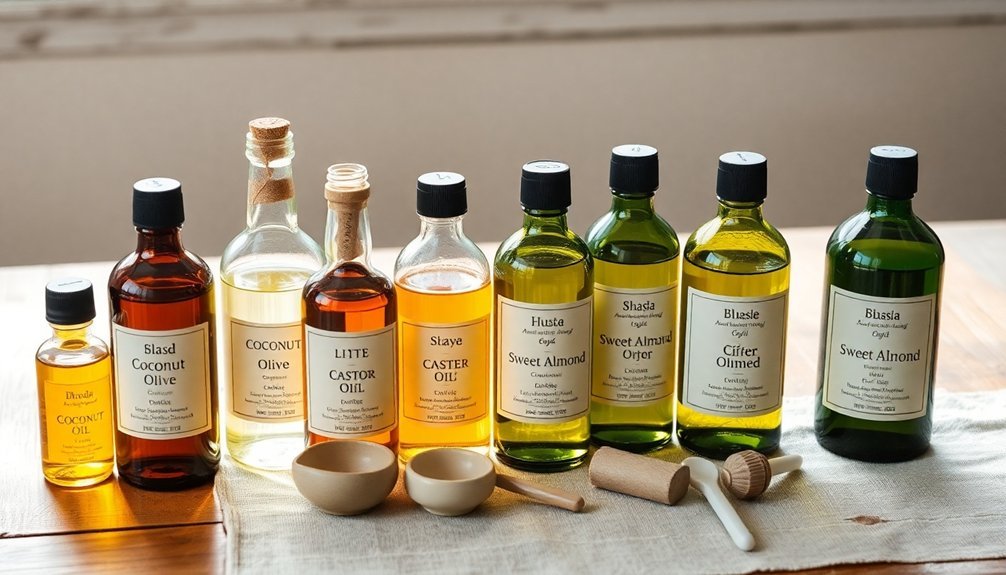
When mixing oils for cold process soap, you'll want to start with a 60/30/10 ratio of hard oils to soft oils to specialty oils, adjusting based on your desired bar properties.
Your most heat-sensitive oils, like avocado and hemp seed, should make up no more than 15% of your total recipe to prevent rancidity and guarantee a stable final product.
You can achieve ideal results by combining coconut oil (30%) with olive oil (50%) and castor oil (5%), leaving room for experimental additions of specialty oils (15%) that match your specific formulation goals.
Best Oil Mixing Ratios
Three fundamental oil combinations form the backbone of successful cold process soapmaking.
You'll find that balancing your oils properly creates the perfect bar of soap with ideal hardness, lather, and moisturizing properties.
- Mix 20-30% coconut oil, 30-50% olive oil, and 5-10% castor oil for a well-balanced bar with excellent lather.
- Combine 30-40% palm oil with 40-50% olive oil and 10-20% coconut oil for durability.
- Use 56% olive oil, 26% coconut oil, 11% shea butter, and 7% castor oil for a palm-free vegan option.
- Incorporate high oleic sunflower oil at 20-30% with harder butters for stability.
For sensitive skin formulations, consider reducing coconut oil and adding gentle oils like sweet almond (up to 15%) and avocado (up to 10%), while maintaining olive oil as your base.
Heat Sensitivity Rankings
Understanding oil heat sensitivity is essential for successful cold process soapmaking, as temperature management directly affects your final product's quality.
You'll want to rank your oils carefully based on their heat tolerance to preserve their beneficial properties.
Olive oil tops the heat-sensitive list, requiring careful temperature monitoring to maintain its nourishing qualities. High-oleic sunflower oil follows closely, as it's prone to softening and has a shorter shelf life when exposed to high heat.
While coconut oil shows excellent heat stability during the cold process soap making, making it a reliable base oil choice.
For butters like shea butter, you'll need higher melting temperatures, but don't overdo it.
Balance these with your more sensitive oils to create an ideal blend that preserves each ingredient's unique benefits in your final soap.
Oil Shelf Life and Storage Requirements
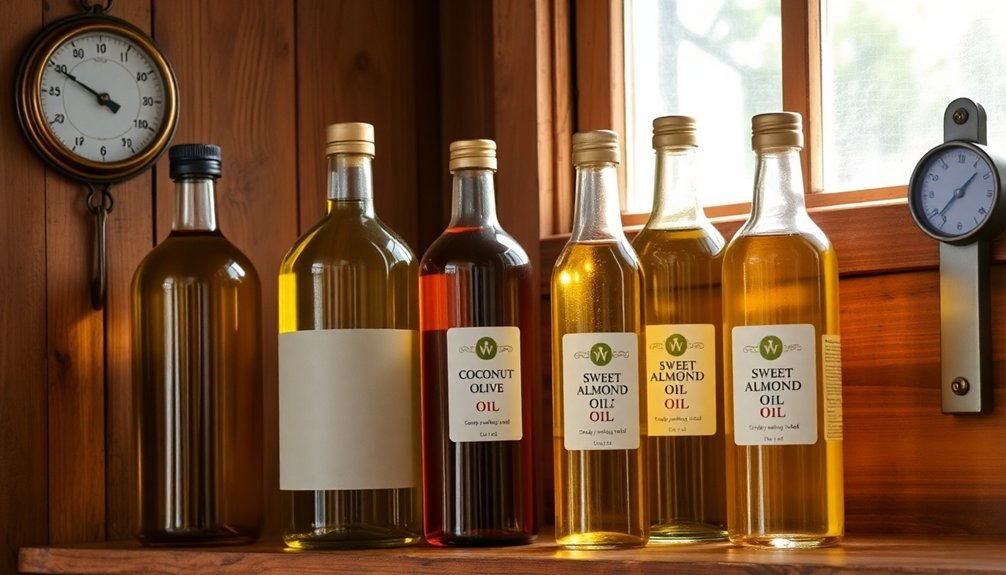
Since proper oil storage directly impacts the quality of your handcrafted soaps, knowing each oil's shelf life is essential for successful soap making.
You'll need to take into account storage requirements and shelf life duration when selecting your oils. While high-oleic sunflower oil requires quick usage within 3-6 months, other options offer more flexibility.
Here's what you need to know about oil shelf life categories:
- Short-term oils (apricot kernel, canola, hemp seed) last about 1 year
- Moderate shelf life oils (argan, babassu) remain stable for 2 years
- Common soap oils (olive, coconut) last 18-24 months with proper storage
- Adding rosemary oleoresin extract helps extend shelf life by preventing oxidation
Remember to store all oils in cool, dark places to maintain their quality and prevent premature spoilage.
Therapeutic Benefits of Different Essential Oil Blends
When crafting therapeutic soaps, essential oil blends offer powerful benefits that enhance both the bathing experience and skin health.
You'll find that lavender and chamomile essential oils provide calming properties, helping you unwind after a stressful day. For skin concerns, tea tree oil's antibacterial qualities make it ideal for treating acne and oily skin conditions.
Looking to boost your mood? Try incorporating citrus oils like lemon or sweet orange into your soap blends. They'll energize your senses while promoting emotional well-being.
Citrus essential oils bring sunshine to your soap – uplift your spirits and energize your day with bright, mood-enhancing aromas.
If you're battling seasonal allergies or congestion, eucalyptus oil can provide welcome relief through its decongestant properties. For an invigorating scent that stimulates circulation, peppermint oil creates a rejuvenating cooling sensation on your skin, making it perfect for morning showers or post-workout cleansing.
Calculating Oil Ratios for Perfect Lather
You'll discover that achieving the perfect soap lather starts with mastering essential oil ratios, particularly the foundational 20-30% coconut oil and 40-60% olive oil combination.
Your balanced lather formula should include a strategic mix of cleansing and moisturizing oils, supported by detailed charts tracking the fatty acid profiles of each oil type.
When you're fine-tuning your superfat percentage between 5-8%, you'll create a luxurious lather while maintaining the soap's gentle, moisturizing qualities.
Essential Oil Ratio Basics
Creating the perfect lather in handcrafted soap requires a strategic balance of essential oil ratios. When you're formulating your recipe, understanding proper usage rates and saponification values will help you achieve ideal results.
You'll want to combine oils that complement each other's properties for the best outcome.
- Coconut oil should make up 20-30% of your recipe to create bubbly, rich lather
- Castor oil at 5-10% helps attract moisture and enhance lathering ability
- Olive oil adds moisturizing qualities and balances harsher oils
- Palm oil pairs well with softer oils like avocado for balanced hardness
Remember to calculate the saponification value for each oil you're using. This guarantees you'll get the exact amount of lye needed for proper saponification, resulting in a well-balanced bar with excellent lathering properties.
Balanced Lather Formula Charts
To achieve the perfect soap lather, understanding balanced formula charts is essential for calculating precise oil ratios.
You'll want to combine oils rich in fatty acids: coconut oil (20-30%) for fluffy bubbles and olive oil (30-40%) for creamy lather. The balanced lather formula works best when you add soft oils like castor or almond to enhance the overall effect.
When crafting your soap, use a saponification values calculator to determine exact measurements. Your formula should balance lauric acid for cleansing with oleic acid for moisturizing properties.
Include stearic acid sources like cocoa butter to add hardness and stability. Remember to superfat between 5-10% using moisturizing oils such as avocado or castor oil.
This combination will give you a well-balanced bar with both cleansing power and skin-nourishing benefits.
Superfat Percentage Adjustments
While basic soap recipes may call for standard measurements, mastering superfat calculations takes your handcrafted soap to the next level. You'll need to understand SAP Value calculations and how oils high in moisturizing properties affect your final product.
When adjusting your superfat percentage, keep these key points in mind:
- Start with a 5-10% superfat range for balanced cleansing and moisturizing
- Document all recipe changes to track successful formulations
- Monitor how different percentages affect bar hardness
- Calculate lye amounts precisely based on your chosen oils' SAP values
Remember that increasing your superfatting beyond 10% may result in a soft bar of soap, while lower percentages create firmer bars.
Track your experiments carefully, noting how different oil combinations and superfat levels influence your soap's qualities. This documentation will help you replicate your most successful formulations.
Sustainable Oil Sourcing and Environmental Impact
Sustainable sourcing of soap-making oils plays an essential role in protecting our environment and supporting responsible agricultural practices. When selecting oils, you'll want to prioritize those with recognized certifications, like the Roundtable on Sustainable Palm Oil (RSPO) for palm oil products.
Consider switching to high-oleic sunflower oil or rice bran oil, which typically have lower environmental impacts and require fewer resources to produce.
You can make a positive impact by sourcing from local and organic oil producers, which reduces transportation emissions and supports sustainable farming methods. Look for suppliers who work with small-scale farmers maintaining biodiversity, particularly for oils like coconut and avocado.
These choices not only guarantee better environmental stewardship but also help sustain local economies while creating high-quality soaps that you can feel good about making.
Premium vs. Budget Oil Options for Quality Soap
The economics of soap making often presents a challenging balance between premium and budget oil choices.
You'll find that premium oils like olive and avocado offer superior moisturizing properties and richer fatty acid profiles, but budget oils can still create excellent soap formulations when used strategically.
- Premium oils deliver enhanced performance in lather, hardness, and moisturizing effects
- Budget oils like rice bran can form the base of quality recipes at lower costs
- Castor oil can be substituted with safflower oil for similar lathering results
- Combining budget and premium oils creates balanced, cost-effective formulations
When crafting your recipes, consider that while premium oils provide superior benefits, budget oils aren't necessarily inferior.
You can achieve professional results by thoughtfully blending both types, maintaining quality while managing production costs.
The key is understanding each oil's unique properties and using them to your advantage.
Oil Combinations for Specific Skin Types
Selecting the right oil combinations for different skin types greatly impacts your soap's therapeutic benefits.
For sensitive skin, blend olive oil with castor oil to create a gentle, moisturizing soap that won't cause irritation.
If you're targeting mature skin concerns, combine avocado oil with borage oil to deliver essential fatty acids and deep hydration.
For dry skin, you'll want to pair shea butter with coconut oil to achieve both moisture and lather.
Those with acne-prone skin can benefit from hemp seed oil mixed with tea tree oil, which cleanses without clogging pores.
If you're looking for a balanced approach, try combining jojoba oil with grapeseed oil – this combination effectively hydrates while maintaining clear, healthy skin.
Each oil partnership serves a specific purpose, ensuring your soap meets your skin's unique needs.
Frequently Asked Questions
What Is the Best Oil to Add to Homemade Soap?
You'll want to start with coconut oil for its rich lather and hardness, but don't skip olive oil's moisturizing benefits. They're best when combined, creating a perfect balance of cleansing and nourishing properties.
What Is the Best Carrier Oil for Hand Soap?
You'll find olive oil is your best carrier oil for hand soap, as it's deeply moisturizing and creates a creamy lather. For enhanced benefits, combine it with coconut oil to add bubbles and hardness.
Which Oil Is Best for Saponification?
You'll find coconut oil is the best for saponification due to its high lauric acid content. It'll give you excellent lather and hardness, but consider blending it with olive oil for balanced properties.
What Essential Oils Should Not Be Used in Soap?
You shouldn't use cinnamon, clove, oregano, wintergreen, or high concentrations of eucalyptus and peppermint in soap. Also avoid undiluted citrus oils as they can cause skin sensitivity and burning sensations.
In Summary
Whether you're pursuing soap making as a hobby or business, selecting the right oil combinations makes all the difference. You'll find that experimenting with different ratios and properties leads to your perfect formula. Remember to take into account sustainability, skin sensitivity, and storage needs when choosing oils. With this guide's oil comparisons, you're well-equipped to create high-quality handcrafted soaps that'll delight your customers and nourish their skin.