You'll find that pioneers chose wood ash for making lye because it was a practical and economical solution. Since they already burned wood daily for heating and cooking, the ashes provided a free source of potassium-rich material essential for creating strong lye solutions. They discovered that hardwoods like hickory and sugar maple produced the most potent lye for their soap-making needs. Understanding their clever use of this everyday waste product reveals much more about pioneer ingenuity.
The Science Behind Wood Ash Selection
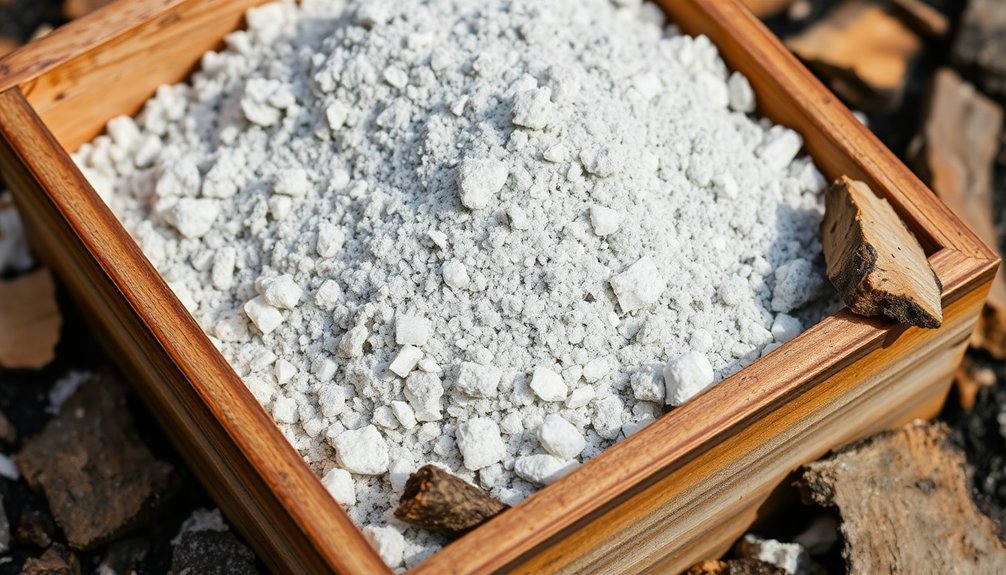
When early pioneers needed to make soap, they carefully selected specific types of wood ash based on their chemical composition. They knew that hardwoods like hickory and sugar maple produced the most effective wood ashes because of their high potassium content.
You'll find that these ashes contained potassium carbonate and sodium carbonate, essential alkaline compounds for creating strong lye solutions.
When lye is used in soap making, it triggers saponification – the chemical process that transforms fats into soap. The pioneers discovered that using readily available wood ashes from their household fires was both practical and economical.
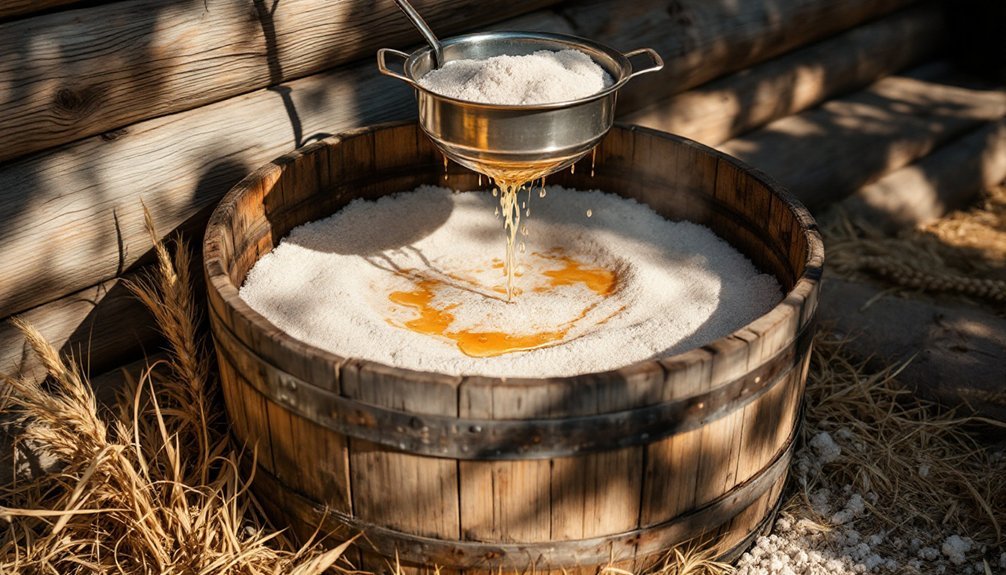
They'd collect the ashes and use a simple leaching process, pouring water through them to extract the alkaline solution. This method proved efficient for creating the powerful lye needed for their soap-making endeavors.
Tools and Equipment for Ash Processing
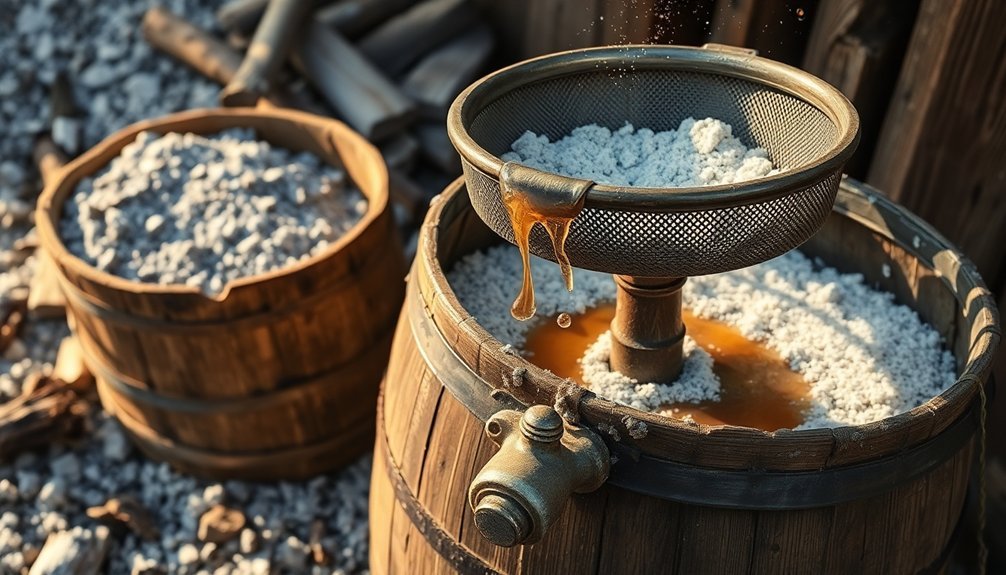
You'll need a wooden barrel or trough with a drainage hole at the bottom, lined with hay to serve as both container and initial filter for your wood ash processing.
Your essential straining equipment consists of additional hay layers that filter out remaining solids while allowing the lye solution to flow through into collection vessels.
To handle the caustic lye safely, you'll want sturdy wooden or ceramic containers for storage, keeping the solution away from metal which can corrode.
Processing Barrels and Containers
To efficiently process wood ash into lye, pioneers relied heavily on wooden barrels and troughs as their primary processing containers.
You'd find these vessels carefully lined with hay and designed with strategic holes at the bottom for ideal drainage. The processing setup included layers of pebbles and straw, which created an effective filtration system that prevented the ashes from clogging while allowing water to seep through steadily.
A single wooden barrel of ashes was typically sufficient for a household's soap-making needs.
When selecting wood for processing, pioneers favored hardwoods like hickory, sugar maple, and ash, as these varieties produced the highest alkali content.
The combination of well-designed containers and carefully chosen wood types guaranteed the most effective lye extraction possible.
Straining and Filtering Methods
Pioneer households mastered efficient lye extraction through carefully planned straining methods and specialized tools. You'll find that they lined barrels or troughs with hay, creating an effective filtration system for wood ashes. The process involved pouring water over the ashes to create a slurry that would seep through the hay barrier.
| Tool | Purpose |
|---|---|
| Hay Lining | Filters wood ashes effectively |
| Collection Container | Captures filtered lye solution |
| Testing Equipment | Confirms lye strength with egg test |
To maximize your lye production, you'd need to reprocess the solution by repeatedly pouring fresh water through the used ashes. Once you've collected the filtered lye, you'd boil it down to achieve the proper concentration. You can verify the solution's strength using the egg float test, a reliable method pioneers trusted.
Storage and Safety Equipment
Safe and effective lye production requires proper storage containers and protective equipment.
You'll need sturdy, airtight containers to store your wood ashes, protecting them from moisture and contaminants that could compromise your lye-making process.
When you're working with lye, don't forget essential safety equipment like gloves and goggles to protect yourself from chemical burns and skin irritation.
You should also guarantee proper ventilation in your workspace, as the alkaline fumes from wood ashes can be harmful if you're working in an enclosed area.
For the extraction process, you'll want to set up a leaching barrel made of wood or metal, with drainage holes at the bottom.
Add layers of pebbles and straw to create an effective filtering system that prevents ash from clogging these holes.
Traditional Methods of Lye Extraction
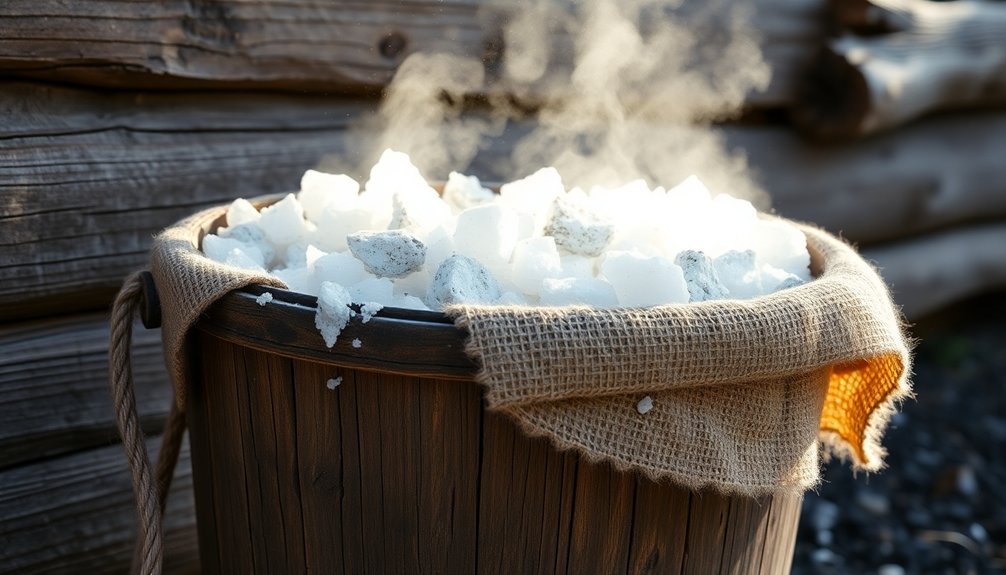
You'll start the lye extraction process by soaking wood ashes in water overnight to begin releasing their potassium content.
Next, you'll transfer the soaked ashes into straw-lined barrels, where you'll pour water through them repeatedly to create a potent leaching solution.
The resulting liquid drains through the barrel's bottom, producing a concentrated lye solution that's ready for soap making or other household uses.
Soaking Wood Ash Overnight
During colonial times, extracting lye from wood ash was a practical overnight process that made use of everyday cooking waste.
You'd start by collecting wood ashes from your hearth and placing them in a large container. After pouring water over the ashes, you'd let nature take its course as the water slowly filtered through, dissolving the potassium hydroxide to create a lye solution.
The beauty of this method was its simplicity and efficiency. You could control the strength of your lye by adjusting the water amount, making it perfect for your specific soap-making needs.
Once the mixture settled overnight, you'd carefully skim the concentrated liquid from the top, leaving the spent ashes behind. This process made the most of resources you already had on hand.
Leaching Through Straw Barrels
While simpler methods existed, leaching wood ash through straw barrels became a preferred technique among pioneers seeking to produce high-quality lye.
You'll find this method was remarkably efficient, using straw and pebbles as natural filters to separate the lye solution from wood ashes. The process required careful layering and patience to extract the most potent alkali content.
Key aspects of the barrel leaching process included:
- Placing straw and pebbles at the barrel's bottom to create an effective filtering system
- Pouring water gradually over the ashes to allow proper percolation
- Collecting the filtered lye solution through a hole at the barrel's base
- Selecting hardwoods like hickory and sugar maple for superior results
This traditional approach guaranteed you'd get the maximum yield while conserving valuable resources.
Collecting Concentrated Lye Solution
Once pioneers had their leaching barrels properly set up, the process of collecting concentrated lye solution demanded careful attention to detail. You'd pour water over the wood ashes, allowing it to slowly seep through the hay-lined barrel. The resulting liquid would contain the essential potassium hydroxide needed for making lye soap.
| Process | Time Required | Yield |
|---|---|---|
| Initial Pour | 1-2 hours | Weak solution |
| First Filter | 30 minutes | Basic lye |
| Boiling Down | 2-3 hours | Concentrated |
| Second Pour | 1-2 hours | Enhanced strength |
| Final Collection | 1 hour | Ready for soap |
To strengthen your solution, you could either boil it down or repeatedly pour water through the ashes to make it more potent. One barrel of ashes typically provided enough lye for a complete batch of soap.
Safety Measures in Historical Lye Making
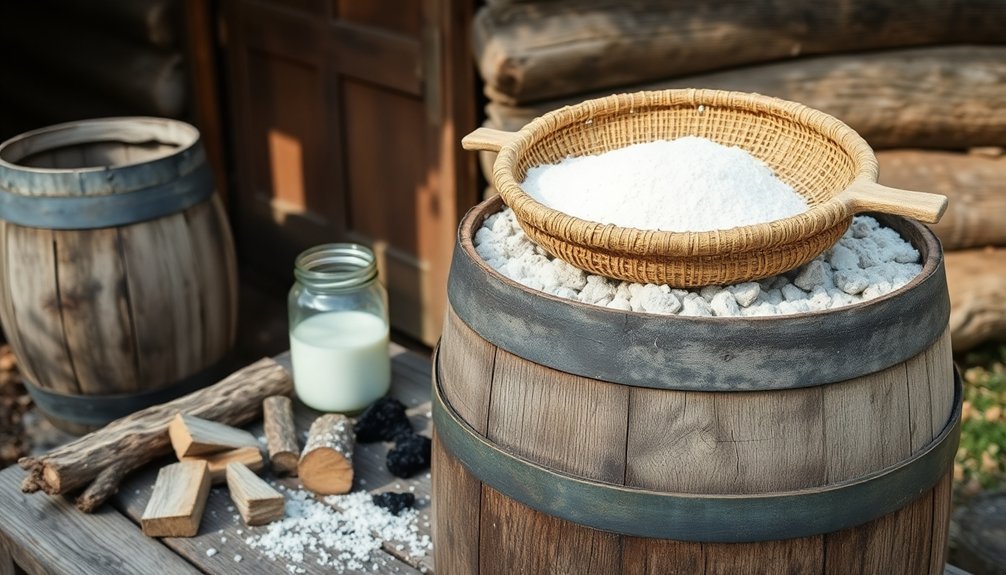
Because pioneers recognized the dangerous nature of lye production, they developed basic safety measures to protect themselves and their families.
Early settlers were well aware of lye's dangers and created fundamental safety protocols to safeguard their households.
While their safety precautions weren't as sophisticated as today's standards, they understood the importance of careful handling and storage of both wood ash and the resulting lye solution.
To maintain safety during lye production, pioneers followed these essential practices:
- Stored wood ash in covered containers away from children and animals
- Monitored the boiling process carefully to prevent dangerous concentration levels
- Used the "egg test" to check lye strength, avoiding overly caustic solutions
- Kept lye materials in designated areas to prevent accidental contact or ingestion
These simple but effective measures helped pioneers minimize the risks associated with making and handling lye, ensuring safer soap production for their households.
Common Hardwoods and Their Alkaline Properties
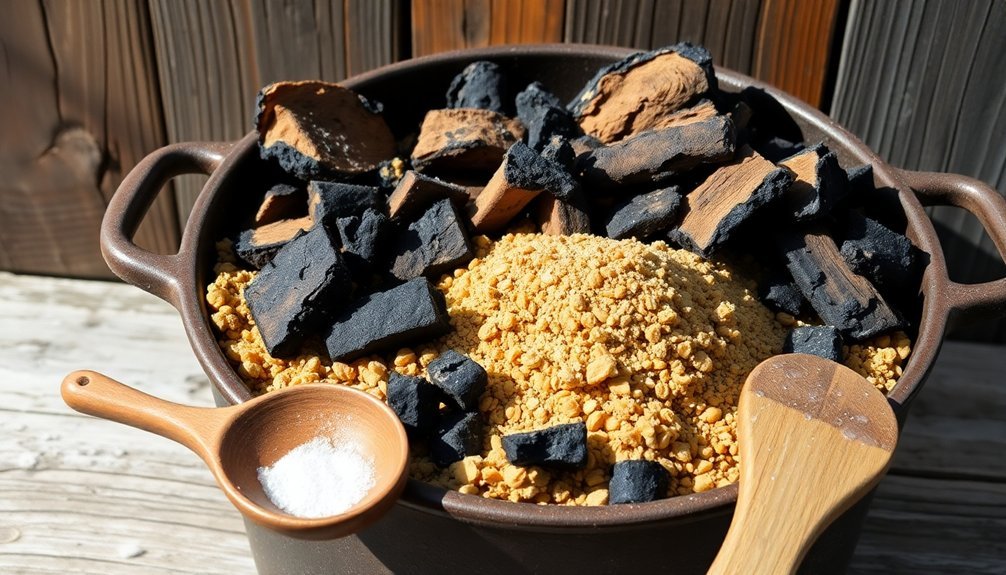
When pioneers selected wood for lye production, they prioritized specific hardwoods known for their superior alkaline properties. You'll find that hickory and sugar maple were particularly valued due to their dense structure and high potassium carbonate content.
| Wood Type | Alkaline Strength | Best Uses |
|---|---|---|
| Hickory | Very High | Soap Making |
| Sugar Maple | High | General Lye |
| Ash/Beech | Medium-High | Mixed Uses |
The wood ash from these hardwoods creates potent lye through a simple leaching process. You'll get the best results by pouring water over the ashes, which dissolves the potassium compounds. The resulting solution's alkaline properties come from cellulose decomposition, producing essential potassium and sodium carbonates. That's why pioneers carefully chose their wood sources, understanding that the right hardwood could make the difference between weak and strong lye.
Storing and Testing Pioneer Lye Solutions
Making quality lye was only half the battle for pioneers – proper storage and testing determined its ultimate success.
You'll find they took great care to store their lye solutions in airtight containers with clear labels to prevent accidents and maintain potency.
When it came to testing their solutions, pioneers relied on several methods:
- The floating egg test, where a fresh egg would float in properly concentrated lye
- Double-processing ash by repeatedly pouring water through it
- Keeping detailed records of wood types and water ratios
- Using pH measurements when more precise results were needed
You'll notice these testing methods evolved from simple observations to more accurate measurements over time.
Frequently Asked Questions
Why Does Wood Ash Make Lye?
When you mix wood ash with water, it releases alkaline compounds like potassium and sodium carbonate. These dissolve to create lye solution, as the water pulls out the soluble alkali components naturally present.
What Did Pioneers Use to Make Lye?
You'll find that pioneers used hardwood ashes, mainly from hickory and maple trees, to make lye. They'd leach water through the ashes in wooden barrels, collecting the potassium-rich solution that dripped out.
How Did Native Americans Make Lye?
You'll find that Native Americans made lye by pouring water through wooden ash collected from their fires. They'd test the solution's strength by floating an egg and use it for soap-making and cleaning.
How Did Ancient People Get Lye?
You'll find ancient people got their lye by pouring water through wood ashes, especially from hardwoods like oak. They'd collect the liquid, boil it down, and test its strength using an egg float method.
In Summary
You've learned how pioneers wisely chose wood ash for making lye because it was readily available, sustainable, and rich in potassium hydroxide. By selecting hardwoods and following careful extraction methods, they created an essential ingredient for soap making and other household needs. While modern alternatives exist today, understanding these traditional practices helps you appreciate the ingenuity and resourcefulness of early American settlers.