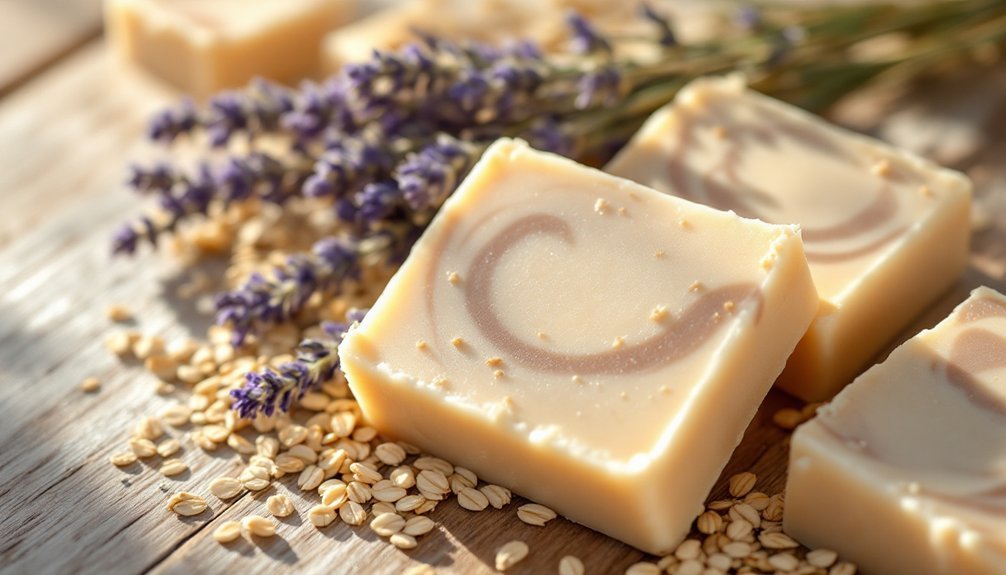
Oatmeal soap bars offer natural exfoliation while providing anti-inflammatory and moisturizing benefits for all skin types. You'll find various DIY options including honey lavender, goat's milk, cinnamon vanilla, and colloidal oatmeal with shea butter. For beginners, try the coconut oil melt-and-pour recipe, while experienced soap makers might enjoy coffee-infused or calendula flower variations. Each recipe combines oatmeal's gentle exfoliating properties with complementary ingredients to address specific skin concerns. Discover how these ten formulations can transform your skincare routine.
Honey & Oatmeal Soap Bar With Lavender Essential Oil
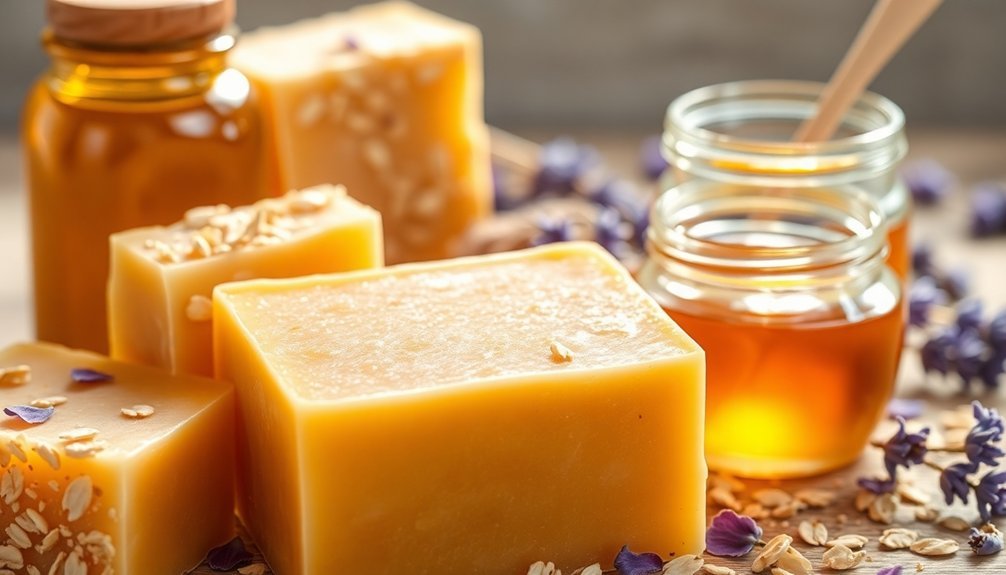
While many store-bought soaps strip your skin of its natural oils, this homemade honey and oatmeal soap bar does the opposite. It combines three powerhouse ingredients that work together to nourish your skin naturally.
The ground oatmeal provides gentle exfoliation, removing dead skin cells without irritation. Honey acts as both a natural humectant and preservative, keeping your skin hydrated while extending your soap's shelf life.
The addition of lavender essential oil brings antimicrobial properties and a calming aroma that transforms your shower into a spa-like experience. Many users love that this soap contains nourishing shea butter which adds an extra layer of moisturization to keep skin soft.
This combination is particularly effective for sensitive or acne-prone skin, as the anti-inflammatory properties of oatmeal and lavender help reduce redness and irritation, leaving your skin soothed and glowing.
Goat's Milk Oatmeal Exfoliating Bars for Sensitive Skin
For those with sensitive skin searching for gentle cleansing options, goat's milk oatmeal bars offer a luxurious solution beyond ordinary soap. These bars combine the exfoliating power of oatmeal with goat milk's nourishing properties to create a skin-friendly cleanser.
Goat's milk is packed with lactic acid that gently removes dead skin cells while fatty acids strengthen your skin barrier. The colloidal oatmeal works alongside it to reduce irritation and absorb excess oil. The high-quality Nigerian Dwarf Goat Milk used in these formulations contains exceptional fat content that enhances the soap's moisturizing properties.
The perfect harmony of lactic acid exfoliation and oatmeal's soothing touch creates a gentle symphony for your skin's natural renewal.
Adding shea and cocoa butter forms a protective barrier that locks in moisture.
When making these bars, remember to freeze your goat's milk before adding sodium hydroxide to prevent scorching.
These specialized bars particularly benefit those with eczema, psoriasis, or chronically dry skin by soothing inflammation and restoring your skin's natural balance.
Cinnamon Vanilla Oatmeal Soap for Warming Winter Care
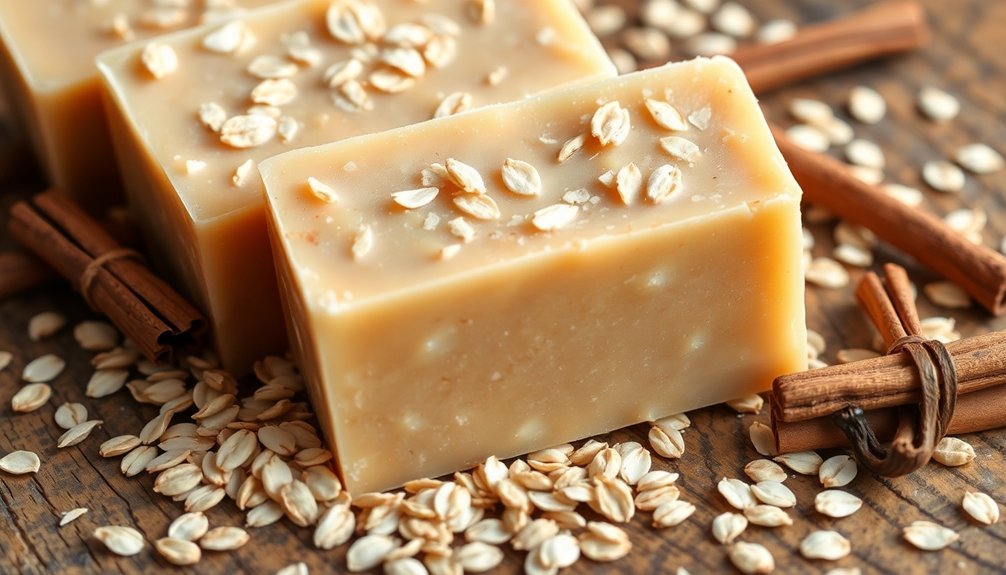
Your skin craves extra warmth during the harsh winter months, making cinnamon vanilla oatmeal soap an ideal seasonal treatment.
The circulation-boosting properties of cinnamon create a gentle warming sensation while delivering antibacterial benefits to your skin's surface.
Combining these warming spices with moisture-retaining oatmeal helps your skin maintain hydration even as indoor heating and cold outdoor air work to strip away natural oils. The anti-inflammatory properties of oatmeal's avenanthramides provide additional relief for winter-irritated skin.
Skin-Warming Spice Benefits
Three warming elements make cinnamon vanilla oatmeal soap an ideal winter skin companion.
Cinnamon stimulates blood circulation, bringing nutrients to your skin's surface while helping to remove dead cells. This natural warming agent provides antimicrobial benefits that deeply cleanse while invigorating tired winter skin. For optimal results, incorporate the cinnamon after allowing the melted soap mixture to cool slightly.
When combined with soothing oatmeal and comforting vanilla, you'll experience:
- Increased circulation – Cinnamon's stimulating properties bring warmth to cold-weather skin
- Gentle exfoliation – Ground cinnamon and oatmeal work together to slough away winter dryness
- Aromatherapy benefits – The vanilla-cinnamon fragrance combination creates a sensory experience that elevates mood during gray winter days
These ingredients work synergistically to transform your winter skincare routine from mundane to luxurious while addressing seasonal skin concerns.
Winter Moisture Retention
Winter's harsh conditions demand specialized skincare that not only cleanses but actively fights against moisture loss. Oatmeal soap bars excel at this task, creating a protective barrier that locks in hydration while gently exfoliating dry skin.
You'll find that adding humectants like honey or coconut oil to your DIY soap greatly enhances its moisture-retaining properties. The oatmeal component soothes irritated skin while maintaining essential oils that commercial soaps often strip away.
For maximum benefit, incorporate milk—either goat's or coconut—into your soap base before adding the oatmeal and essential oils. This combination creates a winter skincare solution that cleanses while preventing the tight, uncomfortable feeling that typically follows washing in cold weather. For a warming winter effect, add 20-30 drops of Young Living Cinnamon Bark essential oil to your 2-pound oatmeal soap base.
Your skin stays supple and nourished despite freezing temperatures outside.
Colloidal Oatmeal & Shea Butter Soap for Extreme Hydration
Colloidal oatmeal and shea butter combine to create a powerfully hydrating soap that'll transform your dry skin care routine.
You'll find that colloidal oatmeal—finely ground oats processed to retain their skin-soothing properties—works synergistically with vitamin-rich shea butter to lock in moisture while calming irritation.
The mixing process is straightforward: whip your foaming bath butter until fluffy, blend in shea butter and glycerin, then incorporate the colloidal oatmeal for maximum skin-nourishing benefits. This soap recipe only takes about 20 minutes to prepare, making it perfect for busy people who want homemade skincare solutions.
Understanding Colloidal Oatmeal
Although commonly overlooked, colloidal oatmeal stands as a powerhouse ingredient in natural skincare routines. This finely ground oat powder dissolves in water, creating a soothing, protective barrier on your skin.
Unlike its whole oat counterparts, colloidal oatmeal doesn't exfoliate but instead delivers impressive moisturizing and anti-inflammatory benefits.
When you're dealing with sensitive or irritated skin, colloidal oatmeal offers:
- Natural relief for conditions like eczema, dermatitis, and sunburn through its anti-inflammatory properties
- Enhanced moisture retention by forming a protective layer that prevents water loss
- Rich nutrient delivery from amino acids, antioxidants, and fatty acids that nourish your skin
You'll find this versatile ingredient in numerous skincare products, from cleansers to moisturizers, or you can make it yourself by grinding uncooked oats into a fine powder. It also helps balance skin pH levels, which is particularly beneficial for those with dry or sensitive skin conditions.
Shea Butter Benefits
The golden elixir of skincare, shea butter transforms even the driest skin when combined with colloidal oatmeal in handmade soap bars. This African treasure is packed with fatty acids that fortify your skin's moisture barrier while delivering deep hydration.
You'll appreciate shea butter's anti-inflammatory properties that soothe irritated skin conditions like eczema and psoriasis. Rich in vitamins A and E, it fights premature aging by neutralizing harmful free radicals. It's also non-comedogenic, so it won't clog your pores.
When paired with colloidal oatmeal, the moisturizing synergy creates a powerhouse of hydration. Together, they promote skin cell regeneration and create a protective barrier against environmental damage. The combination offers exceptional UV protection while shielding your skin from harmful pollutants.
This gentle combination delivers therapeutic benefits while maintaining your skin's natural balance.
Step-By-Step Mixing Process
Creating your hydrating oatmeal soap begins with gathering high-quality ingredients and proper safety equipment. Don your safety goggles and gloves before mixing sodium hydroxide with distilled water in a well-ventilated area.
Allow this lye solution to cool while you melt your shea butter and oils in a separate stainless steel pot.
When both mixtures reach similar temperatures, pour the lye solution into your oils and blend with an immersion blender until you reach medium trace.
Now it's time to customize your soap:
- Add 1 tablespoon of colloidal oatmeal per 500g of oils
- Blend thoroughly to guarantee even distribution
- Optional: incorporate essential oils for fragrance
You can also replace water with oat milk to achieve an exceptionally creamy texture in your final soap bars.
Continue blending until all ingredients are fully incorporated, then pour into your prepared mold.
Coffee-Infused Oatmeal Bars for Cellulite Reduction
Four powerful benefits make coffee-infused oatmeal soap bars an excellent natural remedy for cellulite reduction. The coffee grounds stimulate blood flow beneath the skin, visibly reducing cellulite's dimpled appearance while providing gentle exfoliation.
Meanwhile, coffee's antioxidants protect and soothe your skin, fighting free radicals that contribute to aging.
When combined with oatmeal, you'll get enhanced skincare benefits. This duo creates the perfect balance of exfoliation without harshness, making these bars suitable for all skin types. Adding white clay to your recipe improves the bar's ability to purify while maintaining a gentle exfoliating effect.
For maximum cellulite-fighting potential, add shea butter and coconut oil to your recipe for deep moisturization. You can easily customize these bars using a melt-and-pour base—simply melt, add your coffee grounds and ground oatmeal, then pour into molds for a simple DIY treatment.
Simple Oatmeal & Olive Oil Cold Process Soap
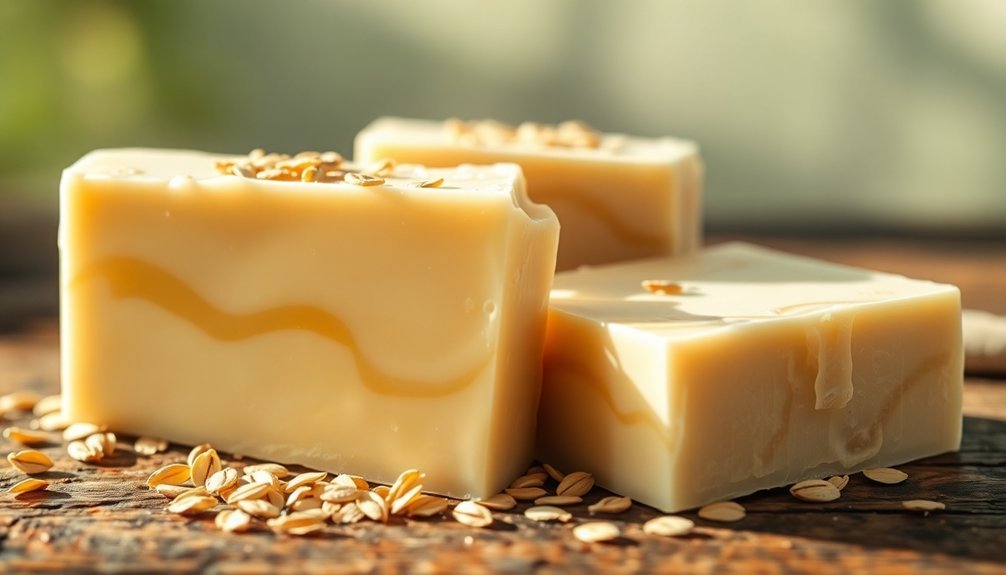
You'll need just a few key ingredients for this nurturing soap: 8 ounces olive oil, 1 ounce coconut oil, 1.3 ounces lye, 3 ounces distilled water, and 2 tablespoons of ground oats.
Before handling lye, put on protective gear including goggles, gloves, and long sleeves, and work in a well-ventilated area away from children and pets. Using a reliable soap calculator is essential to ensure proper lye ratios for successful saponification.
After pouring your soap into molds, you'll need to be patient during the 4-6 week curing process which allows excess water to evaporate and creates a milder, longer-lasting bar.
Ingredients and Measurements
The foundation of any successful oatmeal soap begins with properly measured ingredients that work harmoniously together.
You'll need olive oil (75% of total oil weight), coconut oil (25% of oil weight), and lye calculated specifically for your oil amounts.
Add 18-20 ounces of distilled water per batch and 4 teaspoons of oatmeal per pound of oils.
For the perfect exfoliating soap, consider these critical factors:
- Oatmeal texture – Use colloidal oatmeal for skin benefits without exfoliation, or finely ground rolled oats for gentle scrubbing.
- Superfat percentage – Higher olive oil content creates a milder, more moisturizing bar.
- Optional additives – 1 teaspoon of honey adds nutrition, while essential oils provide customized scents. Oatmeal helps to naturally absorb dirt and oil while being suitable for all skin types.
Always use a lye calculator to ascertain proper saponification for safe, effective soap.
Preparation Safety Steps
Safety must come first when making oatmeal soap at home, as the process involves potentially hazardous materials. Always wear protective goggles, gloves, and an apron to shield yourself from caustic lye.
Work in a well-ventilated area, preferably near an open window or with a fan running. Use only heat-resistant, non-aluminum containers for mixing, as lye reacts with aluminum.
Remember the vital rule: always add lye to water, never the reverse, to prevent dangerous splashing. Measure ingredients precisely with a digital scale for accurate proportions.
Keep children and pets away from your workspace throughout the entire process. Allow your lye solution to cool to 90-115°F before combining with oils at similar temperatures. The soap will need to cure for 3-4 weeks before it's completely safe for use on your skin.
Maintain these safety practices even after mixing is complete until your soap is fully set.
Curing For Maximum Benefits
After completing the initial mixing and molding process, proper curing becomes essential for transforming your freshly made oatmeal soap into an effective, long-lasting product.
Allow your soap to cure for 4-6 weeks in a well-ventilated area at room temperature to develop hardness and allow excess water to evaporate.
For ideal curing results:
- Use curing racks to guarantee proper air circulation around each bar, preventing soft spots and promoting even drying.
- Monitor humidity levels in your curing space to avoid mold formation or excessive drying that could compromise quality.
- Consider extended aging beyond the minimum 4 weeks for a more stable, longer-lasting bar that provides enhanced moisturizing benefits.
The patience invested during curing yields a superior oatmeal soap that maximizes both skin benefits and product longevity. Your fully cured oatmeal soap bars will provide gentle natural exfoliation while promoting smoother skin texture.
Lemon Zest & Oatmeal Refreshing Morning Scrub Bars
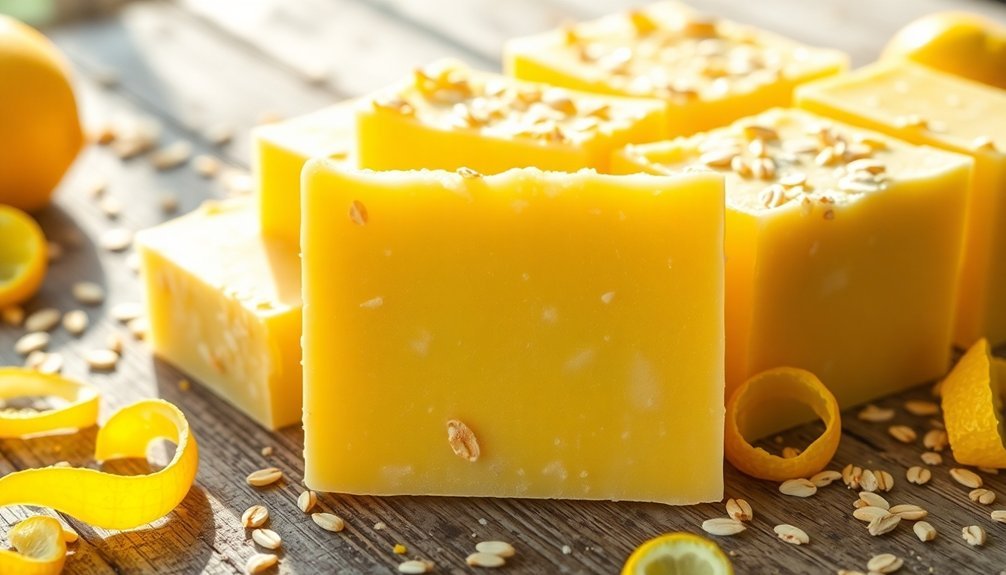
Waking up to the invigorating scent of lemon, you'll find these revitalizing morning scrub bars are the perfect way to jumpstart your day.
Start each morning with a burst of citrus energy that awakens your senses and refreshes your skin.
Combining finely ground oatmeal with fresh lemon zest creates a gentle exfoliant that removes dead skin cells without irritation.
To make these bars, melt your soap base—goat's milk or shea butter work wonderfully—in a double boiler.
Stir in ground oatmeal, lemon zest, and a few drops of lemon and lemongrass essential oils.
The citrus combination offers antibacterial properties while the oatmeal soothes your skin and balances its natural pH.
These ingredients work together to help repair your skin's protective layer, as the protein in oatmeal has been shown to strengthen the skin's natural barrier function.
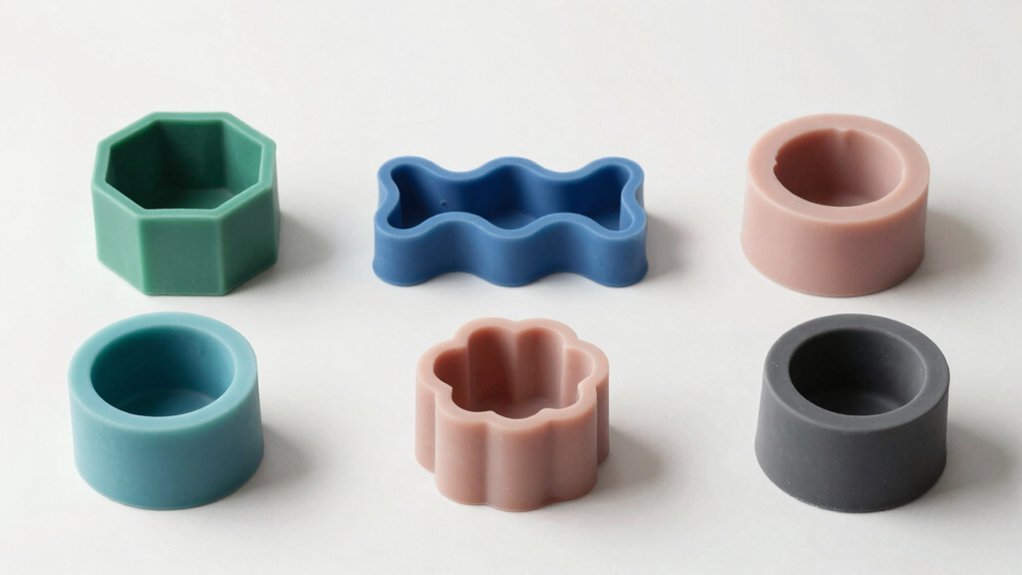
Pour the mixture into silicone molds and allow it to cure completely.
Store in an airtight container to preserve freshness and that uplifting citrus aroma.
Coconut Oil & Oatmeal Melt-and-Pour Beginner Recipe
If you're new to soapmaking, this Coconut Oil & Oatmeal Melt-and-Pour recipe offers three key advantages: simplicity, affordability, and remarkable skin benefits.
This method eliminates the need for handling lye, making it perfect for beginners.
To create your exfoliating bars, you'll need:
- A melt-and-pour soap base (shea or plant-based works best)
- Finely ground oatmeal (colloidal works wonderfully for sensitive skin)
- Coconut oil for added moisture and nourishment
Simply melt your base using a double boiler or microwave, let it cool slightly, then stir in your oatmeal and coconut oil.
For extra exfoliation, sprinkle oatmeal at the bottom of your molds before pouring.
Digital scales provide precise measurements that measuring cups cannot, ensuring your soap has the perfect consistency.
Allow several hours for cooling before unmolding your finished bars.
Calendula Flower & Oatmeal Healing Soap for Irritated Skin
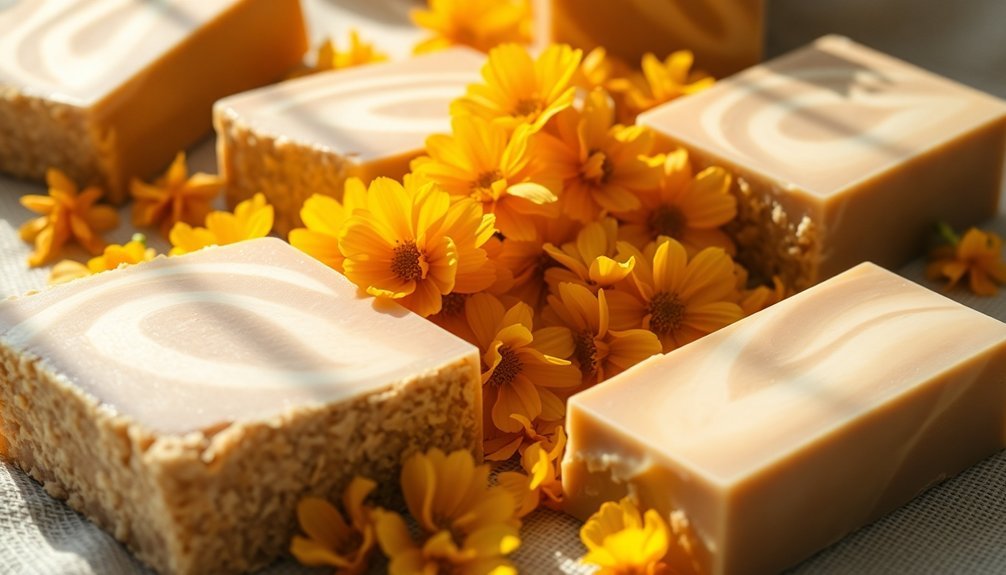
Healing power comes naturally when you combine calendula flowers and oatmeal in homemade soap specifically designed for irritated skin. This dynamic duo works together to reduce inflammation, soothe redness, and promote skin repair while gently exfoliating.
Calendula, often called "nature's collagen," boosts skin elasticity while its antioxidant properties protect against environmental damage. When paired with oatmeal's pH-balancing abilities, you've got a potent remedy for sensitive, inflamed skin. The combination creates a non-foaming, soothing soap that effectively cleanses without stripping natural oils.
For your DIY version, use a melt-and-pour base with olive oil or coconut oil, then add finely ground oatmeal and calendula petals.
Consider including cocoa butter for extra moisture. Essential oils can enhance therapeutic benefits, but they're optional for truly sensitive skin.
Almond Milk & Oatmeal Gentle Exfoliating Bars for Daily Use
For sensitive skin that needs daily care without harsh effects, almond milk and oatmeal soap bars offer the perfect balance.
These two ingredients work in harmony—almond milk nourishes with vitamins and fatty acids while oatmeal gently removes dead skin cells without stripping moisture.
Creating your own exfoliating bars is simpler than you might think:
- Melt your soap base and let it cool slightly before adding finely ground oatmeal.
- Mix in almond milk for a creamy, luxurious texture that soothes inflammation.
- Add optional essential oils like lavender or vanilla for a personalized fragrance.
The result is a family-friendly, vegan soap that both cleanses and moisturizes. For the best results, spray the surface with rubbing alcohol to eliminate any bubbles that form during the pouring process.
Your skin will feel refreshed and radiant with regular use, making this combination ideal for your daily skincare routine.
Frequently Asked Questions
How Long Do Homemade Oatmeal Soap Bars Typically Last?
Your homemade oatmeal soap bars typically last 12 months when stored properly. You'll get the best quality if you keep them in a cool, dry place away from sunlight and moisture.
Can I Use Steel-Cut Oats Instead of Rolled Oats?
You can use steel-cut oats, but they'll provide a much coarser exfoliation than rolled oats. They're less common in soap making because they can feel quite rough on your skin.
Are Oatmeal Soaps Safe for Children and Babies?
Yes, oatmeal soaps are generally safe for your children and babies. They're made with natural ingredients, have anti-inflammatory properties, and avoid harsh chemicals that could irritate sensitive skin. Always do a patch test first.
Will Oatmeal Soap Clog My Drains Over Time?
Yes, oatmeal soap can clog your drains over time. To prevent this, use finely ground oats instead of whole oats, install drain screens, and flush with hot water after use to minimize buildup.
Does Oatmeal Soap Help With Specific Skin Conditions Like Eczema?
Yes, oatmeal soap can help manage eczema symptoms. It soothes inflammation, reduces itching, and moisturizes your skin. Its anti-inflammatory properties and ability to support skin barrier repair make it beneficial for your condition.
In Summary
You've now got 10 amazing oatmeal soap recipes to try! Whether you're a beginner starting with melt-and-pour or an experienced soap maker tackling cold process, there's an option for your skin's needs. Don't be afraid to customize with different essential oils or herbs. Your skin will thank you for choosing these natural exfoliating bars over commercial products. Happy soap making!