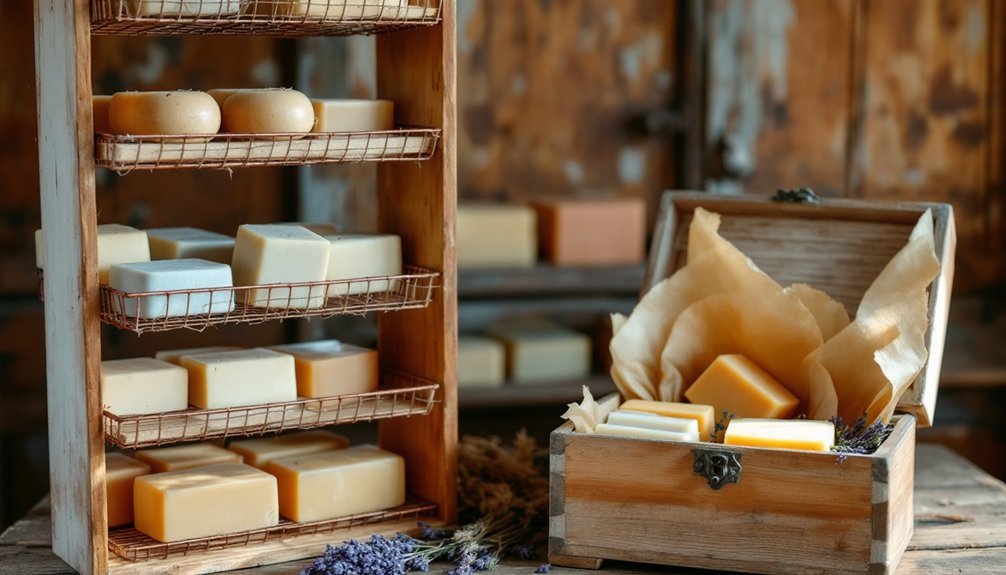
Throughout history, artisans preserved handmade soap using five distinctive methods: wrapping bars in breathable linen or muslin (18th century), storing in porous clay pots (Colonial America), curing on wooden drying racks (European Soap Guilds), sealing with wax paper (Victorian era), and organizing in temperature-controlled root cellars. Each technique balanced moisture protection with necessary airflow, preventing mold while maintaining fragrance. These time-tested preservation methods offer valuable insights for today's soap makers seeking authentic, natural storage solutions.
Linen & Muslin Wrapping Methods of the 18th Century
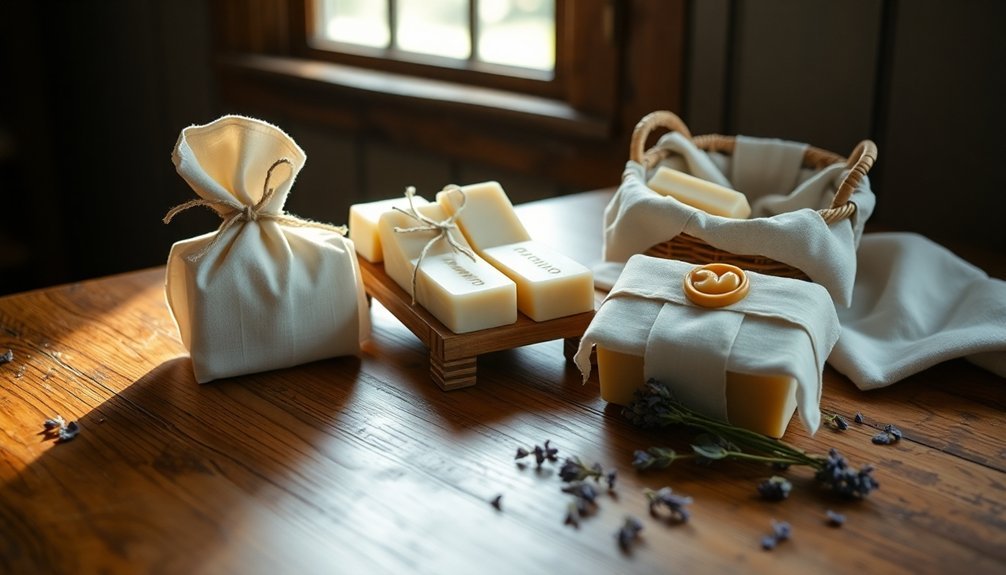
While modern soap storage often relies on plastic or paper, 18th-century soap makers preferred fabric wrappings that balanced protection with breathability. They typically chose linen and muslin—natural textiles that prevented moisture damage while allowing essential air circulation that helped soaps continue aging properly.
These breathable wrappings served multiple purposes: they protected against contaminants, prevented mold growth, and enhanced the soap's quality over time. When you unwrapped your soap, you'd experience a stronger fragrance, as the porous muslin allowed scents to permeate while the soap was stored.
The practice also reflected broader textile reuse patterns of the era. Soap makers could easily write or stitch product information directly onto these fabric wrappers, making them both practical and sustainable storage solutions for their handcrafted products.
Clay Pot Storage Systems From Colonial America
Unlike today's industrial soap packaging, Colonial Americans relied on earthenware solutions that brilliantly addressed their preservation challenges.
You'd find these clay pots buried in the ground or tucked away in cool, dark corners of colonial homes, utilizing the earth's natural temperature regulation to preserve handmade soap quality.
The ingenious storage system worked because:
- Clay's porous structure allowed proper air circulation, preventing moisture buildup that leads to soap spoilage
- Natural insulation properties of earthenware protected soaps from temperature fluctuations
- Burying pots in the ground created a primitive but effective humidity control system
- Simple cloth or wooden lids provided additional protection while maintaining airflow
This practical Colonial American approach effectively extended soap's shelf life during humid summers when handmade soaps were particularly vulnerable to quality degradation.
Wooden Drying Racks Used by European Soap Guilds
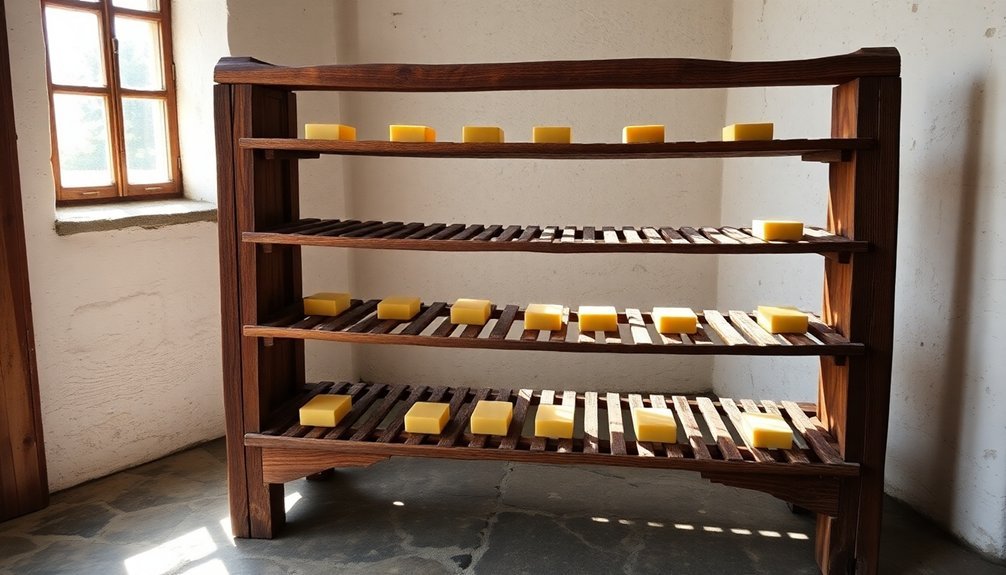
Across the Atlantic from Colonial America's earthenware solutions, European soap guilds developed their own innovative storage system – the wooden drying rack.
You'll find these ingenious structures were crafted from untreated wood, which promoted natural breathability during the vital curing process of handmade soap.
These multi-tiered racks weren't just practical—they revolutionized soap-making by enhancing air circulation and moisture evaporation. They allowed guild members to dry numerous bars simultaneously while preventing mold formation.
The design reflected the exceptional craftsmanship that defined traditional soap-making throughout European history.
What's particularly fascinating is how these wooden drying racks became integral to soap guilds' practices, with designs carefully passed down through generations.
The racks not only improved soap quality and longevity but also showcased the artistry behind this essential craft.
Wax Paper Techniques From Victorian Soap Makers
Emerging during Britain's industrial revolution, Victorian soap makers pioneered wax paper techniques that transformed how handmade soaps were preserved and presented.
You'll find this simple material created an effective moisture barrier that extended shelf life while allowing proper air circulation around the soap.
When you wrap your handmade soap in wax paper, you're following a tradition that helped preserve quality and prevent the dreaded orange spots (DOS) that plagued poorly stored soaps.
- Maintains fragrance intensity by sealing in essential oils
- Creates a perfect surface for labeling products and ingredients
- Allows soap to "breathe" while protecting from environmental contaminants
- Reflects the Victorian era's growing emphasis on personal care products
This practical approach balanced protection with presentation, making beautiful soaps accessible to more households.
Root Cellar Organization for Extended Soap Preservation
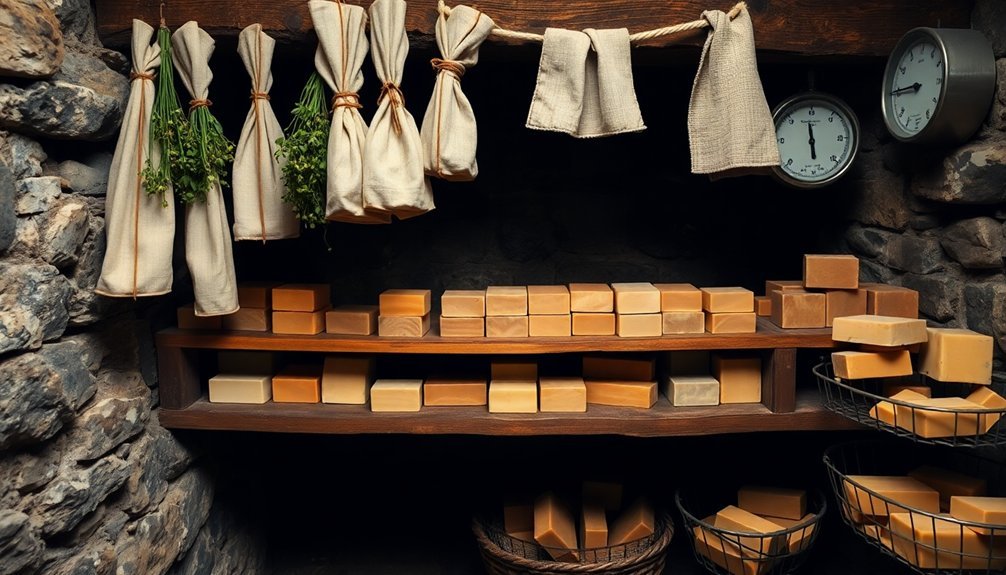
While modern soap makers often turn to specialized storage solutions, traditional root cellars provide an exceptional environment for preserving your handmade soap creations. The stable temperatures of a root cellar slow curing time and extend shelf life, keeping bars in prime condition longer.
Monitor humidity levels carefully to prevent oxidation that causes dreaded orange spots. Guarantee proper air circulation by placing bars on wooden shelves with space between them to avoid moisture buildup.
Never use plastic wrap; instead, opt for breathable containers or wrap soaps in muslin or parchment paper to let excess moisture escape while preventing scent blending between different varieties.
Organize your storage area by labeling each soap with production date and fragrance. This simple system guarantees you'll use older bars first while maintaining the integrity of your handmade treasures.
Frequently Asked Questions
How to Store Handmade Soap Long Term?
Store your handmade soap in a cool, dry place with good airflow. Don't use airtight containers. Keep bars on ventilated shelves away from sunlight. Label each bar with its production date for tracking freshness.
What Is the Shelf Life of Handmade Soaps?
Your handmade soaps will last at least one year, but they'll often improve with age if stored properly. You'll know they're spoiled if they smell rancid, feel sticky, or develop orange spots.
Can You Use 20 Year Old Soap?
Yes, you can use 20-year-old soap if it's been properly stored and doesn't show signs of spoilage. Check for rancid smells or sticky texture first, but well-preserved soap may still clean effectively despite reduced fragrance and lather.
How to Naturally Preserve Soap?
You'll preserve soap naturally by fully curing it for 4-6 weeks, storing in cool, dry places with good airflow, wrapping in breathable materials like muslin, keeping different scents separate, and checking regularly for spoilage signs.
In Summary
You've now traveled through centuries of soap-storing wisdom, from delicate linen wraps to practical root cellars. Whether you're crafting your own bars or collecting artisanal soaps, these historic methods offer both function and charm. Try incorporating these time-tested techniques into your modern routine—you'll extend your soap's life while connecting to a rich tradition of craftsmanship. The perfect soap deserves the perfect storage, and history's solutions still work beautifully today.