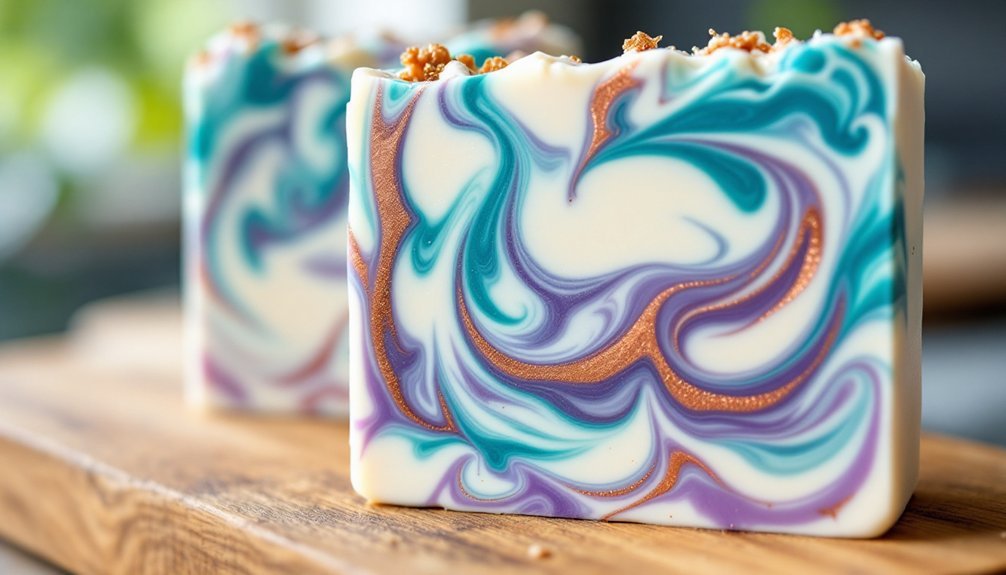
Creating beautiful swirl patterns in cold process soap requires maintaining a thin to medium trace consistency. Keep your soap batter at 80-90°F and use a stick blender in short bursts, then switch to a whisk for gentler mixing. Pre-mix colorants separately, and start with beginner-friendly techniques like drop swirls or in-the-pot swirls. Use contrasting colors and slow-moving oils (about 60% of your recipe) to prevent premature thickening. The perfect swirl pattern awaits with just a few key techniques.
Essential Equipment for Perfect Soap Swirls
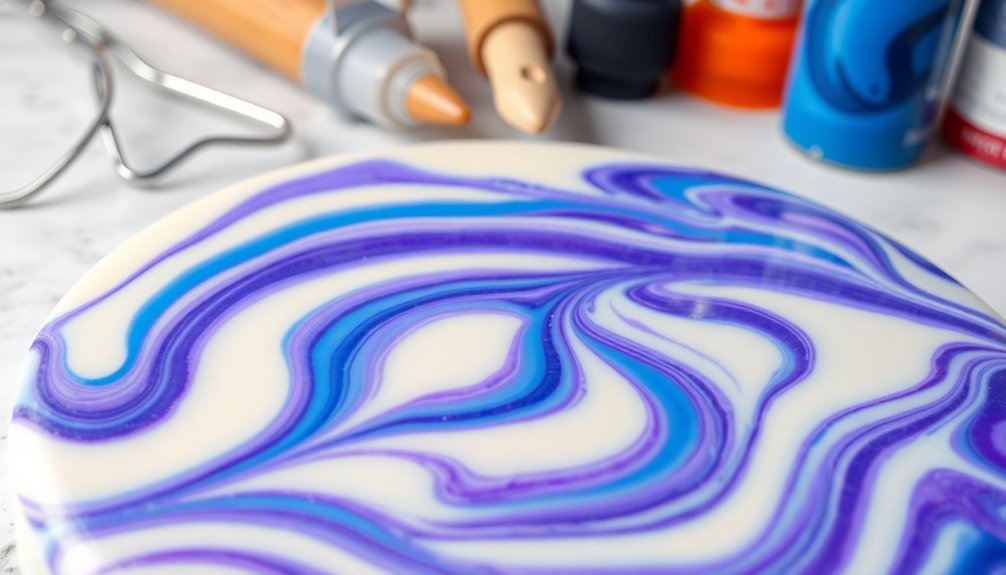
Five key tools stand between you and stunning soap swirls.
First, a stick blender will help you achieve the proper trace consistency—use it in short bursts to avoid over-emulsifying your soap batter.
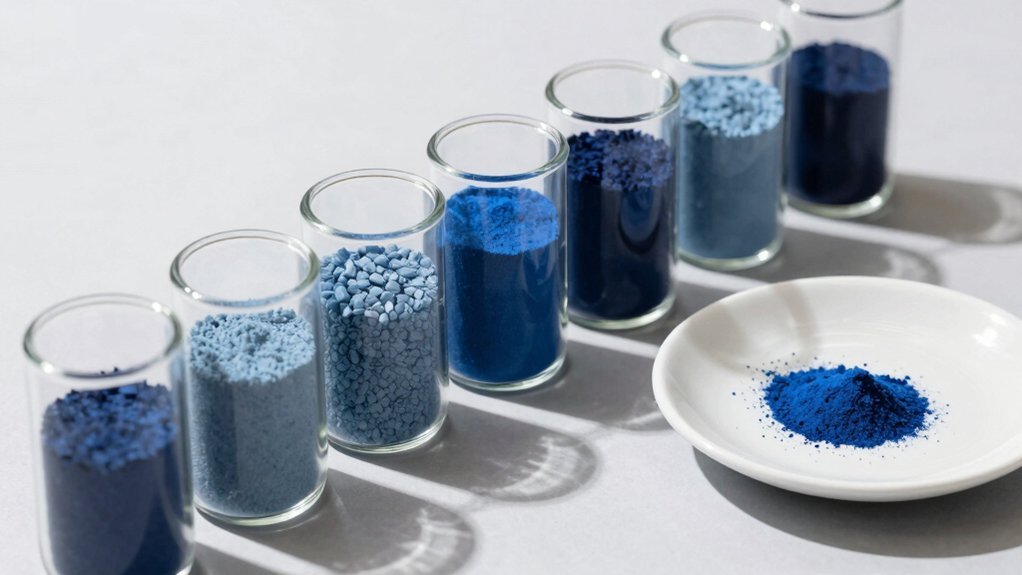
Keep separate containers ready for your colorants, allowing for better control before mixing them into your main batch.
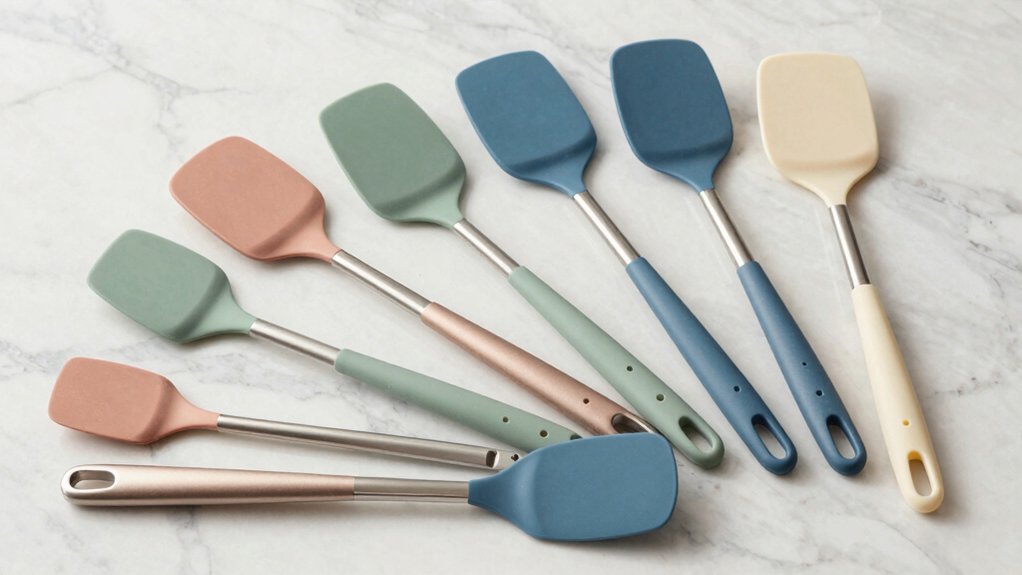
A whisk is invaluable when you need to gently incorporate colorants and fragrance oils at thin trace, maintaining the perfect consistency for swirling techniques.
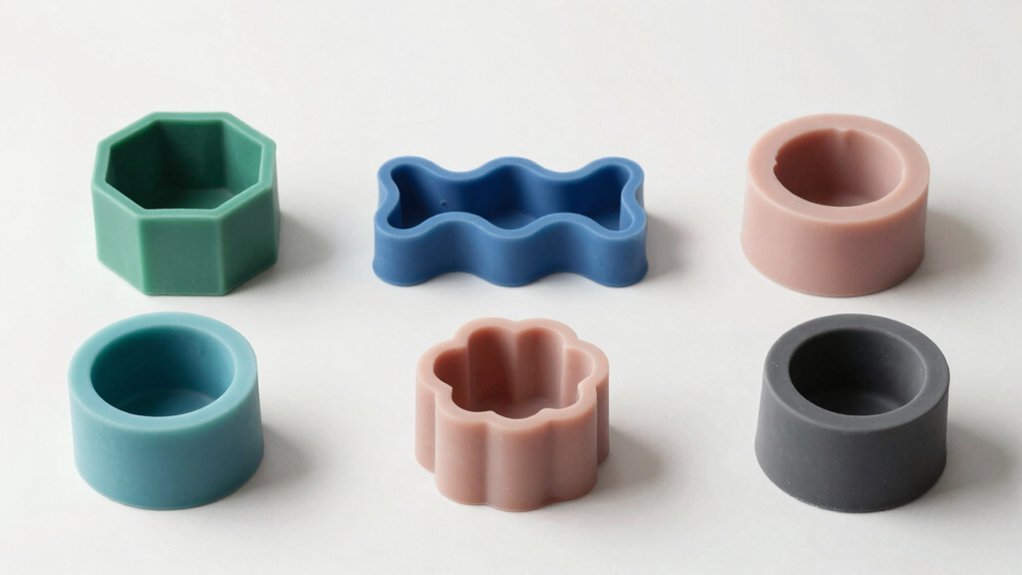
Choose a silicone mold for your creations, as it'll make removing your hardened masterpiece effortless.
Don't forget a reliable thermometer—it's essential for monitoring both your lye solution and oils, ensuring they remain within the ideal range of 80-100°F for successful swirling patterns.
Mastering the Right Trace Consistency
While beautiful swirl patterns depend on many factors, achieving the correct trace consistency remains the foundation of successful soap artistry.
For cold process soapmaking, aim for thin trace to medium trace, typically reached 2-3 minutes after combining oils and lye. This sweet spot gives you control over swirling techniques while maintaining defined patterns.
Keep temperatures between 80-90°F to extend working time for intricate designs. Avoid high percentages of fast-tracing oils that can sabotage your swirl patterns.
Your stick blender is powerful—use it in short bursts, then switch to a whisk for gentle mixing to prevent over-emulsifying your soap batter.
Popular Soap Swirl Techniques for Beginners
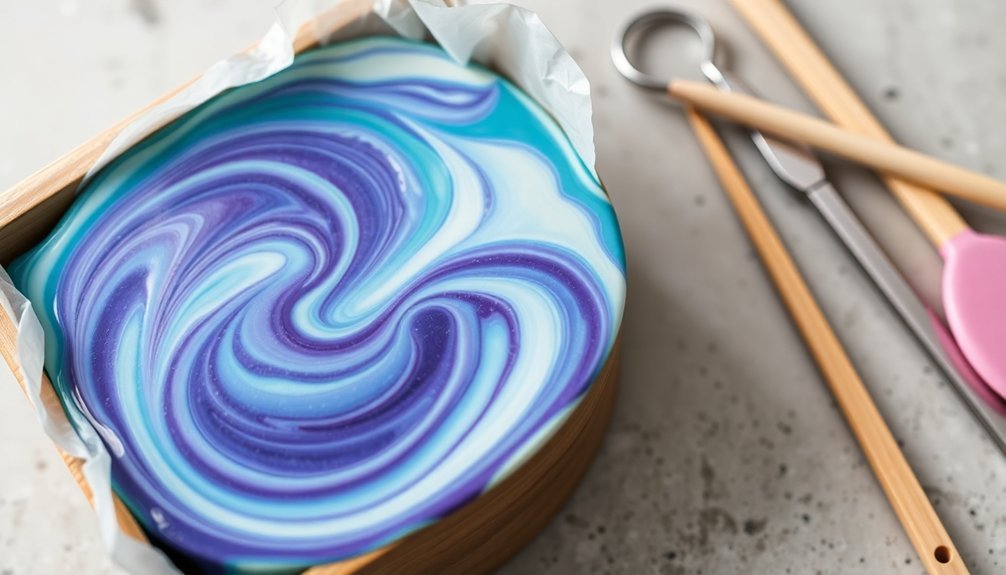
Several beginner-friendly swirl techniques can transform your basic soap into eye-catching designs without requiring advanced skills.
Drop swirls and in-the-pot swirls are excellent starting points, where you'll pour colored soap into a neutral base to create beautiful patterns.
For successful soap swirls, maintain a thin trace by working with slow-moving oils and keeping your soaping temperature between 80-90°F.
When performing drop swirls, experiment with different pouring heights for more dramatic effects in your cold process soap.
As you gain confidence, try the hanger swirl or Taiwan swirl using specialized tools for unique soap designs.
Remember to choose your fragrance oils carefully, as some can accelerate trace and compromise your swirl patterns.
With practice, you'll develop an intuitive feel for timing and consistency.
Color Selection and Preparation Strategies
Now that you've familiarized yourself with basic swirling techniques, let's focus on the colors that will bring your soap designs to life. Successful swirl patterns depend on thoughtful color selection and strategic preparation.
Keep your soap batter at 80-90°F to maintain the ideal thin consistency for swirling. Incorporate slow-moving oils (about 60% of your recipe) to prevent premature thickening while you work.
- Pre-mix all colorants in separate containers before pouring begins
- Test colorants beforehand—especially yellows and oxides—as they can accelerate trace
- Add colorants and fragrance oil only after reaching thin trace for maximum control
- Aim for even distribution of color by thoroughly mixing each portion
- Use contrasting colors that complement each other for visually striking swirl patterns
Troubleshooting Common Swirl Pattern Problems
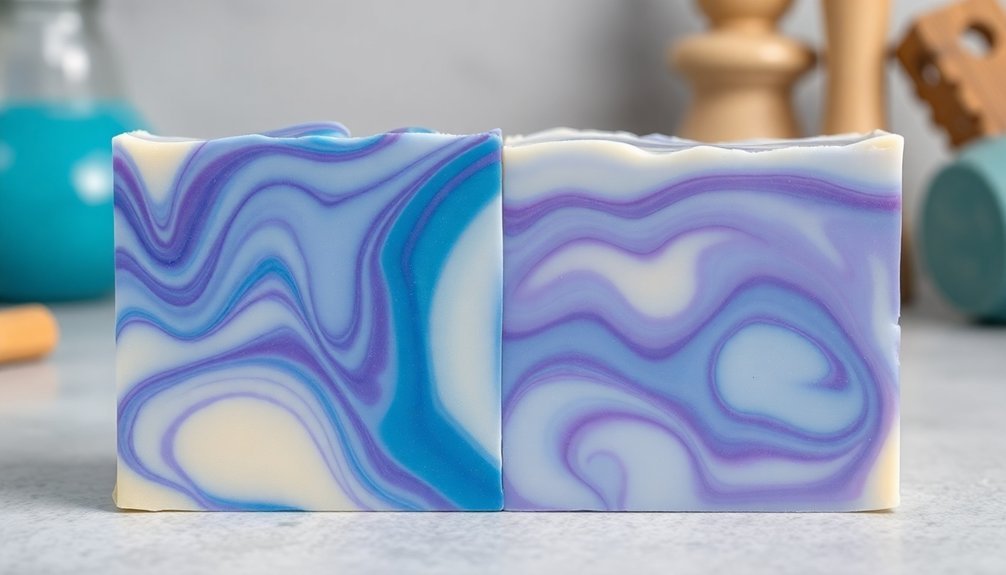
Even the most experienced soapmakers encounter obstacles when creating swirl patterns. If your swirls aren't distinct, check your soap consistency—a thin trace allows for better definition, while thicker consistency results in muddled designs.
Over-mixing after adding colorants is a common mistake; limit stirring to maintain color separation.
When you notice soda ash forming on your soap's surface, spray with rubbing alcohol immediately after pouring. This simple fix prevents that unwanted rough texture that can detract from your beautiful design.
For more dramatic swirls, try pouring from higher above your mold, creating impact when soap layers meet.
If certain colors are accelerating trace unexpectedly, test different colorants in small batches first. This prevents consistency issues that can ruin an entire batch of otherwise perfect swirled soap.
Frequently Asked Questions
What Temperature to Swirl Soap?
For swirling soap, you'll want to maintain temperatures between 80-90°F for thinner batter and better control. If you're working with thicker soap, aim for 100-110°F. Don't exceed 130°F to prevent over-emulsification.
How to Create Swirls in Soap Making?
To create swirls in soap making, you'll need a thin trace at 80-90°F. Use slow-moving oils, prepare colorants beforehand, and employ techniques like drop swirls. Don't overmix, and try skewers for additional designs.
How to Get Vibrant Colors in Cold Process Soap?
You'll get vibrant colors by using quality skin-safe colorants like mica or oxides. Mix them with a small amount of oil first, maintain thin trace when adding, and conduct tests to understand how they affect your soap.
What Are the Different Types of Soap Swirls?
You'll find five main soap swirl techniques: drop swirls (poured in small portions), in-the-pot swirls (mixed before pouring), Taiwan swirls (using dividers), hanger swirls (using wire tools), and secret swirls (revealed when cut).
In Summary
Creating beautiful swirl patterns isn't just about mastering techniques—it's about expressing your artistic vision through soap. You'll find that with practice, your confidence will grow alongside your skills. Don't be discouraged by early attempts that don't meet your expectations. Keep experimenting with colors, techniques, and trace consistency. Soon you'll develop your signature style that makes your handcrafted soaps truly unique.