Lye heavy soap can be fixed with simple pH adjustments. Test your soap first using pH strips or a digital meter to confirm it's above pH 10. You can neutralize the excess lye by adding a 20% citric acid solution gradually, testing between applications. Alternatively, rebatch the soap by grating it, melting with water, and adding additional oils to balance the alkalinity. Always wear protective gear when handling lye heavy soap. The techniques below will guide you through each correction method step-by-step.
Identifying Signs of Lye Heavy Soap
Soapmakers dread the telltale signs of excess lye in their creations. When your soap leaves a persistent soapy feeling on skin after rinsing or causes excessive dryness and itchiness, you're likely dealing with lye heavy soap.
The most reliable confirmation comes from a pH test. Readings above 10 indicate problematic alkaline levels, while 9-10 is generally skin-safe. The zap test offers a quick assessment—simply tap the soap on your tongue. If you feel an electric "zap," there's excess lye present.
Visual indicators include cloudy appearances developing over time and small white pockets or crystals on the surface, signaling undissolved lye.
Don't ignore physical symptoms—if your soap feels harsh or causes skin irritation, test its pH immediately before further use. Addressing high alkalinity promptly prevents potential skin damage.
Essential Tools for Accurate Ph Testing
You'll need reliable tools to accurately measure your soap's pH, with digital pH meters offering precision and chemical indicator strips providing quick results.
Proper calibration solutions guarantee your digital pH meter gives trustworthy readings, preventing false security about your soap's safety.
Remember that even the best testing equipment requires proper maintenance and regular calibration to consistently deliver accurate results for your handmade soaps.
Digital Ph Meters
While traditional testing methods have their place, digital pH meters stand out as the gold standard for serious soapmakers concerned about lye-heavy batches. These devices deliver precise pH readings accurate to within 0.01 pH units, eliminating guesswork when testing soap batches.
Before using your meter, you'll need to apply the calibration solution that comes with it. This guarantees your readings remain trustworthy when evaluating lye heavy soap.
Most modern meters feature automatic temperature compensation, adjusting readings based on your soap solution's temperature.
Don't neglect maintenance—regular cleaning of the electrode and recalibrating keeps your meter performing at its best.
You'll save considerable time using a digital pH meter versus traditional methods, and you'll greatly reduce the risk of human error that could lead to inaccurate assessments of your soap.
Chemical Indicator Strips
Chemical indicator strips provide a fast, visual method for determining your soap's pH level without specialized equipment. They're essential for identifying lye heaviness in your soap by changing color when exposed to different pH levels.
| pH Range | What It Means | Action Needed | Testing Time | Reliability |
|---|---|---|---|---|
| Below 9 | Too acidic | Add small amounts of lye solution | After 5+ days | Moderate |
| 9-10 | Safe pH range | No action needed | After 5+ days | Good |
| Above 10 | Lye heavy | Rebatch or cure longer | After 5+ days | High |
| 11-12 | Very lye heavy | Always rebatch | After 5+ days | High |
| 12-14 | Caustic | Do not use – rebatch required | Immediate | Very high |
For best accuracy, wait at least five days after saponification before testing. While convenient, always confirm borderline readings with a zap test for complete safety assurance.
Calibration Solutions Matter
Even the highest quality pH strips can provide misleading results if they're not properly calibrated. When testing soap pH, remember that strips often indicate lower levels than actual, potentially masking dangerous lye presence. This discrepancy could lead you to believe your soap is safe for skin use when it isn't.
To guarantee accurate pH measurements, use standardized calibration solutions with known pH values to verify your strips' reliability.
Wait approximately five days after making soap before testing, as the saponification process continues during this time, affecting readings.
Your goal is a pH level between 9-10 for skin-safe soap. Readings above 10 indicate potential lye heaviness requiring adjustments.
Step-By-Step Ph Adjustment Methods
To fix lye heavy soap, you'll want to prepare a 20% citric acid solution and test small portions first to avoid over-neutralization.
You can also rebatch the soap by adding additional oils which will combine with the excess lye to create more soap.
Remember to check your soap's pH after adjustments using pH strips or the zap test, ensuring it falls within the safe 8-9 range before use.
Acid Neutralization Techniques
Once you've confirmed your soap is lye-heavy through a zap test or pH measurement, you'll need a systematic approach to neutralize the excess alkali.
Prepare a 20% citric acid solution as your neutralizing agent. For every 15 grams of citric acid, you'll counteract approximately 12.6 grams of potassium hydroxide in your soap.
Test your solution on small samples before treating the entire batch. Add the citric acid gradually while guaranteeing thorough mixing to prevent cloudiness or separation issues.
Monitor your soap's consistency throughout the process. Continue testing pH until you reach the safe pH range of 8-9.
After completing the neutralization, allow your soap to cure for 1-2 months. This curing period guarantees proper drying and ideal lather development before use.
Rebatching With Oils
Rebatching offers a reliable solution for salvaging lye-heavy soap through careful adjustment of its pH balance.
To rebatch the soap, first grate or slice it into small pieces, then melt them in a stainless steel pot or slow cooker with a small amount of water.
Add additional oils or fats to neutralize excess lye and bring your soap to a safe pH range of 8-9. Use a stick blender to thoroughly combine the mixture, ensuring complete saponification.
Keep monitoring the cooking process until you achieve a smooth consistency.
Once blended, pour the soap into molds for cooling and hardening. Allow it to cure for 1-2 months if you've added water.
Test the pH multiple times throughout the process to confirm it's safe before use, preventing potential skin irritation from an improperly balanced product.
Rebatching Techniques for Lye Heavy Batches
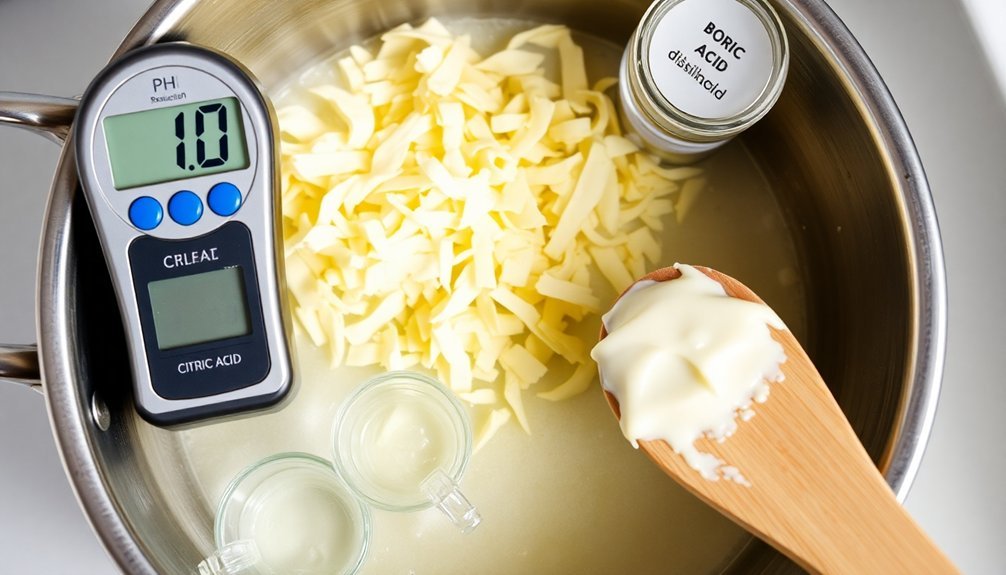
When your soap turns out lye heavy, rebatching offers a reliable solution to salvage your creation rather than throwing it away.
Begin by grating or slicing your lye heavy soap into small pieces, then melt them in a stainless steel pot or slow cooker with a little water.
The key to success lies in adding additional oils or fats in correct ratios to neutralize excess lye.
Thoroughly stir the mixture with a stick blender to guarantee proper emulsification and saponification of the newly added ingredients.
Throughout this process, monitor the pH carefully, aiming for a final reading between 8-9.
Once your melted soap reaches the proper consistency, pour it into soap molds and allow it to cool and harden.
Remember that the curing process may take 1-2 months if extra water was added during rebatching.
Natural Neutralizers to Balance Alkalinity
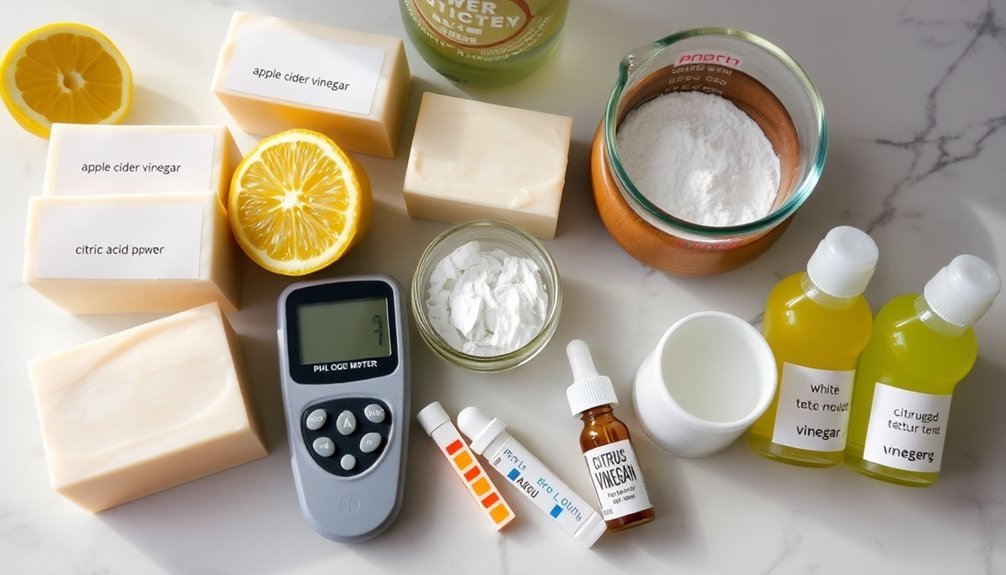
Although rebatching works well for lye-heavy soap, using natural neutralizers provides a more targeted approach to balance alkalinity.
Citric acid stands out as an effective natural neutralizer for lye heavy soap, with a recommended 20% concentration solution for initial testing. When applying this method, remember that every 15 grams of citric acid requires about 12.6 grams of potassium hydroxide to neutralize properly.
Always test small samples first to prevent over-neutralization, which can create new pH imbalances.
Boric acid offers another natural option but requires careful application.
Whatever neutralizer you choose, consistent pH testing before and after treatment is essential, aiming for a safe pH range of 8-9 for skin use.
This targeted approach helps you achieve the perfect alkalinity balance without compromising your soap's quality.
Safety Considerations When Working With High Ph Soap
Because lye heavy soap can cause serious chemical burns, you'll need to prioritize safety when handling, testing, or correcting these products.
Always wear gloves and protective eyewear to shield your skin and eyes from high pH levels that can cause immediate irritation or burns.
When working with lye heavy soap, follow these critical precautions:
- Conduct pH tests carefully using reliable methods like pH strips, and never directly touch soap until you've confirmed a safe pH of 9-10.
- Make small test batches when neutralizing lye to prevent over-correction problems.
- Store unfinished soap in a well-ventilated area away from children and pets.
For soap with extremely high pH levels (13-14), proper disposal through local hazardous waste facilities is essential—never wash it down regular drains where it could cause damage.
Frequently Asked Questions
How Do I Fix Lye Heavy Soap?
You'll need to neutralize your lye heavy soap. Prepare a 20% citric acid solution, test small samples first, and monitor pH levels. Aim for 8-9 pH. If it's still harsh, consider repurposing as laundry soap.
What Happens if Your Soap Is Lye Heavy?
If your soap is lye heavy, you'll experience skin irritation, itching, and a persistent soapy feeling. Your skin may become rough, and the excess lye (pH above 10) can damage skin cells like bleach contact would.
What Is the Ph of Lye Heavy Soap?
Your lye heavy soap will have a pH above 10, typically ranging from 11 to 14. This indicates excess sodium hydroxide hasn't saponified, making it too alkaline and potentially harmful to your skin.
Why Is My Homemade Soap Not Getting Hard?
Your homemade soap isn't hardening likely due to insufficient lye, too much water, or excessive soft oils. Make sure you're calculating lye correctly, using harder oils, and allowing adequate curing time of 4-6 weeks.
In Summary
You've now got all the skills to salvage your lye-heavy soap without wasting materials. Remember, patience is key during the rebatching process. Test your soap's pH regularly, use only skin-safe neutralizers, and always wear protective gear when handling high pH substances. With these techniques, you'll transform harsh, unusable soap into gentle, skin-friendly bars that you'll be proud to use or share.