Oil ratios directly impact your soap's quality, texture, and skin benefits. You'll need to balance hard oils (like coconut and palm) with soft oils (like olive and almond) to create the perfect bar. Hard oils provide firmness and lather, while soft oils deliver moisture and conditioning. The ideal mix is 30-40% hard oils to 60-70% soft oils, with coconut oil limited to 20% and castor oil at 5%. Understanding these essential ratios will transform your soap crafting journey.
Understanding Basic Oil Properties in Soap Making
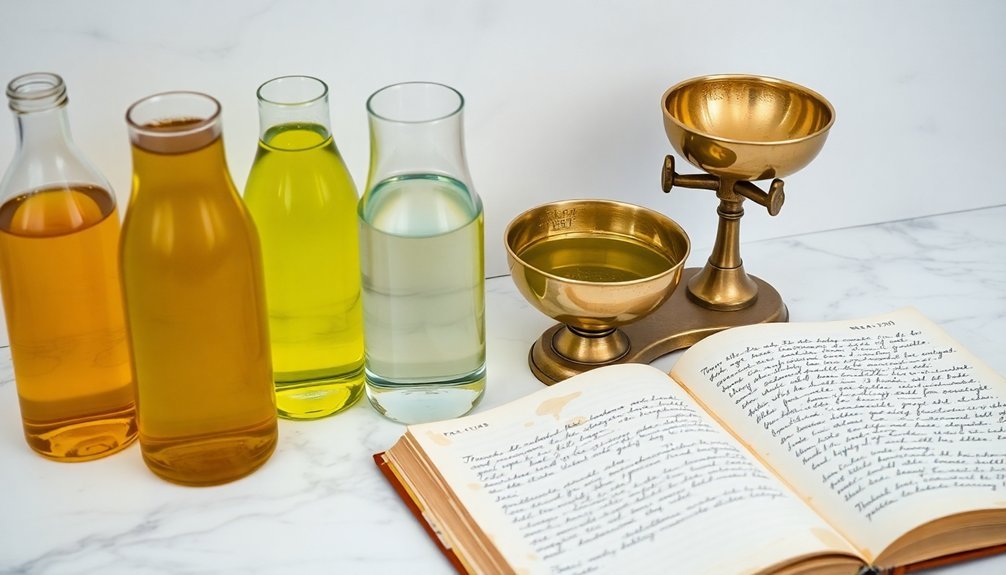
While soap making may seem straightforward, understanding oil properties is essential for creating the perfect bar.
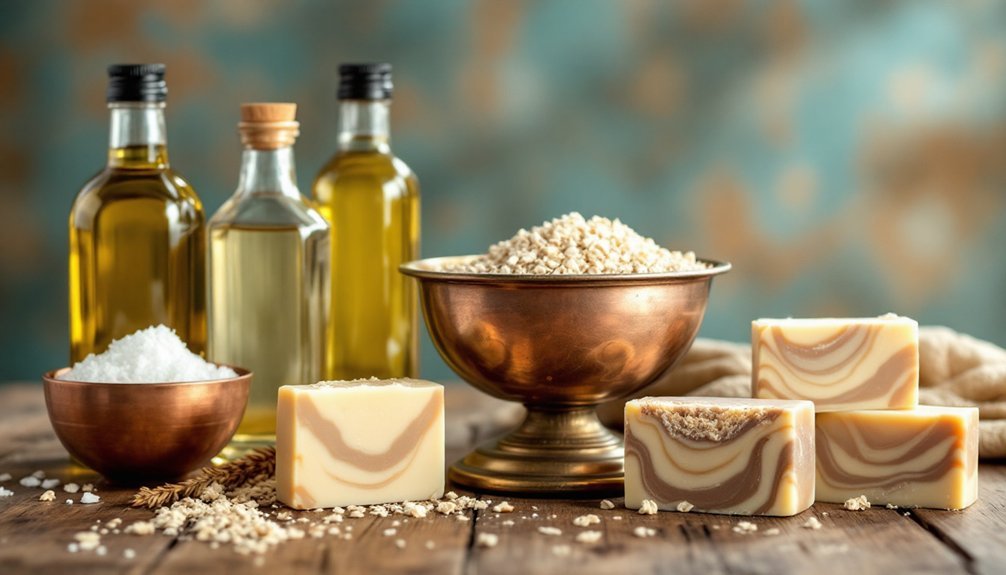
You'll need to grasp how the fatty acid profile of each oil contributes to your final product's characteristics. Hard oils, such as coconut and palm, create firmness and durability in your soap, while soft oils like olive and almond deliver moisturizing benefits and creamy lather.
To achieve a well-balanced soap, you'll want to combine both hard oils and soft oils in appropriate ratios. For instance, you should limit coconut oil to 20% or less of your formula to prevent excessive drying, even though it produces excellent lather.
The Science Behind Fatty Acid Profiles
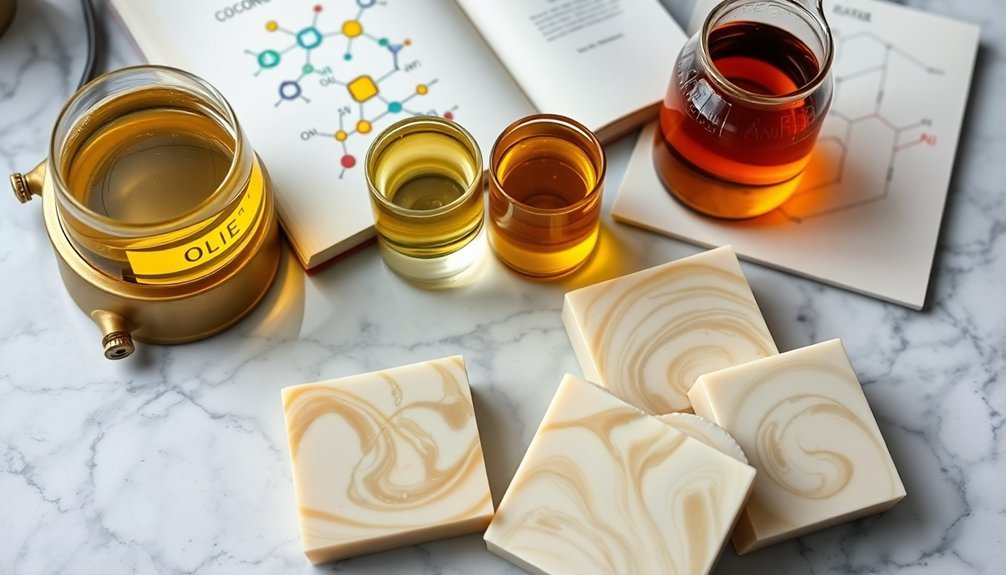
These fundamental oil properties stem directly from their fatty acid compositions.
When you're formulating soap, you'll find that different fatty acids create distinct characteristics in your final product. Lauric acid, commonly found in coconut oil, helps you achieve a hard bar of soap with excellent lather, while myristic acid enhances the bubbles' fluffiness.
Each fatty acid brings its own magic to soapmaking, from lauric acid's firm bars to myristic acid's fluffy, abundant lather.
You'll notice that palmitic acid is essential for creating stable, creamy lather in your soap.
If you're making olive oil soap, you'll get wonderful conditioning properties from its high oleic acid content, but you'll need to balance it with harder oils to prevent a soft bar.
Measuring Essential Oil Concentrations
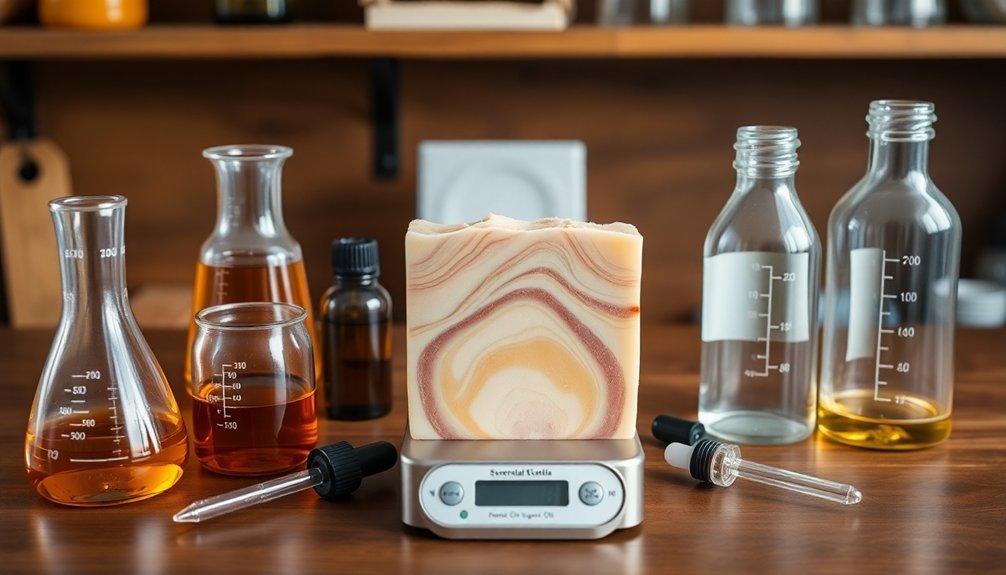
To safely incorporate essential oils into your soap, you'll want to maintain concentrations between 0.5% and 5% of your total oil weight, following the standard guideline of 1 ounce per pound for moderate scenting.
You can maximize benefits by carefully blending different essential oils while accounting for their individual potencies, particularly with citrus oils that require lower concentrations.
When calculating your dilution rates, it's vital to start with smaller amounts and perform patch tests, especially if you're creating soaps for sensitive skin types or customers with potential allergies.
Safe Essential Oil Levels
Measuring the right concentration of essential oils stands as one of the most critical safety aspects in soap making.
You'll want to keep your essential oil levels between 1% to 3% of your total oil weight to maintain safe essential oil levels in your final product.
If you're crafting soap for sensitive skin, stick to the lower end of the spectrum, using just 1% to 2% essential oils.
Some potent oils like peppermint and cinnamon require even more caution – you shouldn't exceed 0.5% to 1% of these varieties due to their potential for irritation.
Don't forget to calculate your essential oils based on your recipe's total oil weight, not the final soap weight.
Before using your soap regularly, it's smart to perform a patch test to verify skin compatibility.
Blending For Maximum Benefits
When crafting soap with essential oils, blending different varieties can amplify both therapeutic benefits and aromatic appeal. You'll want to maintain a total concentration of 3-5% essential oils relative to your base oils and butters to guarantee safety and effectiveness.
To create a well-rounded blend, combine top notes like bergamot with middle and base notes such as cedarwood or sandalwood. This layering approach extends the fragrance's longevity while maximizing therapeutic benefits.
Remember that citrus oils evaporate more quickly, so balancing them with grounding oils creates a more stable scent profile.
Be cautious with potent oils like cinnamon and clove, which can irritate skin. Always test your blends and measure precisely.
Your goal is to craft a soap that's both aromatic and skin-friendly while delivering the full spectrum of essential oil benefits.
Dilution Rate Guidelines
Because accurate dilution rates are essential for safe soap making, you'll need to carefully measure your essential oil concentrations. The standard dilution rate ranges from 1% to 5%, with stronger oils like cinnamon requiring lower percentages.
To guarantee proper ratios, mix 20 drops of essential oils per ounce of carrier oil for a 5% dilution.
For consistent results and future adjustments, maintain detailed records of your formulations.
Remember these key guidelines:
- Never exceed 5% of total oil weight in your soap recipe
- Use drop-by-drop measurements for precise essential oil amounts
- Adjust dilution rates based on specific oil properties and skin sensitivity
Balancing Hard and Soft Oils
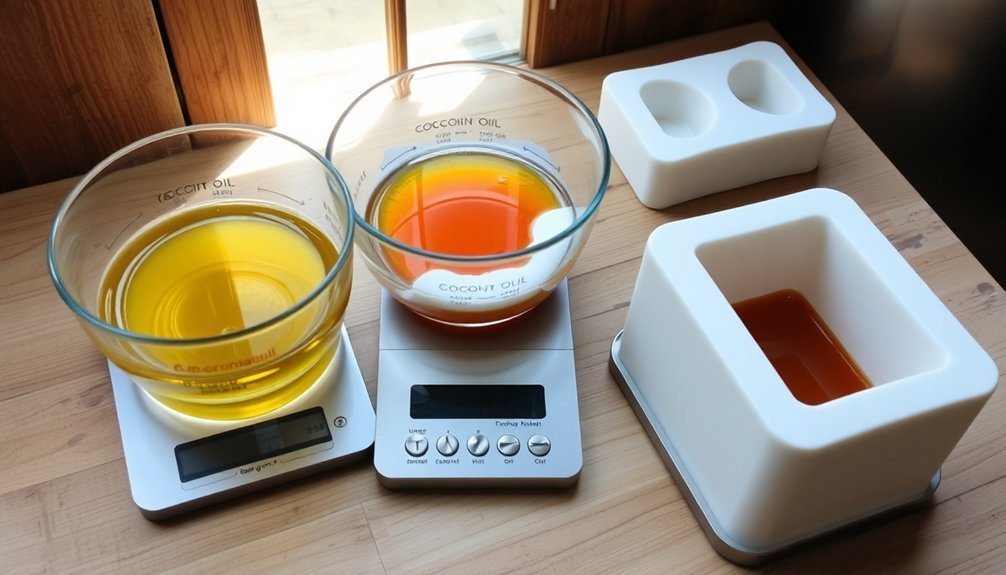
The art of balancing hard and soft oils stands as a fundamental principle in soap crafting, determining everything from your bar's durability to its skin-nourishing properties.
You'll want to aim for a ratio of 30-40% hard oils to 60-70% soft oils to achieve ideal results.
Hard oils like coconut and palm contribute to bar hardness and create robust lather, while soft oils such as olive and almond provide essential moisturizing benefits.
The secret lies in understanding how different fatty acids work together – lauric and myristic acids from hard oils deliver cleansing power, while oleic acid from soft oils enhances conditioning properties.
Calculating Lye-to-Oil Ratios
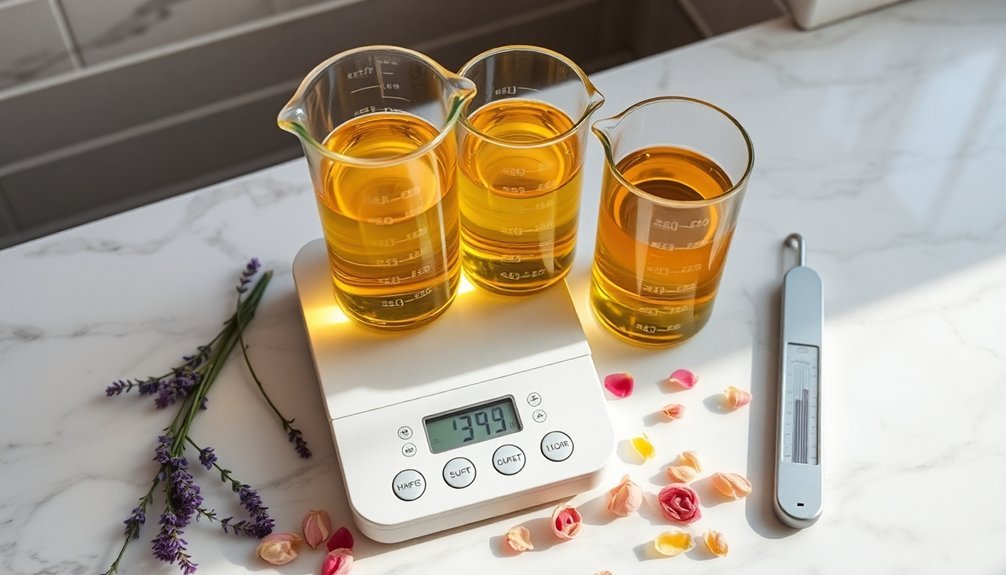
Before you begin mixing your soap ingredients, you'll need to understand how to calculate the precise lye-to-oil ratios that guarantee a safe, well-balanced final product.
Your superfat percentage, typically set between 5-8%, creates a safety buffer by leaving some oils unsaponified while still maintaining excellent lather quality.
You must test your lye solution's strength using an accurate digital scale and reliable soap calculator to prevent excess alkali, which could make your soap too harsh for skin use.
Safety First: Precise Measurements
Precise measurements stand at the heart of successful soap making, where even small miscalculations in your lye-to-oil ratios can lead to unusable or dangerous products.
You'll need to maintain lye concentrations between 28-32% for proper saponification, and using a lye calculator is crucial to determine exact amounts for your oil combinations.
When crafting your soap, remember these critical measurement practices:
- Always use a reliable lye calculator like SoapCalc or Soapee to compute precise measurements for your specific oil blend
- Double-check your measurements, as even minor variations can result in caustic soap that could harm skin
- Calculate your ratios based on each oil's unique saponification value to guarantee complete conversion into soap
Following these measurement guidelines will help you create safe, well-balanced soaps that perform as intended.
Superfat Percentage Explained
Understanding superfat percentages marks a crucial step in mastering soap calculations, as this intentional excess of oils creates gentler, more moisturizing bars. You'll need to carefully calculate your lye-to-oil ratio based on your desired superfat percentage, typically ranging from 5% to 10%.
| Superfat % | Effects on Soap |
|---|---|
| 5% | Balanced moisturizing properties |
| 7% | Enhanced conditioning |
| 8% | Extra gentle on skin |
| 10% | Maximum moisturizing |
To calculate your ratios, determine your total oil weight first. For example, with 1000g of oils and a 5% superfat, you'll calculate lye amounts for 950g of oils. While higher superfat percentages increase conditioning properties, they can reduce lather quality. You'll want to find the sweet spot that matches your desired soap characteristics.
Testing Lye Solution Strength
Determining the correct lye-to-oil ratio stands as the foundation of successful soap making, since even small miscalculations can lead to harsh or ineffective products.
You'll need to start with a baseline ratio of 0.134 grams of lye per gram of oil, but this varies depending on your chosen oils.
To guarantee accurate measurements and safe soap production, you should:
- Use a reliable lye calculator to determine precise amounts based on your specific oil blend
- Account for your desired superfat percentage (5-8%) when calculating final ratios
- Test your solution strength before combining with oils to avoid unwanted reactions
As a soapmaker, you'll find that mastering the lye-to-oil ratio directly impacts your final product's quality, from its hardness to its moisturizing properties.
A properly calculated ratio guarantees your soap provides the perfect balance of cleansing and conditioning.
Optimal Percentages for Different Soap Types
While crafting soap requires artistic creativity, successful formulations depend on carefully balanced oil ratios.
You'll want to aim for about 30% hard oils and 70% soft oils to achieve the perfect balance of cleansing and conditioning properties.
For a reliable basic recipe, combine 35% olive oil, 30% coconut oil, 30% palm oil, and 5% castor oil.
If you're seeking bubbly lather, keep coconut oil below 20% to prevent excessive drying, and include castor oil at 5% for stable foam.
To enhance your bar's hardness and longevity, you can incorporate up to 15% of conditioning butters like shea or cocoa.
Remember that oils high in lauric acid, such as coconut and palm kernel, create cleansing lather, while oleic-rich oils like olive provide moisturizing benefits.
Temperature Considerations for Oil Blending
When blending oils for soap making, you'll need to maintain temperatures between 100-110°F (38-43°C) to guarantee safe and effective saponification.
You should first melt your solid oils like coconut and palm until they're completely liquid before combining them with room-temperature liquid oils to prevent clumping and achieve uniform consistency.
If you're planning intricate designs or adding fragrances, consider working at slightly lower temperatures within this range, as cooler conditions will give you more time to work with the soap batter before it reaches trace.
Melting Point Safety Rules
To create a successful soap blend, you'll need to carefully monitor oil temperatures during the melting process. Solid oils like coconut and palm require heating above their melting point, typically between 76°F and 95°F, while liquid oils can blend at room temperature.
Keep your thermometer handy and never exceed 120°F to preserve the oils' beneficial properties.
- Check each oil's individual melting point before combining them to prevent lumpy soap batter.
- Heat solid oils gradually, maintaining temperatures just above their melting point for ideal blending.
- Monitor oil temperatures consistently throughout the process, adjusting heat as needed.
Following these temperature guidelines will help you achieve a smooth, well-incorporated soap mixture.
Remember that proper temperature control directly impacts your final product's quality, texture, and performance.
Optimal Blending Heat Ranges
The key temperature range for blending soap-making oils falls between 95°F and 110°F, ensuring perfect incorporation and consistent trace development.
When you're working with ideal blending heat ranges, you'll need to heat your oils enough to melt ingredients that remain solid at room temperature, creating a uniform mixture that promotes creamy lather in your final soap.
Don't exceed 120°F, as this can damage delicate oils and trigger unwanted reactions during saponification.
It's best to let your blended oils cool to room temperature before adding lye – this gives you better control over trace development and prevents acceleration that could limit your design options.
Remember to monitor temperatures carefully, as oils that are too cool won't saponify properly, resulting in softer soap that may not cure correctly.
Storage and Shelf Life Requirements
Since successful soap making depends heavily on ingredient quality, proper storage and shelf life management are critical aspects of the craft.
Understanding the shelf life of your oils is essential, as they typically last between 6 months to 3 years. Hard oils like coconut and palm contribute considerably to your soap's longevity, while oils high in oleic acid provide stability against rancidity.
- Store your oils and finished soaps in a cool, dark place to prevent oxidation and extend their usability.
- Monitor the percentage of short-lived oils like flaxseed in your recipes to maintain overall quality.
- Include a balanced ratio of hard oils to guarantee your bars remain firm and resistant to dissolution.
Essential Oil Safety Guidelines
While proper oil storage guarantees soap quality, safe handling of essential oils demands equal attention in soap crafting.
You'll want to limit essential oils to 1-3% of your total oil weight to prevent skin irritation and adverse reactions. Before incorporating any new essential oil into your soap, always conduct a patch test to identify potential allergies or sensitivities.
Exercise extra caution with potent oils like cinnamon and clove, which can irritate the skin. If you're pregnant or have specific health conditions, research each oil's safety guidelines thoroughly before use.
Always exercise care with strong essential oils like cinnamon and clove – your skin's safety depends on proper research and precautions.
Store your essential oils in a cool, dark place to maintain their potency and prevent deterioration.
Common Oil Substitutions and Equivalents
Finding suitable oil substitutions can transform your soap making process when preferred ingredients aren't available. Common oil substitutions help you maintain the desired qualities of your soap while adapting to ingredient availability.
You'll find that hard butters like palm oil can effectively replace tallow or lard at up to 33% to maintain bar hardness.
- Babassu oil works as an excellent substitute for coconut oil, providing similar cleansing properties with less drying effects.
- Castor oil can replace up to 5% of your total oils to enhance and sustain lather while adding moisture.
- Sunflower oil substitutes well for olive oil at around 20% of total oils, offering a lighter feel while maintaining fatty acid benefits.
When adjusting your recipe, consider using almond oil at up to 30% to replace harder oils if you're seeking a softer texture.
Quality Control and Testing Methods
To guarantee consistent soap quality, you'll need reliable testing methods and quality control processes throughout your crafting journey. Start by analyzing fatty acid profiles and using lye calculators like SoapCalc to verify your oil ratios. Monitor your INS values, aiming for around 160 to achieve the perfect balance between cleansing and conditioning properties.
| Test Method | Purpose | Target Result |
|---|---|---|
| INS Value | Balance Check | ~160 |
| Trial Batches | Oil Effect Analysis | Consistent Properties |
| Fatty Acid Profile | Quality Assessment | Balanced Profile |
| User Feedback | Performance Review | Positive Response |
Conduct systematic trial runs with different oil ratios while maintaining other variables constant. This testing method helps you evaluate how specific oils affect your final product. Remember to collect regular feedback from testers to refine your formulations and maintain quality across batches.
Frequently Asked Questions
What Is the Ratio of Oil in Soap Making?
You'll want to use a balanced mix of 35% olive oil, 30% coconut oil, 30% palm oil, and 5% castor oil for your soap. This ratio creates an ideal combination of hardness, lather, and moisturizing properties.
What Is the Ratio of Essential Oils to Soap Making?
You'll want to add essential oils at 5-7% of your total oil weight in soap making. It's best to mix them in at trace, and you should always test small batches first.
How Do You Calculate Oil for Soap Making?
You'll need to use a soap calculator like SoapCalc or Soapee. Input your desired batch size, then subtract lye and additives weight. The remaining amount determines your total oil weight needed.
How Different Oils Affect Soap?
You'll find that different oils create unique soap qualities: hard oils like palm make firm bars, coconut oil produces bubbly lather, soft oils like olive add moisture, and castor oil boosts lather while providing conditioning benefits.
In Summary
You'll find that mastering oil ratios transforms your soap making from basic to exceptional. By balancing your hard and soft oils, carefully calculating lye ratios, and maintaining proper essential oil concentrations, you're creating safer, more effective products. Whether you're new to the craft or an experienced artisan, understanding these critical measurements guarantees your natural soaps will consistently deliver the quality and properties you desire.